

Water insecurity in Arizona is no longer a distant concern but a present and measurable reality. Years of prolonged drought, rising temperatures and increasing demand have strained rivers, aquifers and reservoirs across the state.
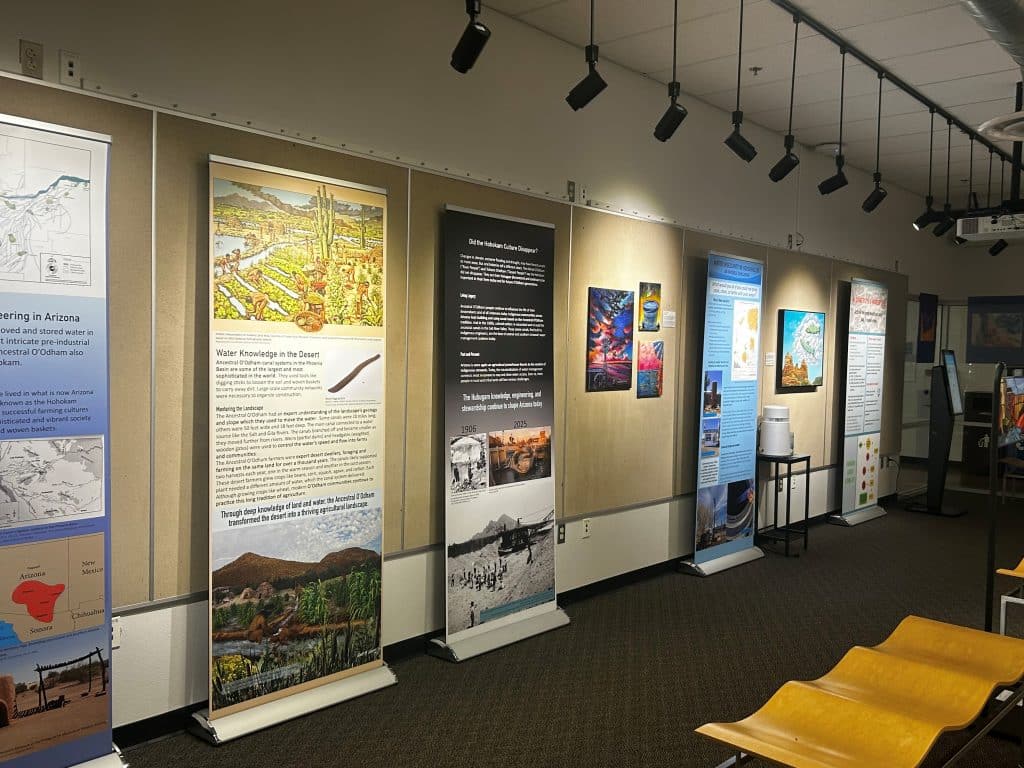
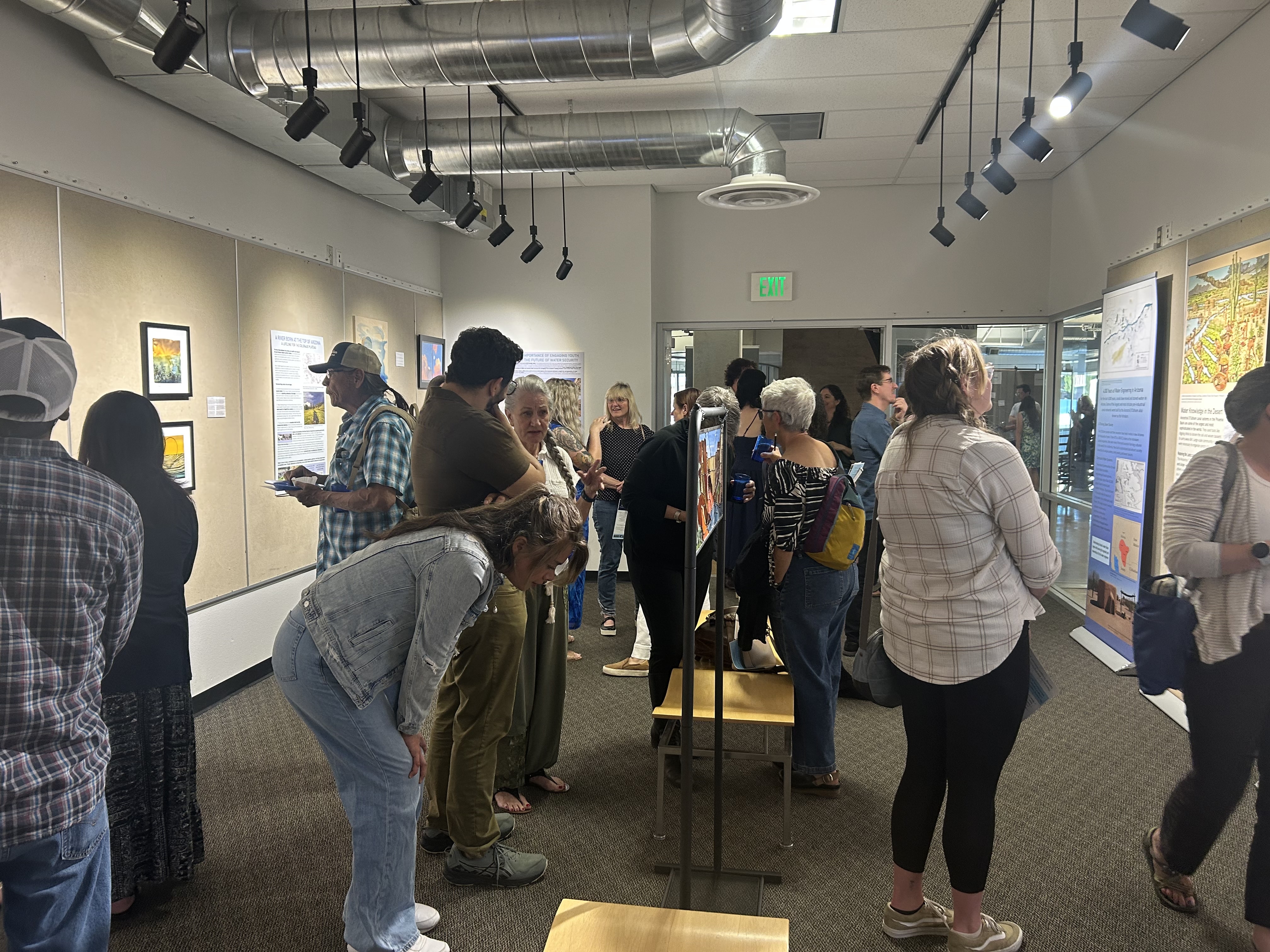 The “Our Water: Innovations and Collaborations in Arizona” exhibition explores how collaborations and innovations can help shape a more just and resilient water future in Arizona through a combination of art and research. The exhibit was created in the context of Arizona Water for All, a partnership funded by the governor’s office to bring together community members, organizational partners and academic researchers from Arizona’s three state universities to address water security.
“We have a huge issue with water in our state,” said Ashleigh M. Day, associate professor in the School of Communication. “This type of crisis can be really hard for people to process, because we still have water coming out of our taps at home and can still take a shower whenever we want. But the water is dwindling, and for many cities in Arizona, even some up here in northern Arizona, the issues with how we are governing the Colorado River, and other water sources, are serious.”
The exhibit started at Arizona State University and then traveled to the University of Arizona. Now, it’s NAU’s turn to host it, and Day said although there will be some commonalities in the exhibition, the plan is to localize it by collaborating with northern Arizona water experts, highlighting regionally specific topics and displaying local art.
Lucero Radonic, associate professor in the Department of Anthropology, has been working alongside Day and Miriam Nelson, NAU alumna and program coordinator for Arizona Water for All, in this endeavor. Radonic said the exhibit will introduce people to the water challenges of Arizona while showing them the different forms of innovation that require collaboration to find solutions to water problems.
“In our research at the Water, Society, and Policy Lab, we found that the one theme that everyone mentions when discussing the future of water in northern Arizona is collaboration,” Radonic said. “How can we work together to ensure that different communities have water security? How could we figure out ways of getting over conflict? How could we have ways of disagreeing productively? When we had an opportunity to bring the exhibit here, we decided to add a focus on collaboration and developing new content to the exhibit that is Colorado Plateau focused.”
Some of these collaborators are the Indigenous people who live in northern Arizona, their voices will be present in the exhibit.
“After decades of exclusion, the federal government has been increasingly working with tribes to try to monitor, learn from and figure out adaptive management for water resources,” Radonic said. “We will have one panel on current Diné involvement in the Glen Canyon Dam Adaptive Management Program and another one looking at the Hohokam canal system of southern Arizona as a form of infrastructure that has allowed a civilization to flourish in the area. It’s a little bit of past, present and maybe future as we think about water in this region and how we can adapt to our limited resources.”
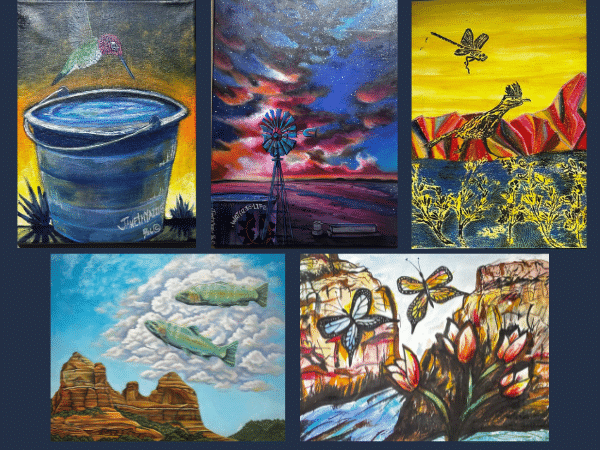
Radonic added that the goal of the exhibition is to get people to think about their different relationships with water in northern Arizona, and some of the local artists who have been invited to display their work will help reach that goal.
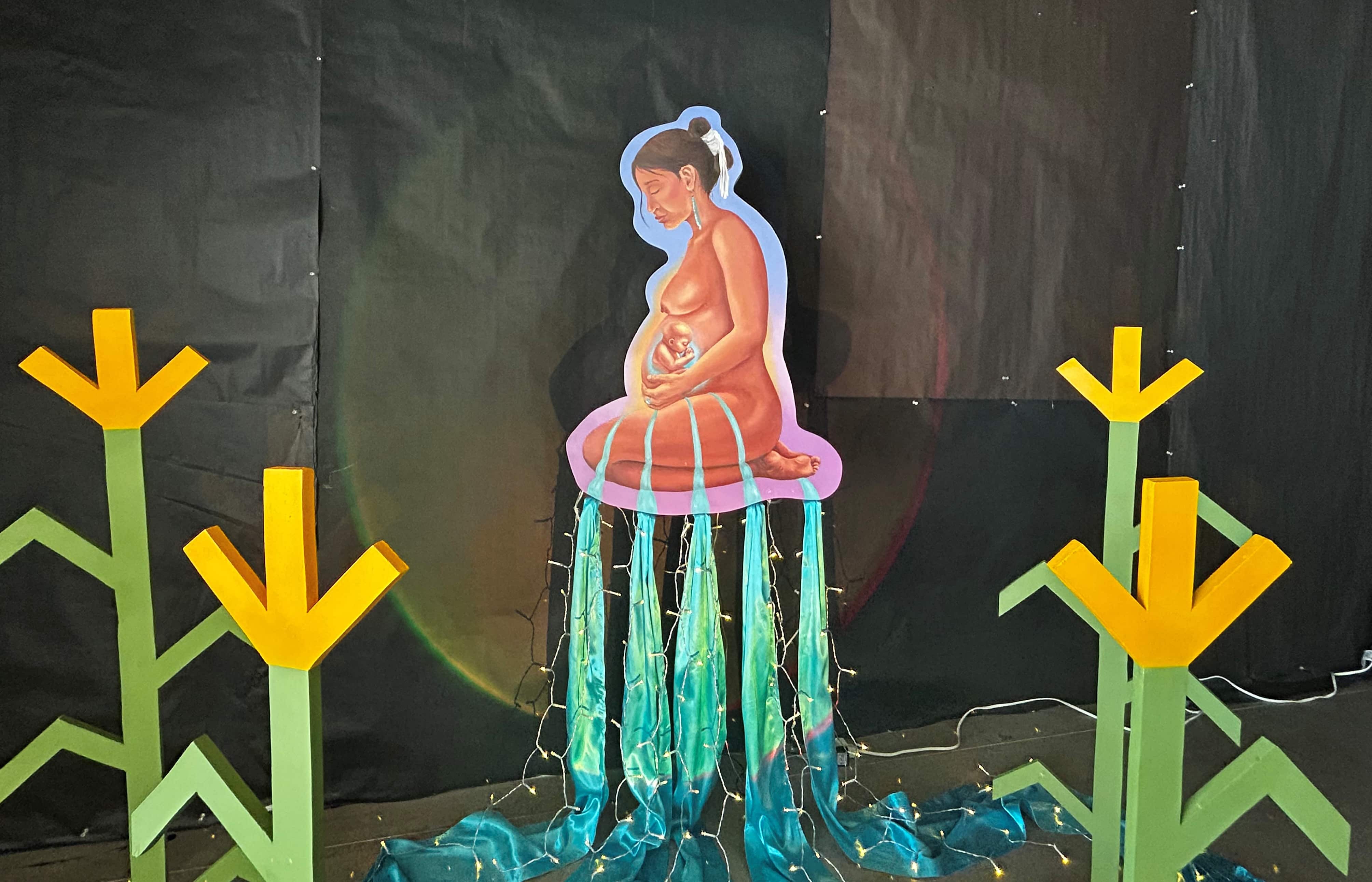
“We have some amazing work being presented,” Radonic said. “There is a three-dimensional installation by Selina Scott, who is a Diné and Hispanic artist. It is inspired by her family and the connection between land, water and our mothers. This exhibit is a way to give back to our community, not only to the practitioners and the residents who have participated in our research projects. We hope people will come and learn new things about water in the area and realize that the future of water security is at that intersection of policy, technical innovations and a profound understanding of socio-cultural values. I think the exhibit does a beautiful job of showing that it is not only about technology, it is not only about policy, and it is not only about people, but about how they all interrelate.”
“Our Water: Innovations and Collaborations in Arizona” will be on view May 15-June 19 in the School of Communication Gallery (Bldg. 16, second floor). It is open 8 a.m. to 5 p.m. Monday through Thursday.
 Mariana Laas | NAU Communications
(928) 523-5050 | mariana.laas@nau.edu