

*Editor’s Note: The “Views from NAU” blog series highlights the thoughts of different people affiliated with NAU, including faculty members sharing opinions or research in their areas of expertise. The views expressed reflect the authors’ own personal perspectives.
 By Mowana L. Lomaomvaya
 By Mowana L. Lomaomvaya
Lomaomvaya is an assistant archivist for Indigenous Initiatives and Cultures at Cline Library and an alumna of NAU’s anthropology master’s program.
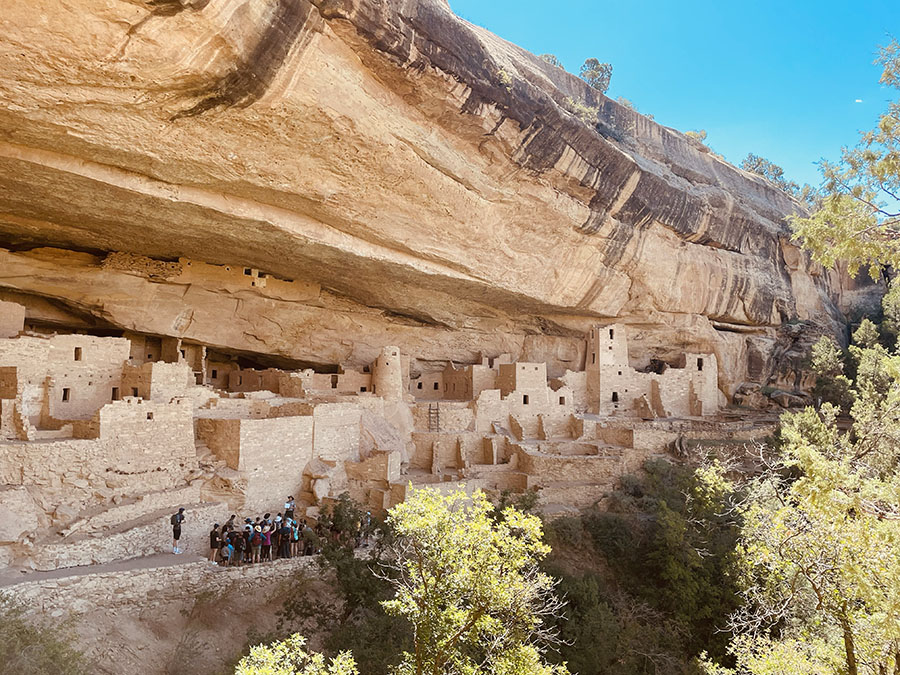
Studying and working in archaeology is to participate in a traditionally western, colonialist field, which historically excluded the voices of the descendants of the peoples and cultures being documented. During my short career in archaeology, I have seen archaeological research spaces intentionally pivot and move toward becoming a more inclusive and collaborative discipline. One such space is Crow Canyon Archaeological Center, a nonprofit organization whose mission is “to empower present and future generations by making the human past accessible and relevant through archaeological research, experiential education, and American Indian knowledge.” Located in Cortez, Colorado, Crow Canyon has conducted archaeological research at Ancestral Puebloan sites in the Mesa Verde region since 1983.
My relationship with Crow Canyon began in 2019 when I attended the summer College Field School as a requirement for my admission to the NAU anthropology graduate school program. While participating in the program, we had four Native American Scholars in Residence (NASIR) that each spent a week with the field school students, who taught us about their research, interests and knowledge, and perspectives as Indigenous persons regarding archaeological research and methods. I was beyond excited to learn from and talk with individuals who could understand and relate to my perspective and feelings as a young, Native American student in archaeology. It was profound to see Native scholars operating at higher education and research levels, doing research representative of their identity and interests.

The first week of June, I participated in what is now the Indigenous Scholar in Residence program (ISIR). I traveled to Crow Canyon and spent the week with this summer’s cohort of College Field School students as they learned how to conduct archaeological excavations at the Haynie site, visited curation facilities to learn about collections and preservation management and completed lab work on materials from Haynie. It was an excellent week filled with thoughtful discussions and questions about Hopi culture, our connections to our ancestors and ancestral sites and conducting archaeological research in respectful and intentional ways.
The week included excavation, a field trip and two days doing archaeological survey on a plot of land in the area. However, due to unusual but welcomed rainstorms throughout the week, our fieldwork time was cut short. Instead of a day of excavation, the students received an introduction to photogrammetry and LiDAR projects Crow Canyon staff completed. Later that week, instead of two days of survey work, the students worked in the lab, getting an introduction to and hands-on analysis of paleoethnobotanical collections. The students also learned to process flotation samples, which are a preparatory step to conduct analysis on pollen and other botanical samples to determine the plants in use by ancestral peoples. We spent a day visiting the Mesa Verde National Park and Canyons of the Ancients curations facilities to understand the care and curation of ancestors’ belongings when they are removed from sites for preservation and research.
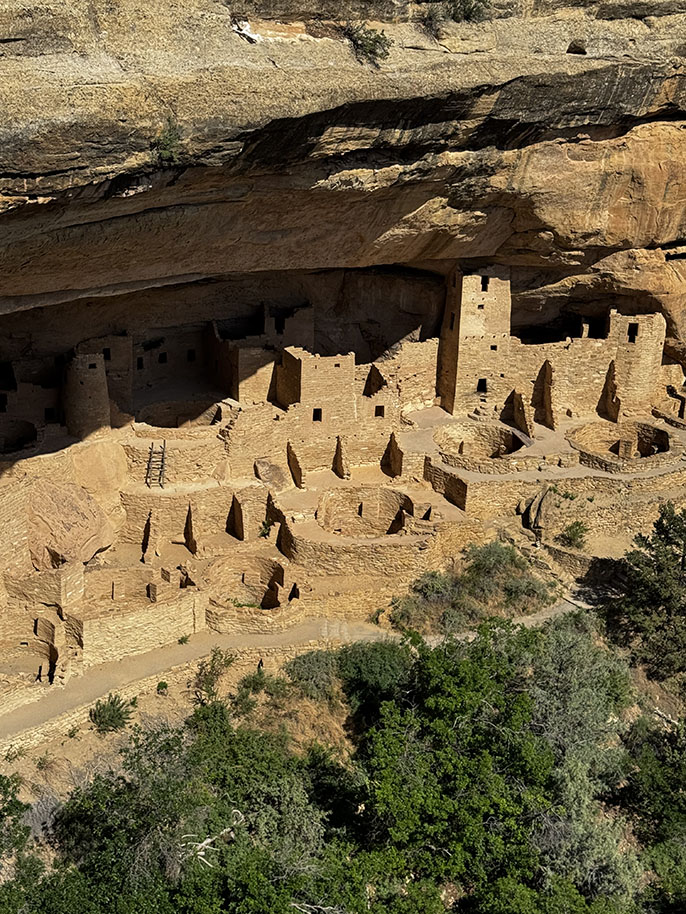
While at Crow Canyon, I gave two presentations: an evening lecture to the students and Crow Canyon summer interns and a brown bag presentation for students and staff. Following conversations with the students where I learned many of them are from outside the southwestern United States, I decided to modify my evening presentation to provide more information on the Hopi people, our history, culture, agriculture and oral histories detailing our migrations across the American Southwest. I shared that archaeological sites are our footprints, itaa kukveni in Hopi, the physical evidence of the migrations of our ancestors on their journey to find our enduring home, which is where our Hopi villages are located today.
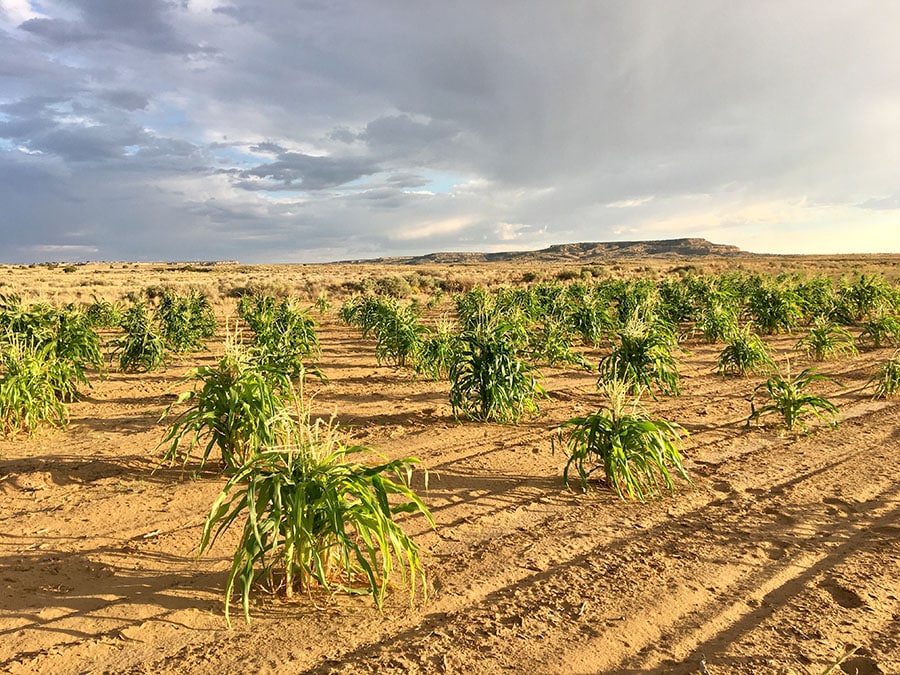
I spoke about Hopi farming practices, traditional dry-farming, and while showing a picture of a Hopi corn field, asked the students what looked different about the picture, to which a student pointed out the additional space between each stalk. I informed the students that because Hopi do not have water to irrigate the fields, the corn is spaced out when planted so the stalks do not compete for water; rather, they all have equal opportunity and resources to grow.
My brown bag presentation gave an overview of the Indigenous Knowledges Digital Learning Library (IKDLL) project that I and a team of specialized Cline Library staff are developing at NAU. The IKDLL is an Indigenous open educational resources (IOER) repository that provides open access to Indigenous knowledge and ways of learning through articles, poetry, recorded presentations, textbooks and more. A beta version of the IKDLL is available at ikdll.nau.edu, with plans for a robust, permanent version to roll out in fall 2025. This presentation provided information on the Seven Generations Signature Initiative grant, our work creating the IKDLL and navigating content curation, and most importantly, informed the audience about IOER, the foundational “6 Rs of Indigenous OER” and our responsibility and intentionality when developing a repository that centers and shares Indigenous knowledge. The feedback was positive and enthusiastic to see the creation of an online space dedicated to providing respectful and culturally appropriate access to Indigenous knowledges.
The week was full of profound discussions concerning archaeological ethics, Indigenous perspectives on the discipline, and difficult conversations about the trauma and harm academia has inflicted on Indigenous communities. We talked extensively about the need to decolonize and indigenize the archaeological discipline and focus on collaborative work centering Indigenous voices. I emphasized the strong ties Indigenous people like me have to our ancestors and their footprints on the landscape.
 As Hopi people, we have close and unbreakable ties to our ancestors and we tell their stories and visit their footprints, always with respect and reverence. In the Mesa Verde museum collections, I shared how the artifacts we were seeing, which are hundreds and even thousands of years old, show the continuity of traditions and technologies from past to present day in our communities at Hopi. Belongings such as piiki stones, manos and metates and pottery on the shelves that I could take home to my village and use today. It was a week of knowledge-sharing between the students and me, teaching and learning from one another. This was my third year serving as an Indigenous scholar, and I always value the time I spend with these young people and the things they can teach me. I hope this is a program that lives into the future, and that I am fortunate to be a part of it going forward.
In Hopi way of life, we always give thanks for all things. Thank you. Askwalí.