


Rhetoric is one of the oldest academic subjects, so when you hear the word, you might picture a bunch of men in togas gathered in an ancient amphitheater.
That dusty, fusty mental image? Shake it off. When it comes to teaching rhetoric, pop royalty works just as well as Plato.
“Taylor Swift is so famous, so prolific, so omnipresent,” said Kim Hensley Owens, a professor of English at NAU. “She’s written a song about every single life situation. People have written master’s theses about her music and her fame. Even people who don’t know her songs have an opinion about her.”

That’s why she’s the perfect focal point for a rhetoric class with broad appeal, Hensley Owens said. Two years ago, the professor created her Swift-centered class and watched the registrations roll in. Students from every corner of NAU packed her classroom. Most were die-hard Swifties, but some were just Swift-curious.
Now in its second year, the popular ENG 399: Taylor Swift and the Rhetoric of (Almost) Everything uses pop to help students use language to make sense of—and even shape—the world around them. Through close analysis of Swift’s music, classroom debates and interactive group projects connecting her persona, publicity and productions, Hensley Owens’ students learn how to craft a bulletproof argument all too well using emotion, logic and sources.
The professor said her course is valuable for just about any student. After all, persuasive communication never goes out of style.
“This class gives students the confidence to express their ideas and to form well-supported critical arguments,” Hensley Owens said. “It helps them gain awareness of how news articles can manipulate our thoughts and feelings. It teaches them how to analyze text. Taylor Swift is a great avenue for teaching these things because everyone knows who she is.”
A semester-long ‘Eras Tour’
Before teaching ENG 399, Hensley Owens had always liked Swift’s music but wouldn’t have labeled herself a Swiftie.
Then came Spring 2025 and a class full of supercharged Swift fans. Through them, the professor found out all about Swift’s “Easter eggs”—cleverly coded hints she leaves in lyric booklets, carefully chosen outfits and Instagram captions to hint to fans that a new release is on the way. And she was introduced to some deep cuts in Swift’s catalog that contained thoughtful lyrics about loss, regret and imposter syndrome.
“The more I learned from them, the more I thought, ‘This Swiftie world is super cool,’” Hensley Owens said.
Her syllabus has since evolved into a rainbow-colored, lyric-filled journey through Swift’s lyrics, visuals, music, feminism and fans. Over the course of six “eras,” or units, her students learn the basics of rhetoric while also getting to know Swift a little better.
Kim’s Swift picks
Favorite album: Tie between “The Life of a Showgirl” and “Midnights”
Favorite song: “Mean”
Favorite Track 5: “Eldest Daughter”
Favorite bridges: “Cardigan” and “Father Figure”
On top of keeping reading and listening journals outside of class, students also analyze the singer’s lyrics, music videos and press interviews in the classroom, sometimes with costume designers and lighting experts from the Department of Theatre. They engage in debates about which lyrics pack the most emotional punch (is it “I’ll watch your life in pictures like I used to watch you sleep” or “The deflation of our dreaming leaving me bereft and reeling”?), which of her public comments worked (“There’s always some standard of beauty that you’re not meeting”) and which rang hollow (“I would very much like to be excluded from this narrative”).
These classroom debates have turned junior Henry Petterson from a sideliner (it wasn’t love; it wasn’t hate; it was just indifference) to a Swift appreciator. His favorite was The Claim Game, where groups of students researched certain claims about Swift—that she’s an unethical billionaire, or that she only gets political when it’s convenient for her career—and used trusted sources to develop arguments for and against those claims.
“Before this class, I thought about her music primarily as something for younger people, or for girls, as I didn’t have much understanding of her work,” the English major said. But as he learned more about the rhetorical devices Swift uses in her lyrics to combat critics’ claims, he gained an appreciation for her music’s connection “to larger movements, including feminism and the feminine experience in the music industry.”
‘Taylor Swift is my entire life right now’
Hensley Owens said she created Taylor Swift and the Rhetoric of (Almost) Everything in response to her department’s requests for English classes that would meet students where they are.
With a teen daughter at home, Hensley Owens knew exactly where they were: in their rooms, blasting Swift’s music to help them process heartbreak, bullying and bad blood with friends.
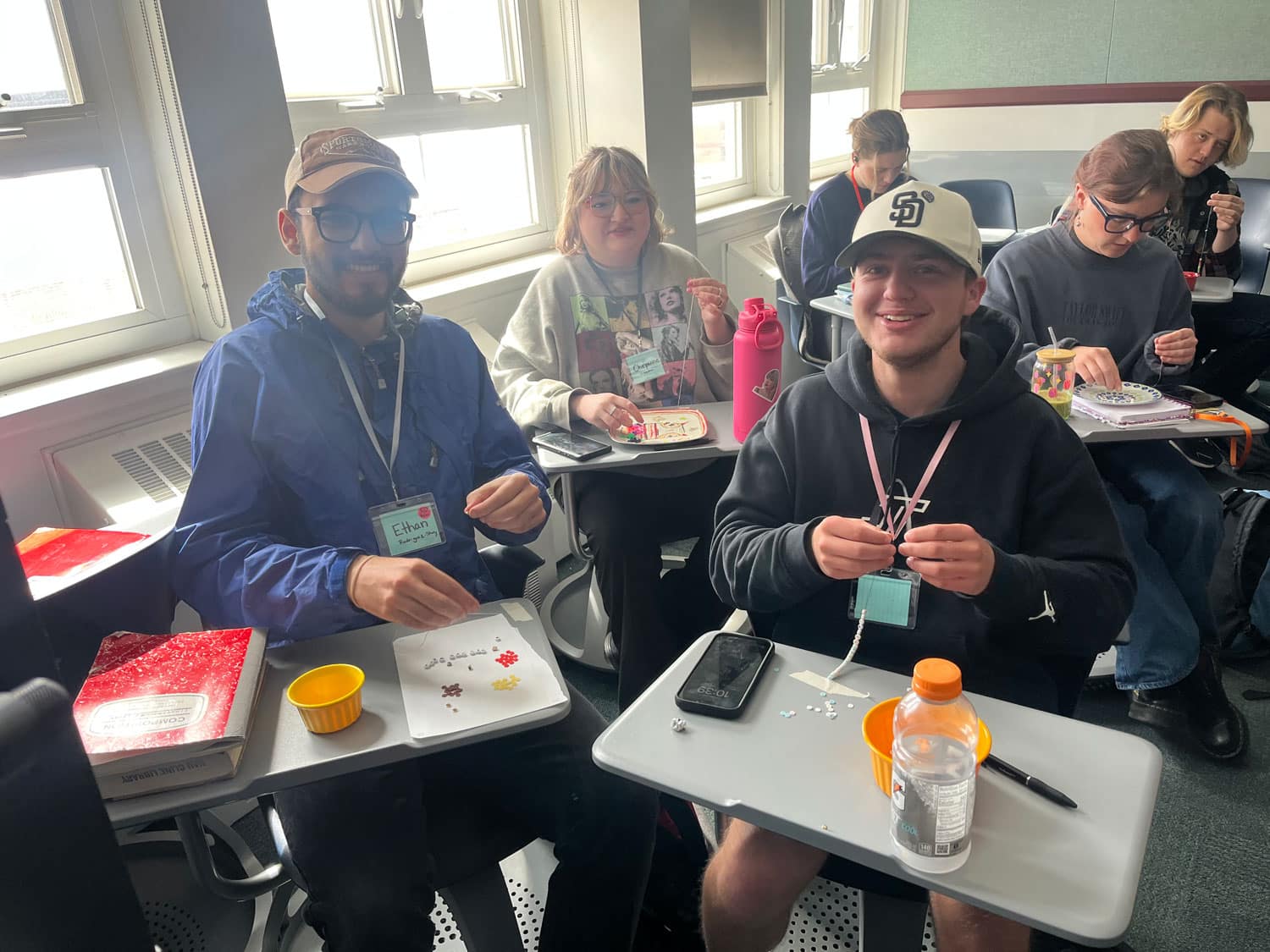
That was certainly true for Lisa Smith, a literature major in the class this semester.
“She has always been a part of my life,” Smith said. “I grew up listening to her music casually, mostly ‘Fearless’ or ‘1989’ and ‘reputation.’ It wasn’t until she released ‘folklore’ and ‘evermore’ that I started to pay attention to her lyricism. I am definitely a fan.”
But even the biggest Swift superfans can learn something in this classroom. In Smith’s case, she’s gained more confidence analyzing lyrics as poetry, decoding the meaning behind writing devices like repetition, allusion and simile and thinking about how a song about a specific topic can connect to broader social movements.
“I can look at the deep lyricism in her music and think about what is influencing her writing, like societal standards and misogyny,” Smith said. “This is a skill I can carry into my literature classes where I have to analyze the language of other writing. It will be useful for my career aspirations because I love language, and I want to find a career where I can continue analyzing it.”
With thoughtful students like these, the spring semester slips away like a moment in time, Hensley Owens said. She’s heartened to hear about the impact she’s made on them: One student said he used to make fun of his sister for liking Swift, but taking this class helped him reckon with his internalized misogyny and apologize. Another said she’d never gathered the courage to talk in class until this semester, but thanks to ENG 399, she’s become more confident and speaks up in her classes all the time.
“A lot of them will tell me, ‘I’ve never thought about Taylor Swift, I’ve only felt about Taylor Swift, but this class made me think more critically and I liked that,’” she said.
Hensley Owens can relate. A woman she once considered a teenybopper with some fun hits is now her temple, her mural and her sky. On top of this course, she’s the faculty advisor for the NAU Taylor Swift Society, founded by a Lumberjack in search of like-minded friends after the COVID-19 pandemic. This summer, she’ll lead a graduate seminar called Teaching with Taylor Swift. In her free time, she listens to podcasts like “The Swiftie and the Scholar.” Plus, she’s co-editing a collection of essays about using the pop star as an education tool. The volume captures insights from 20 academics who have used Swift to teach everything from rhetoric to religion across multiple continents.
“Taylor Swift is my entire life right now,” she said, laughing. “I never thought I’d say that.”

Jill Kimball | NAU Communications
(928) 523-2282 | jill.kimball@nau.edu