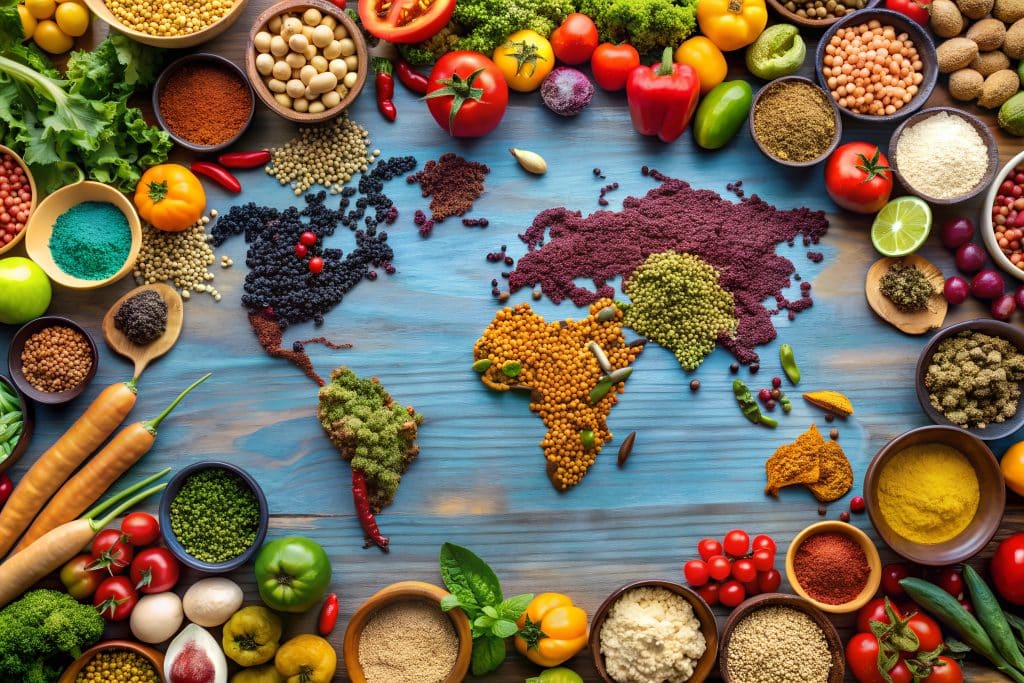


Food is more than just sustenance; it is a reflection of who we are, where we come from and how we connect to one another. As the saying goes, we are what we eat—and what we eat reveals our shared histories, beliefs and identities. Throughout history, the ways people have grown, prepared, stored and shared food have been deeply intertwined with their cultures, social structures and historical changes.
A class at Northern Arizona University explores the rich relationship between culture and food across time and geography, examining how factors such as history, politics, war and religion have shaped culinary traditions and eating habits.
HA276-Cuisine and Culture is taught by Kathleen King, assistant teaching professor at the School of Hotel and Restaurant Management (HRM). She said the class started as an HRM elective, but it is now moving to a general studies class.
“The class is for anyone who likes history or food or is interested in different cultures—not only the interpersonal relationships of cultures, but what food means to them,” King said. “We start with prehistoric people and go all the way up to modern times. We talk about how people got their food, how they hunted and when they started growing things, or if they were nomadic or sedentary.”
The class explores how ancient peoples cooked and stored their food. It goes over dining practices from Mesopotamia (5000 BCE) to modern times, studying what dining looked like in different cultures and time periods.
Students take quizzes throughout the semester and end the class with a group project chosen from among 10 topics.
“One example of a topic would be to talk about how in medieval times, during the feudal era in Europe, the place someone sat at a table was based on their social status and how even the color of the bread you got was based on that status.”
Other examples include choosing two Food Network stars and talking about their journeys and backgrounds, the theory of the Four Humors or a grandma-made tradition—a topic to which many can relate.
“A lot of people don’t realize that they have that thing in their family that’s food-related, which is part of who they are and who their family is,” King said. “It could be something cooked all year long or during a particular time of the year. At the end of the course students come to realize that food is powerful, more than just to fuel their bodies. It moves cultures around. They learn to relate it to interpersonal relationships, even within their own families.”
Culture and Cuisine is offered during the spring semester. For more information on this and other unique classes, visit the NAU course catalog.
 Mariana Laas | NAU Communications
(928) 523-5050 | mariana.laas@nau.edu