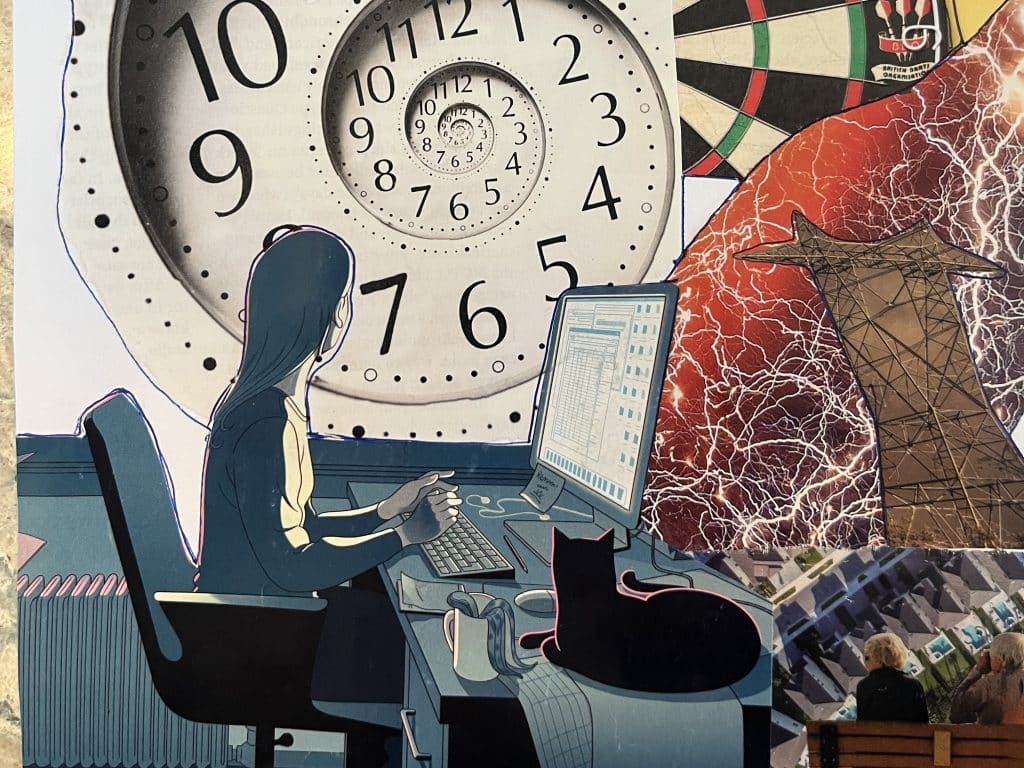


When we hear the word “lab,” we probably think of test tubes and fluorescent lights. But at one NAU lab, research is done through art and storytelling.
The Social Science Community Engagement Story Lab (SSCL) was established as a collaborative research hub. Led by anthropology professor and founding director Lisa Jane Hardy, it focuses on public scholarship and collaborative writing, working with individuals and groups to help them document and communicate their experiences through creative and research-based methods, while supporting communities and improving public health.
“We do a lot of work with storytelling to help people communicate what they know and what they do,” Hardy said. “If someone has data from their social science research or related personal experience they want to write in some form, we can help them learn how to do that.”
Which is exactly what the lab recently did for Stuck Community Acupuncture, a program in northern Arizona that uses a justice model in tribal lands. Thanks to a grant from Arizona Community Foundation, Hardy collaborated with the program’s executive director, Nox Chetcuti, to write their story in the article “Health Justice Two Ways: Examples from the Field.”
“We have published quite a few stories over the past few years,” Hardy said. “We have a project called Rapid Inquiry During Global Events (RIDGE), and we’re continuing the work on that. We have worked with Flagstaff youth to hear how people deal with global events very broadly and have implemented art-based research on that project.”
When anthropologists do community engagement research and practice, their goal is to figure out how to improve the system. Hardy feels the best way to do that is to build connections.
“When we finish manuscripts about how we care for people and for ourselves while we’re doing research and practice, one of the things we do is view our science as a means toward finding patterns that we can use to make change and to build connections through creativity,” Hardy said. “With a justice model of research and collaboration, people are always in control of what they want to share or not and in control of their data. We listen in a way that is very organic, and we are open to learning the answer to questions that we didn’t necessarily ask in the first place.”
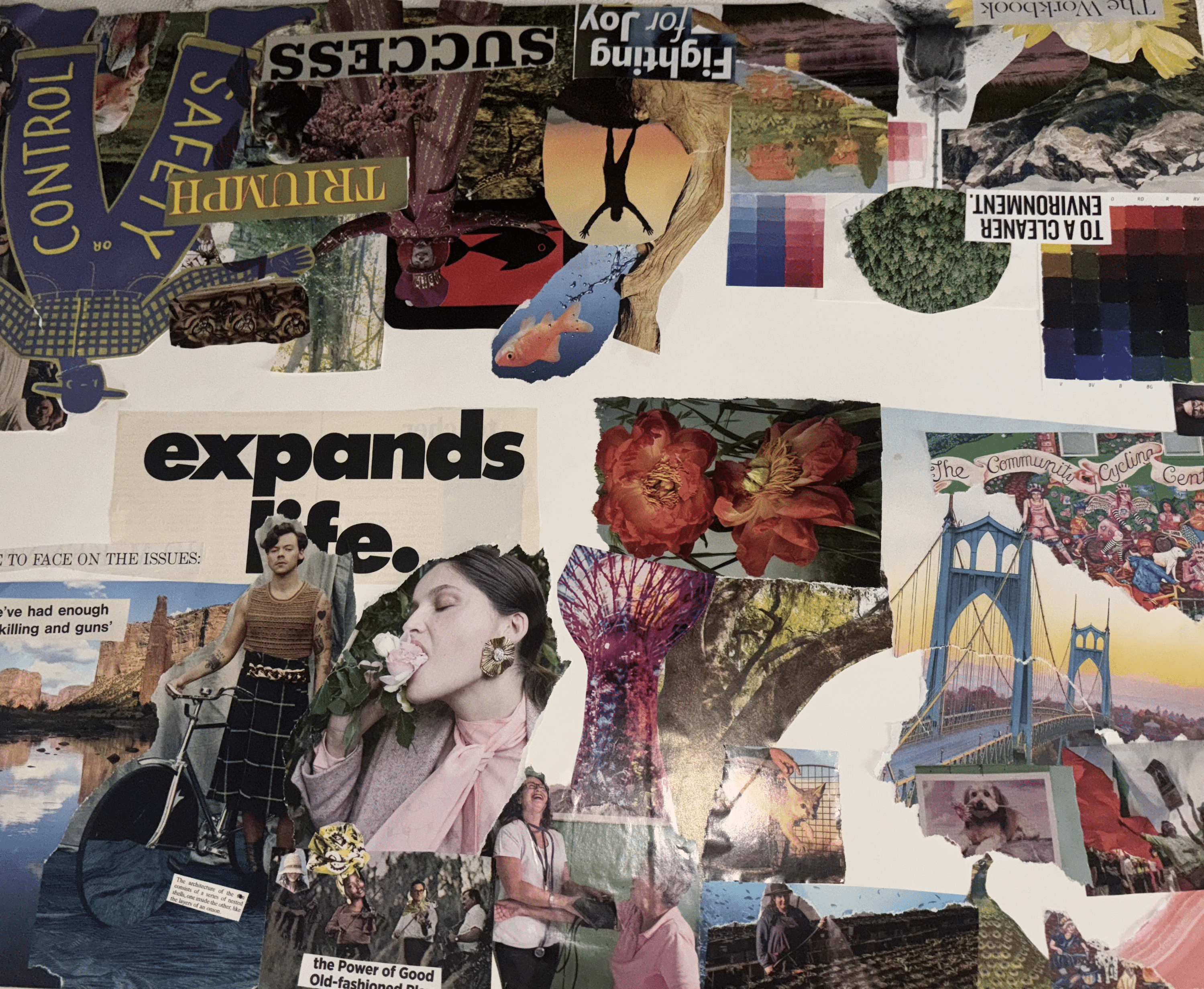
The Story Lab also does public scholarship, supporting faculty and students in the development of academic writing, research projects and publications, serving as both a creative and scholarly environment where research and artistic expression are treated as connected practices rather than separate fields.
Recently, the lab conducted focus groups in the MakerLab at Cline Library to talk to people about their perceptions of the world and what is happening around them. Participants created collages and used transcriptions from interviews and discarded library books to create art. Hardy said these guided discussions will become part of the data they will analyze to look at trends and patterns that will later become articles and possible recommendations for policy and wellness.
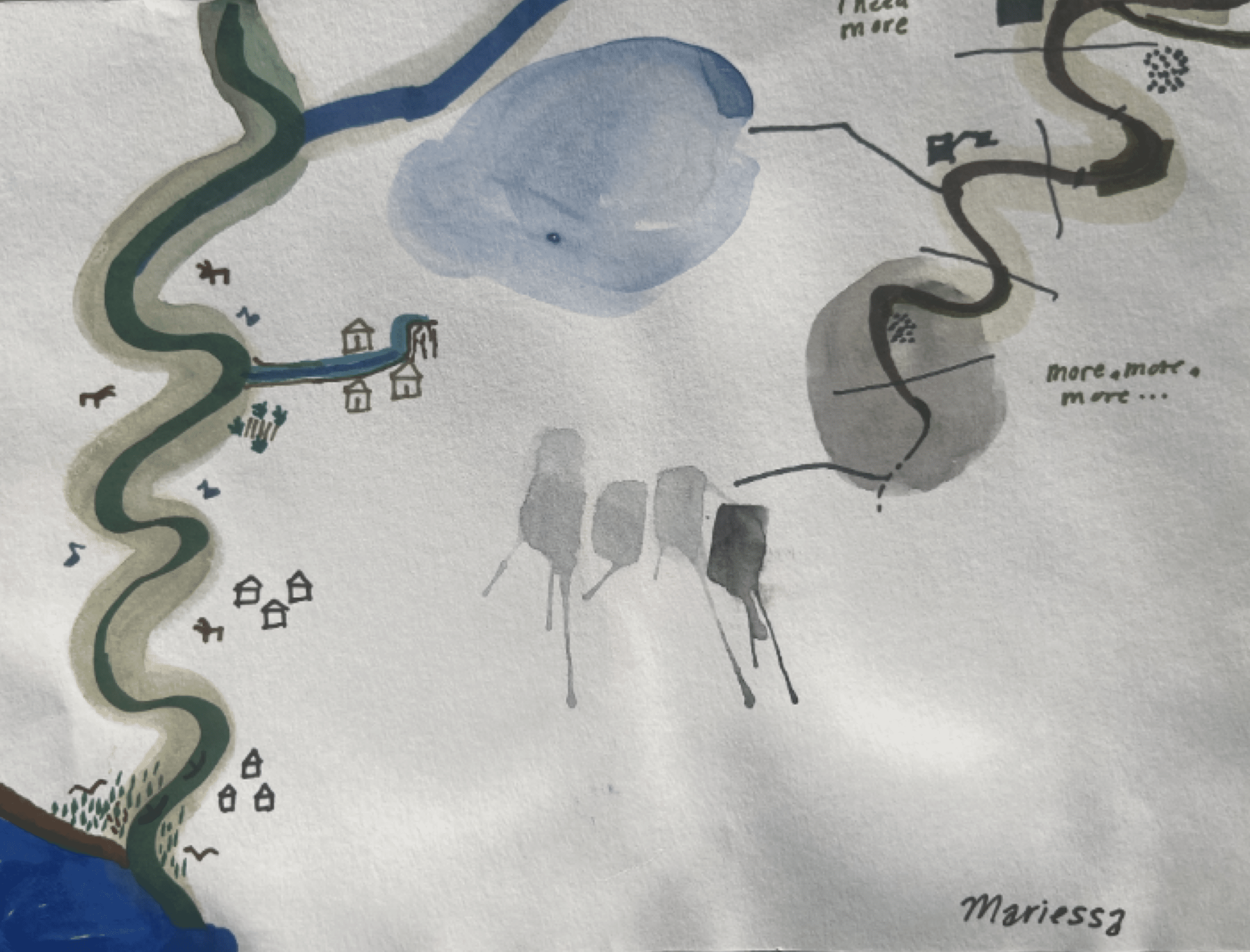
“What I am finding right now is that the Story Lab is a place where we can face imminent local and global challenges and do it with connection and community and creativity,” Hardy said. “Arts-based research is a good way to find hope and imagination, not because it fixes the problems of the world, but because it allows people to connect, talk and learn from each other. A lot of people are not feeling very hopeful, so if we have places where we can build relationships with each other and do creative things together while conducting research, that feels powerful to me.”
Read some of the public-facing articles the Story Lab has published by visiting their website.
 Mariana Laas | NAU Communications
(928) 523-5050 | mariana.laas@nau.edu