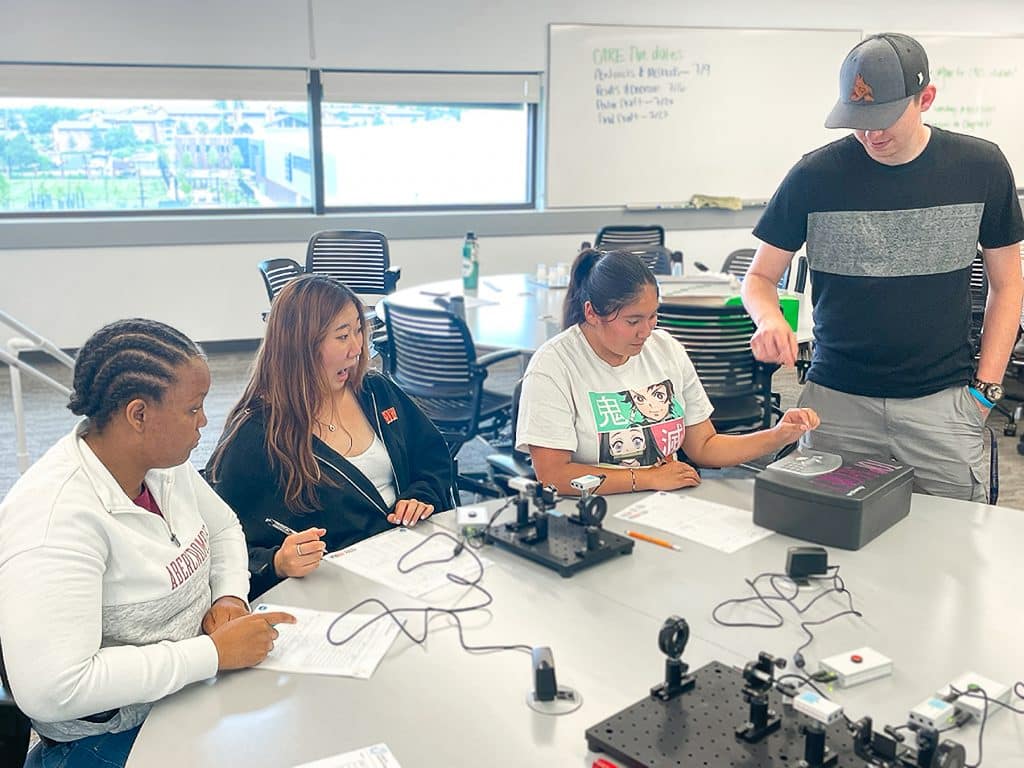


Imagine a problem with 96 billion potential solutions.
To try them all would take a human, well, longer than forever. It would take a regular computer algorithm, checking 1 million possibilities a second, 24 hours.
It would take a quantum computer less than one second.
That’s how Inès Montaño introduces the concept of quantum computing to young students and their parents when she travels the country with SparCQS (pronounced “sparks,” short for Sparking Curiosity in Quantum Science). She uses a fun game called The Cat Challenge, where the participants try to match up cats on a 3×3 grid. It’s an illuminating way to demonstrate the potential of quantum computers, which are computers that exploit the principles of quantum science to solve complex problems such as modeling climate change or finding a cure for cancer.
“These days we hear a lot about new technologies like quantum computers, which require us to not only understand the physical laws at the subatomic level but actually control subatomic particles,” Montaño said. “We are talking about new technologies that sound like science fiction and were completely unthinkable just a few years ago. They are very quickly becoming a reality, and with that we have workforce demands that we as a country are really not prepared to meet.”
In addition to her research on quantum science, Montaño, a professor in the Department of Applied Physics and Materials Science, is actively involved in laying the foundation of the quantum-trained workforce needed to support these new technologies. In 2022, she started SparCQS as an effort to support the workforce development programming of the Center for Quantum Networks, an NSF-funded engineering research center. Fast forward to 2025, when SparCQS has grown to be an integral component of multiple NSF awards (Center for Quantum Networks, Expand QISE, ¡MIRA!-PREM) and most recently Elevate Quantum. Elevate Quantum, a $127 million funded designated TechHub consortium sponsored by the U.S. Department of Commerce Economic Development Administration and backed by more than 140 organizations including Microsoft, Google, AWS and others, aims to secure U.S. leadership in quantum technologies, which includes the ramp-up of the needed workforce.
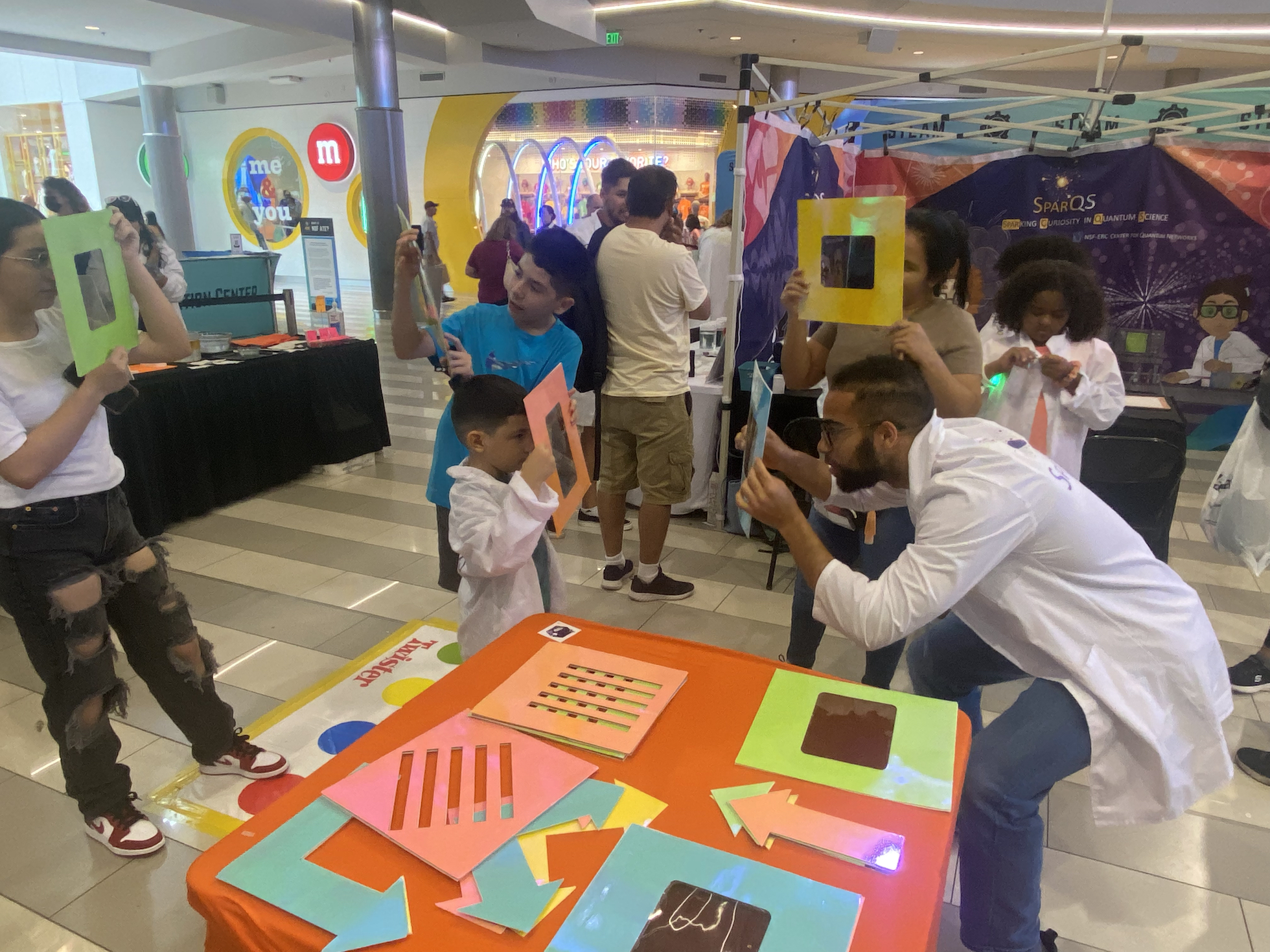 The goal of SparCQS is to educate the future workforce, starting really young, about quantum—what it is, what it means and what they need to know to work in the field in the future. Quantum is already becoming a critical knowledge base for STEM jobs from entry level to advanced positions, and there are nowhere close to enough people with the quantum skillsets to do those jobs. As such, the need and avenues for the quantum workforce are not limited to becoming a quantum physicist but extend across science, technology, medicine, manufacturing, economics and education.
“All the quantum fields have the same problem: They’re facing a future where they have a lot of jobs that they can’t fill because people don’t have the skills,” Montaño said. “People are needed at every level, from technician to Ph.D.”
But what is quantum?
At its most basic, it’s how particles behave on the subatomic level.
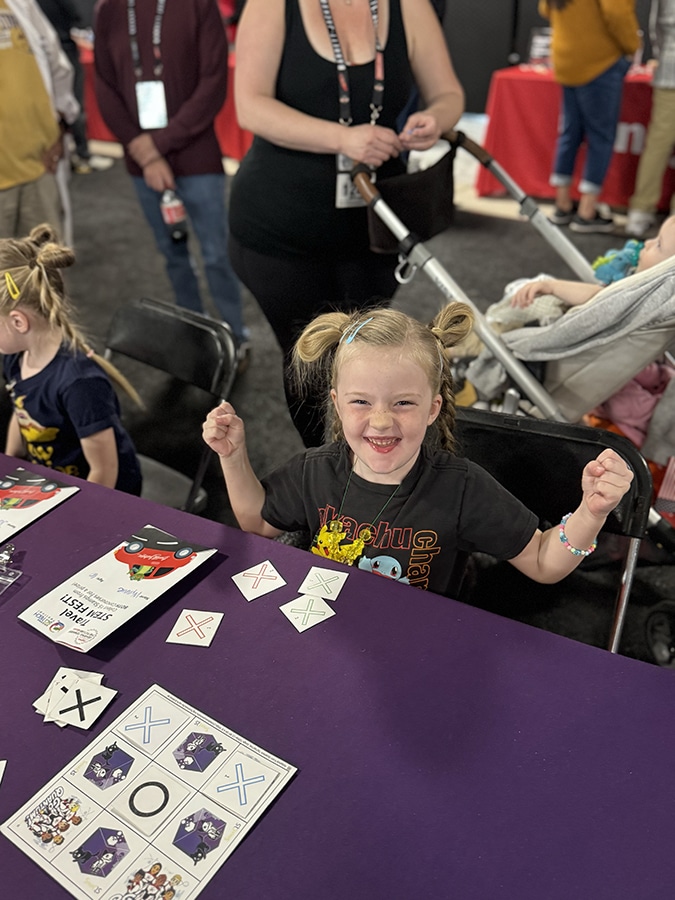
“They’re all so small that they live in a world that’s completely different than the world that we experience,” Montaño said. “It doesn’t sound real when you first explain it, so the earlier we can introduce kids to quantum, the easier it is for them to accept it, and the more excited they are to go into these fields.”
That’s why SparCQSis targeting students at Arizona elementary schools, Girl Scouts on the Navajo Nation, families at the Mall of America in Minneapolis and anywhere else they’re invited throughout the country. Trying to explain quantum to an adult is like trying to learn a new language as an adult—doable, but usually really hard because it seemingly doesn’t follow the rules. But to a child who hasn’t yet grasped those rules? It’s a much easier lift.
“We’re just limiting the students ourselves by not believing that this is intuitive if you start at an early age,” program manager Celedonio Rodriguez said. “When is the right age to teach math? When we think or when they can actually understand it? Kids are able to analyze and conceptualize what is happening. They can see it; it’s right there.”
Where can I find quantum?
The device you’re reading this on? Quantum science contributed to its development. Computer, lasers, MRI machines, medical technology and more—so much of what makes the world function is based on our understanding of quantum science. But with technological progress, we are now starting to be able to control at the quantum level. The result: a range of new technologies that are set to revolutionize our world. Quantum computers have applications in pharmaceuticals, energy, finance and other fields. Quantum cryptography is the only method of encryption that is not hackable. The quantum Internet, one of Montaño’s areas of study, will allow quantum devices to send completely secure messages. Quantum sensing measures the tiniest changes with unprecedented precision.
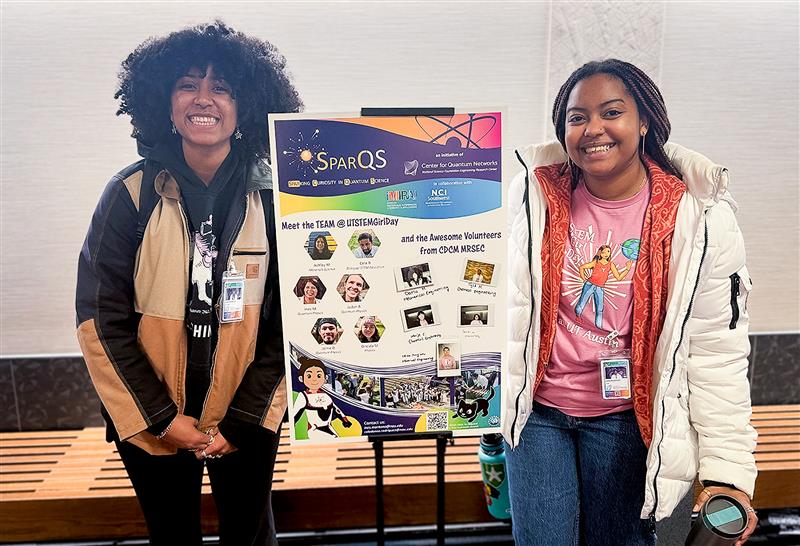 It’s the Second Quantum Revolution, Montaño said, driven almost entirely by getting enough people with the right knowledge and skills into the industry. STEM fields already struggle to meet workforce demands, and training on quantum is even further behind. One reason SparCQS goes to so many events isn’t just to introduce K-16 students to quantum; it’s to introduce it to their parents too. If a student comes home and says she wants to be a quantum physicist, her parents may have no idea what that is, how to get there and if there’s a future in it.
“We’re providing opportunities students need, and we are doing it at all levels, really K-16, and whenever we can, we include their families, too,” Montaño said. “This is one of the most up-and-coming industries with the longest projections. We have data on how much income and revenue are projected in the coming years. Students need to be prepared for those opportunities, and this is one of those ways.”
Gabriel Montaño, professor in the Department of Applied Physics and Materials Science and director of ¡MIRA!, is a co-principal investigator on the grant.
How do I get involved?
Students: interested in a fun gig teaching science, impacting communities and boosting your career? SparCQS is looking for volunteers, student workers and science engagement interns to be part of the team. You don’t have to be a physics major or know anything about quantum science! SparCQS is looking for motivated NAU students who want to learn, educate and engage K-16 students and their communities. To get more information and apply, fill out the online form.
You can also support SparCQS’s work through donations.
Since July 2022, SparQCS has:
- Driven more than 31,000 miles in three years…
- Including more than 10,000 miles to reach rural and Indigenous communities in Arizona, New Mexico and Colorado.
- Distributed more than 7,000 “I can be a scientist” badges at events.
- Reached more than:
- 5,000 K-8 students
- 6,000 high school students
- 400 K-16 educators
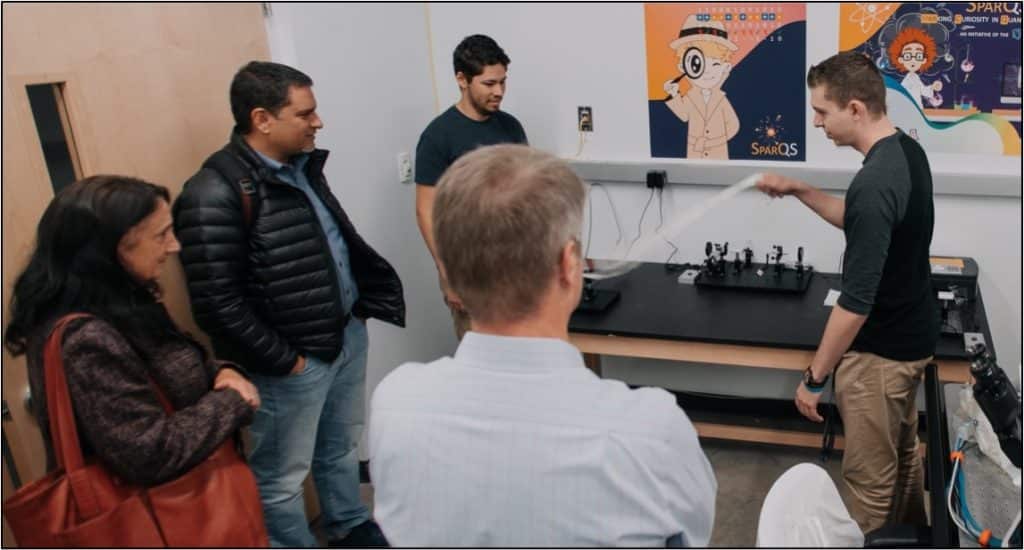
 Given the same quantum demo to President Cruz Rivera, Provost Karen Pugliesi and Vice President for Research Jason Wilder AND a classroom of first-graders. (Everyone was excited.)
 Given the same quantum demo to