

What started as a project to compost human stools has turned into an experiment that could open the possibilities for colonizing another planet.
Jeff Meilander, research scientist and program manager in Greg Caporaso’s lab at the Pathogen and Microbiome Institute (PMI) at NAU, has been working with composting to improve crop growth for five years. His Ph.D. work focused on composting human waste to improve global sanitation and reduce water contamination, while also examining sustainable ways to reuse the nutrients in human feces to improve soil health and crop yields.
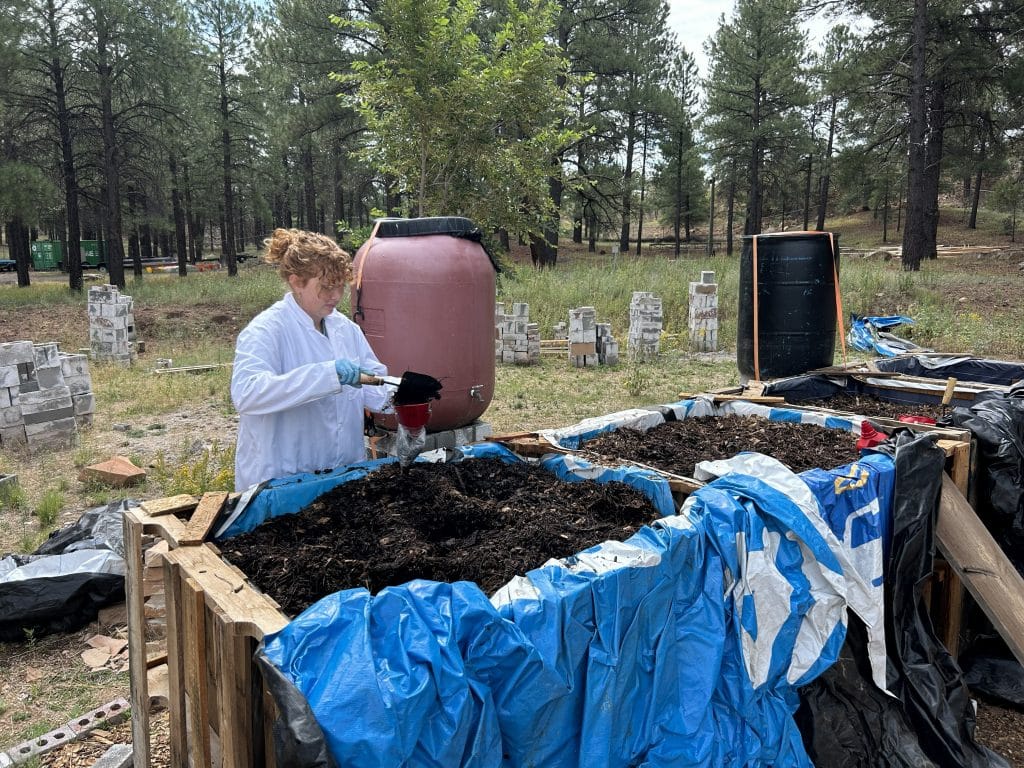
His most recent experiment, in collaboration with Elizabeth Gehret, who also works in Caporaso’s lab, started with the collection of human waste from Colorado River trips. The material collected was placed in large bins, mixed with Ponderosa pine wood chips, composted above 55 degrees Celsius for three weeks and left to cure for six months. The finished human excrement compost (HEC) will now be used in an experiment that could change space travel.
 “As this project evolved, we began collaborating with Nancy Johnson, a Regents’ Professor in the School of Earth and Sustainability, her lab research coordinator Sedona Spann as well as Haley Sapers, Michael Strane, Christopher Edwards and Laura Lee from the Department of Astronomy and Planetary Science, which expanded our focus to include the potential application of finished compost in space exploration contexts,” Meilander said. “For long-duration lunar or Mars missions, nothing can be wasted, including human waste itself. We need to create closed-loop, bioregenerative life support systems that compost human excrement and direct it back into food production.”
For this experiment, Meilander and his team are using regolith that simulates the soil found on the Moon and Mars’ surface. They are also using arbuscular mycorrhizal fungi (AMF) that form symbiotic relationships with plants by colonizing their roots, helping plants capture the nutrients they need to grow.
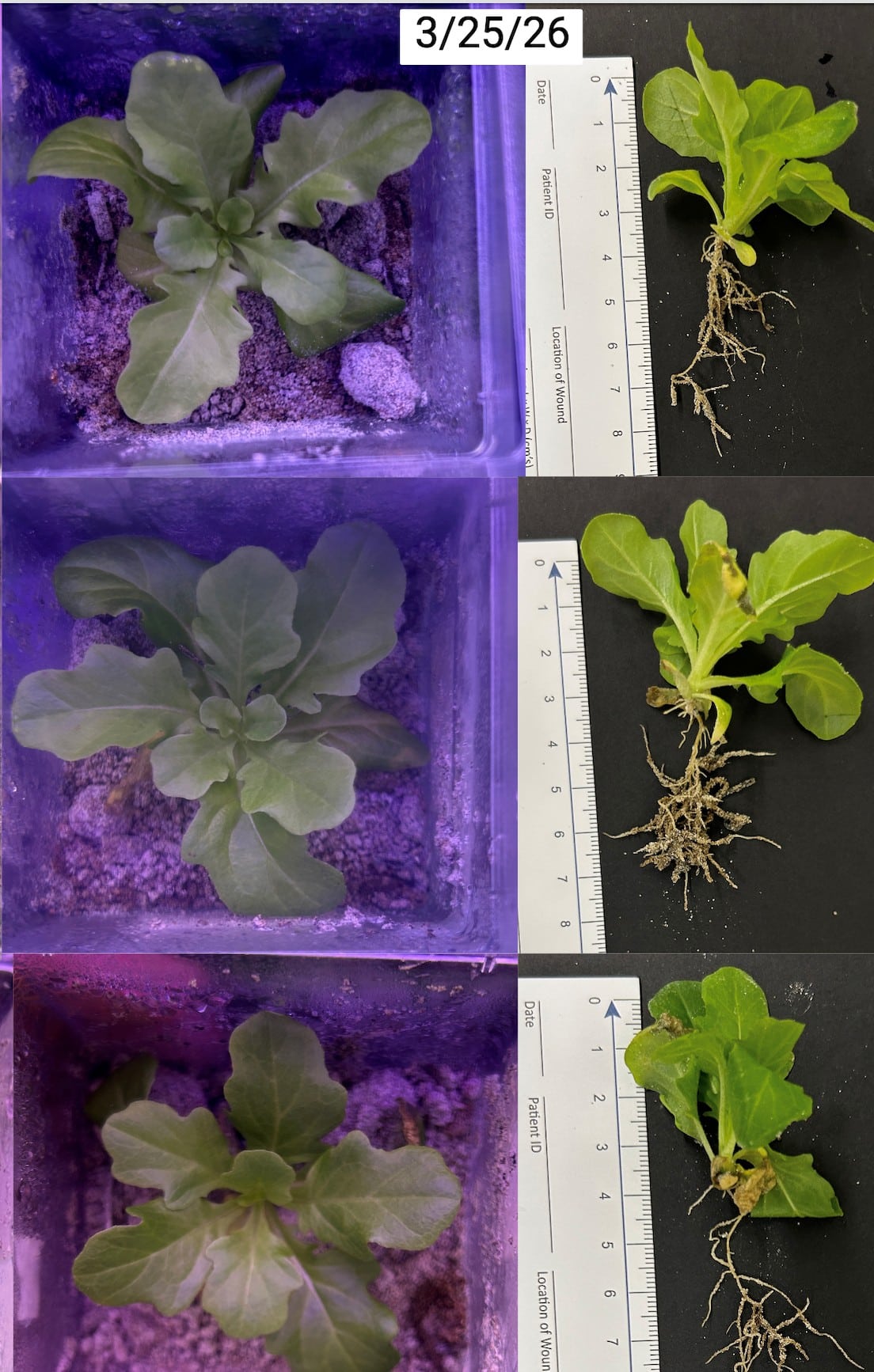
“We have multiple conditions where we have added different combinations of sterilized and microbially active HEC and AMF to the regolith,” Meilander said. “As a result, we have successfully grown red leaf lettuce and are pretty impressed with our preliminary results.”
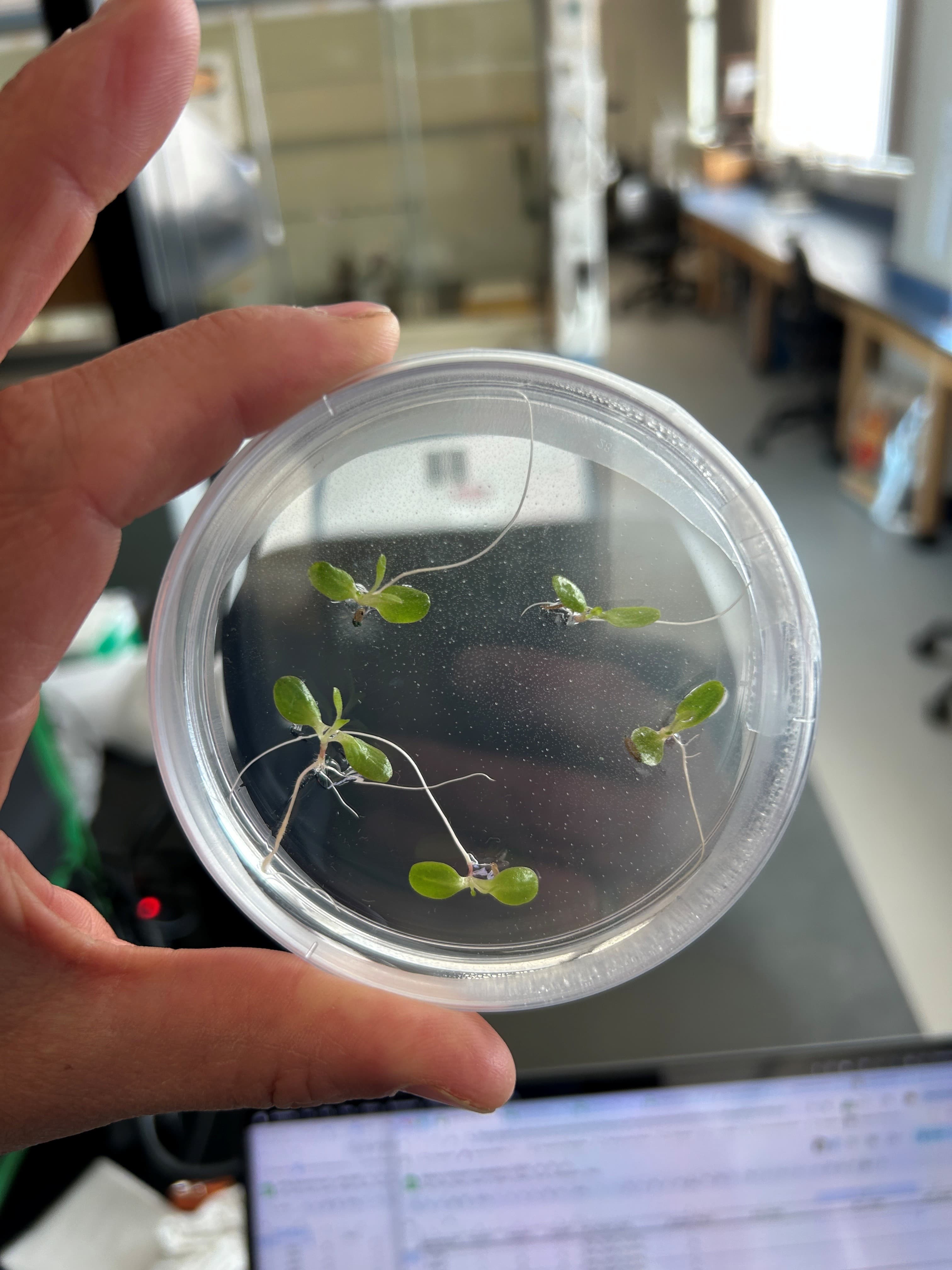
 Cianna Brooks, a Flinn Scholar and Interns-2-Scholars student majoring in biomedical science and business management, has been germinating seeds, making substrate mixtures and helping harvest plants for the experiment.
“I was brought right into the experimentation, and I am very excited to be part of this research,” Brooks said. “This is my first undergrad research, and I am super pumped to keep going with it. In the lab, one day I might be organizing things and another day I might have my coat and gloves on to work with soil samples.”
Phase one of the experiment has been successful in proving that plants can be grown using HEC. Phase two will be focused on the longitudinal changes and interactions of the microbial communities.
“Phase two will be a generational study,” Meilander said. “We will be doing essentially the same thing as phase one but on a larger and longer scale. Once we harvest the plants, we will collect samples of the rhizosphere and substrate and then replant in the same substrate for 10 generations. We will look at the microbial communities and see how they changed over time. Since we can’t take high-quality soil to space, this research can help us determine how to effectively and efficiently amend regolith, which microbial communities we’ll need to bring with us, and how to sustainably reuse waste products in ways that improve plant growth and reduce reliance on resupply missions.”
Phase two will begin in the fall, with data analysis to follow shortly thereafter. After that, the group will publish their findings, hoping to open possibilities that could change future space exploration, where human waste could be recycled into a sustainable food system.
 Mariana Laas | NAU Communications
(928) 523-5050 | mariana.laas@nau.edu