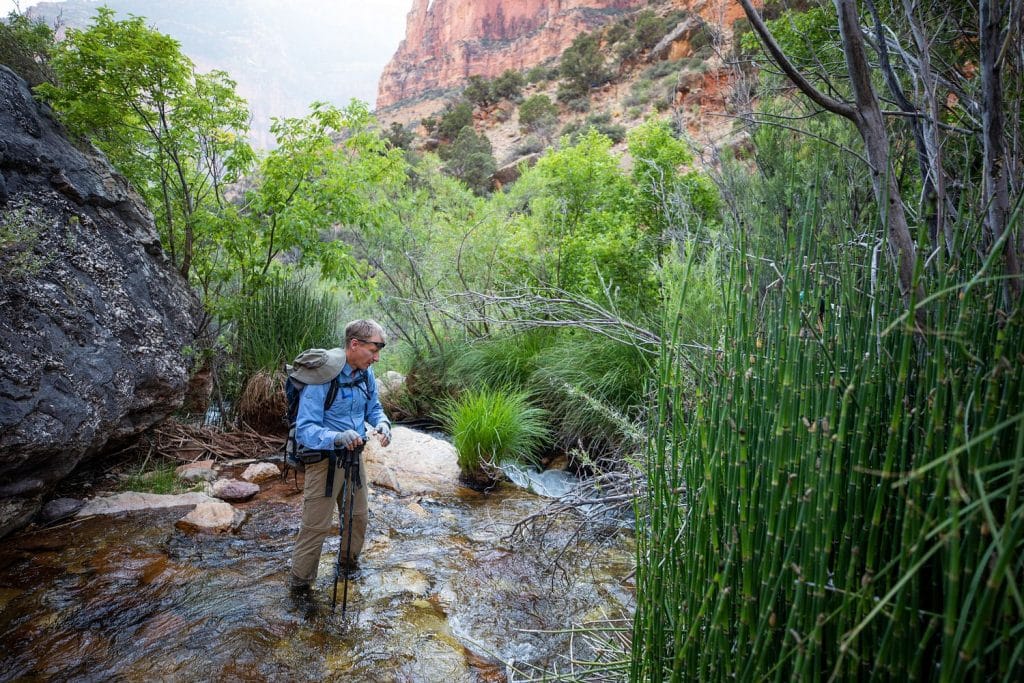


When lightning struck the North Rim of the Grand Canyon, setting the Dragon Bravo Fire in motion, talk revolved around the precious resources under threat: thousands of ponderosa pine trees, campsite and visitor infrastructure, the beloved Grand Canyon Lodge. But NAU professor Abe Springer’s mind was fixed on another precious resource: Roaring Springs, the sole source of water for Grand Canyon National Park.
“Roaring Springs provides water to more than 4 million visitors and more than 3,000 park and concessionaire employees and families,” said Springer, a professor in NAU’s School of Earth and Sustainability. “The springs support critical riparian corridors and ecosystems in Bright Angel Creek and its tributaries. These streams contain threatened and endangered species.”
In other words, Roaring Springs is really, really important—and as the Dragon Bravo Fire continues to move across the North Rim, it’s under threat.
That’s why, with rapid-response funding from the National Science Foundation, Springer and his colleagues will work with the science resource management team at the national park to understand exactly how the fire will affect its water supply and how the world-famous destination can minimize harm to workers and visitors.
Springer explained that when wildfire burns through the North Rim’s ponderosa forest, the charred soil that’s left behind is less absorbent than soil that hasn’t been disturbed by fire. Instead of sinking into the ground, a greater percentage of water from this summer’s monsoon rain and next spring’s snowmelt might tumble down into the area’s 6,000 sinkholes, faults and fractures, taking some of the burned, fire-retardant-treated soil with it. Eventually, that water will make its way to Roaring Springs, where Springer predicts the water will be much more turbid this year.
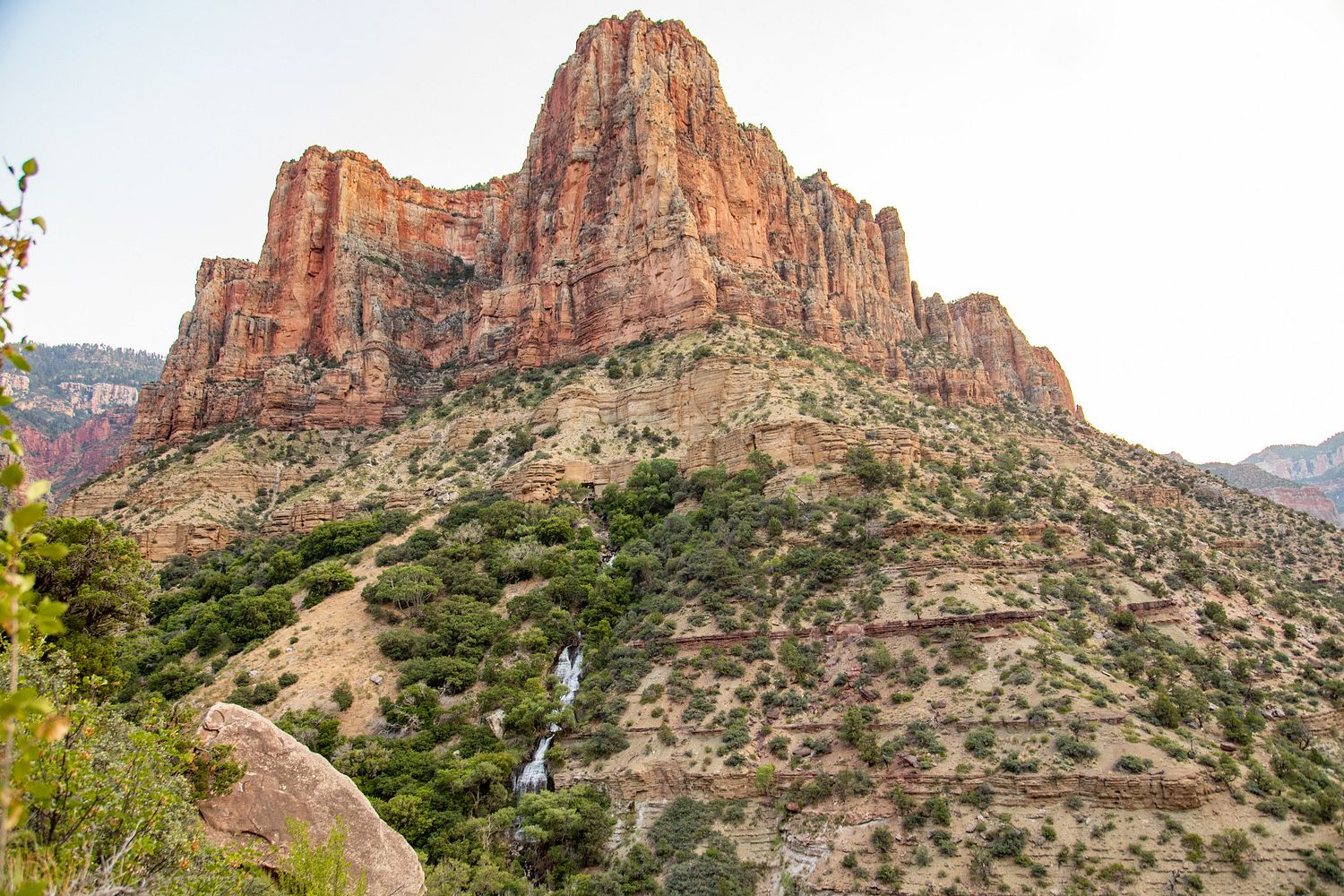
How can Springer and his colleagues address the problem early? By setting up gages and cameras at sentinel springs and sinkholes, where water passes through before traveling down the canyon to Roaring Springs.
“This sentinel spring can be used as an early detection system for water with increased turbidity that’s approaching Roaring Springs,” Springer said. “We will install a system of gages that are connected to satellite telemetry so that Grand Canyon National Park can receive alerts of increases in pressure and turbidity. If they know what’s happening at the sentinel spring, they can manage the turbid water before it hits Roaring Springs.”
To support water monitoring efforts, students at NAU will work with scientists, technicians and volunteers at the national park and the U.S. Geological Survey (USGS) to capture and analyze daily water samples during significant rainfall events and during snowmelt season. They’ll also install cameras at a handful of sinkholes along the Kaibab Formation, allowing them to glimpse turbid water early in the runoff process. They’ll also work with the park’s Burned Area Emergency Response team and the USGS to analyze samples of soil across the North Rim, potentially shielding certain areas from rain if the soil contains harmful contaminants.
Springer said the project won’t just keep people safe at the Grand Canyon—it’ll also help inform future research and response in other important natural areas that are affected by wildfire.
“Forested lands provide most of the drinking water for the western U.S., so it’s extremely important to understand what happens when wildfires come to those forests and firefighters respond with chemical retardants,” Springer said. “We’re demonstrating how to use technologies, partnerships and methods to manage our water and our lands in the 21st century.”
Jill Kimball | NAU Communications
(928) 523-2282 | jill.kimball@nau.edu