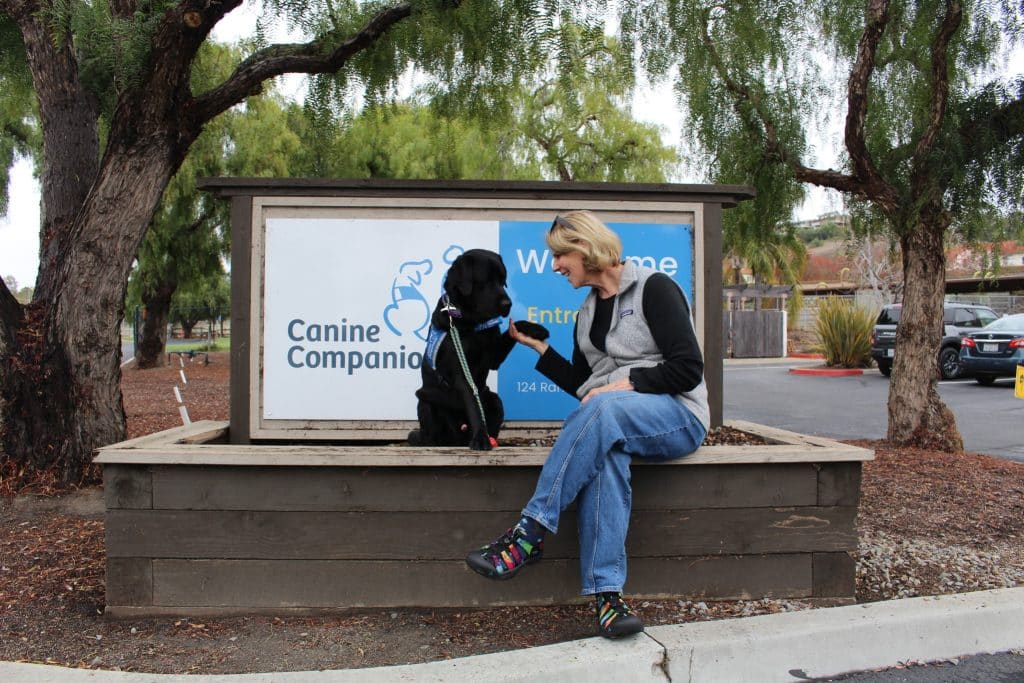


When it’s time for Karen Sealander to head to work, she makes sure to grab the essentials.
The Department of Educational Specialties professor packs her bag, picks a coat suitable for the morning’s chilly weather and pats her pockets to check that her wallet, phone and keys are safely on her person.
Her most important workplace necessity, however, cannot be stuffed into a backpack or hidden in a garment. Rather, it follows Sealander to her office every morning on a leash, tail wagging.
Since December 1999, Sealander has volunteered as a puppy raiser for Canine Companions. The national nonprofit breeds, trains and distributes service dogs to individuals with disabilities and veterans with PTSD free of charge.
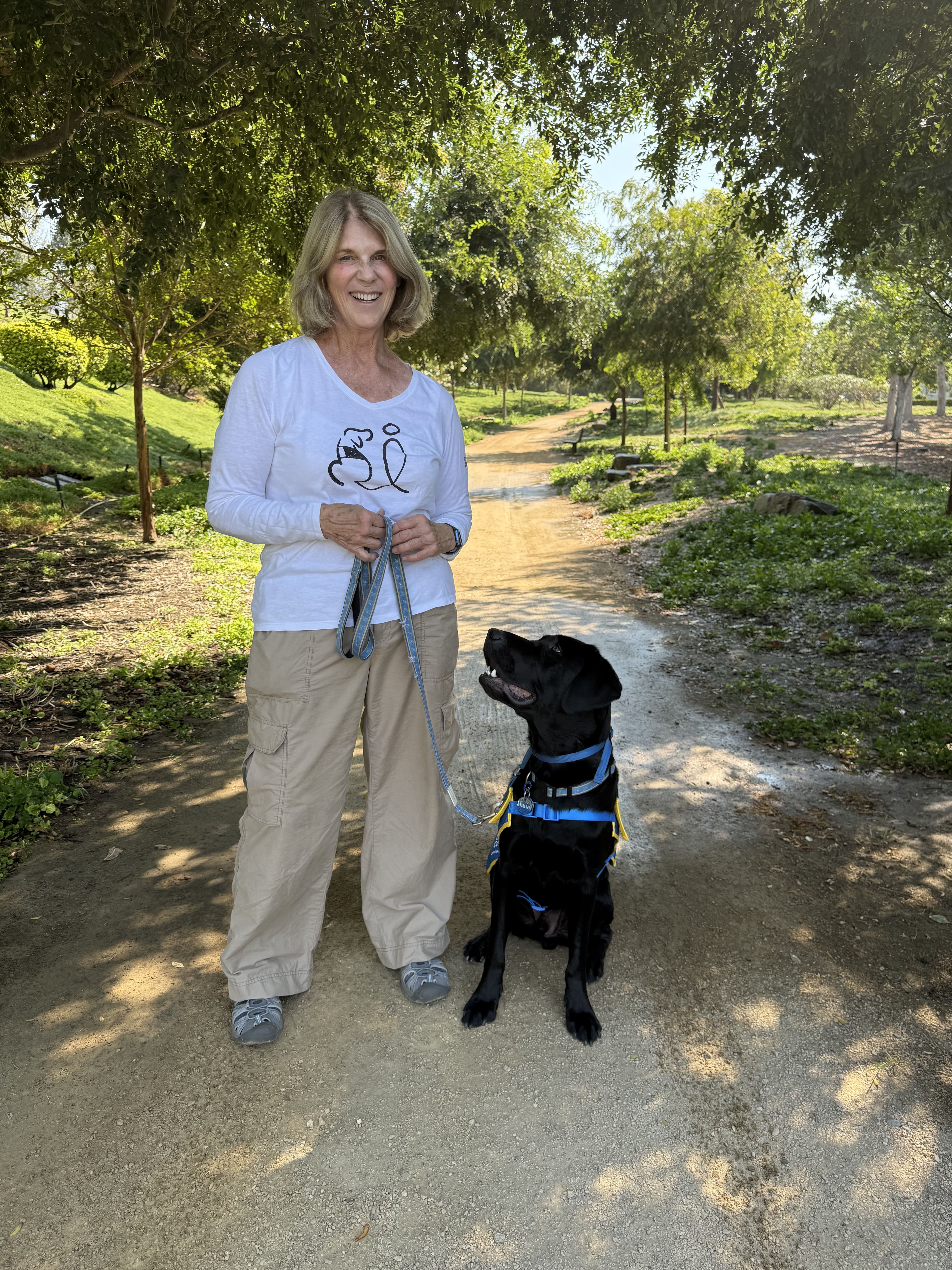 These golden and Labrador retrievers receive between five and nine months of intensive training to learn how to perform various practical tasks for their assigned person, like fetching dropped items or pulling a lightweight manual wheelchair.
Before they’re old enough to train, however, the young pups must learn to follow basic commands and become comfortable in a range of social environments. That’s where the volunteer puppy raisers come in.
“Being an educator, I think it’s in our DNA to look for ways to provide some kind of give-back,” Sealander said. “I looked at Canine Companions and thought, ‘I’m a special educator, and they work with people with disabilities. It’s a perfect match.’ Now, I’m in, hook, line and sinker. I feel lost without a leash and a dog.”
Sealander cares for a service pup in the making for about 16 months, starting when they’re 8 weeks old and ending when they’re ready to move to one of Canine Companions’ specialized training facilities. She has raised six dogs while working in the College of Education and will co-raise her seventh pup, Townsend, starting this December.
From helping them learn to sit, heel and stay to keeping them calm at the sight of a squirrel, Sealander plays an integral part in helping her four-legged friends get ready for the big leagues.
Most importantly, to introduce her dogs to as many public spaces as possible, Sealander gets to live out a universal dream: Every day is Take Your Dog to Work Day.
The top dogs on campus
Sealander’s pups are present at every class, faculty meeting and impromptu get-together she attends.
Inside the classroom, they snuggle up to students and help them destress when their workloads seem unbearable. Outside, they navigate around NAU’s food bots, learn to ride the bus and familiarize themselves with speeding scooters so nothing surprises them when they’re helping their person in public.
NAU is well-known among the puppy-raising community as a prime socialization spot. Every June, Sealander invites her fellow volunteers for a coordinated on-campus walk, so their dogs can see the sights, smell the smells and mingle with year-round Lumberjacks.
“Our job is to shepherd them through the next 16 months of life, exposing them to as many different situations as we can, which is why NAU is so great,” Sealander said. “From the get-go, the dogs are exposed to students and campus life so that when they get with their person, being out in public is a known entity.”
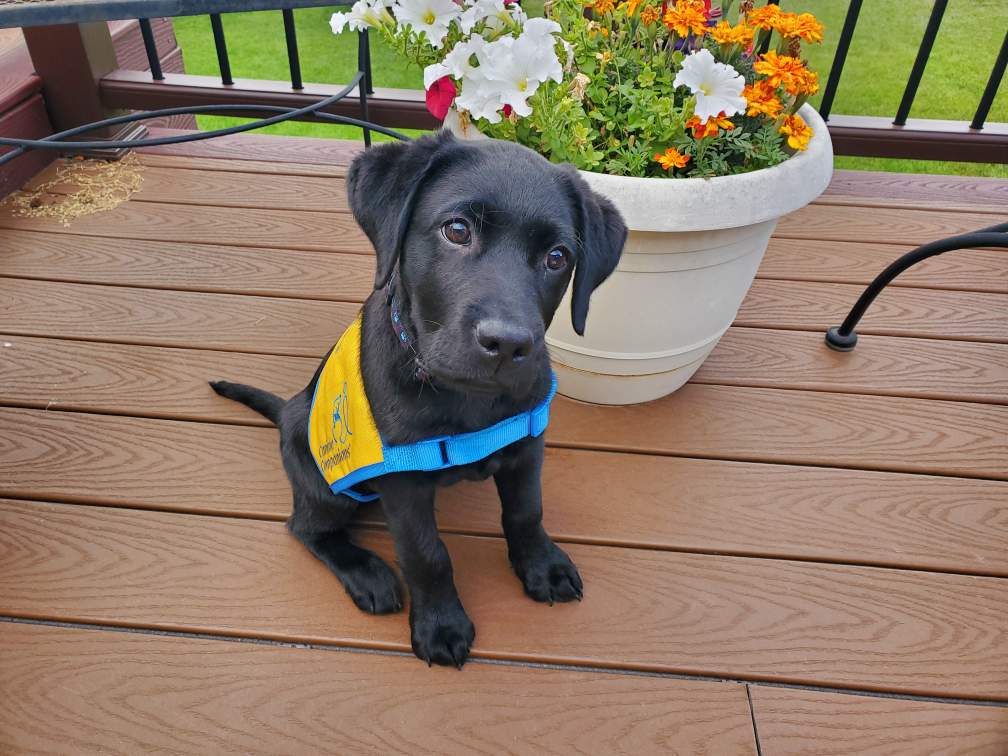 Sealander’s dogs have earned celebrity status inside and outside of the College of Education.
The school’s deans formally introduce them as a part of the team during their first faculty meetings, even designing profiles for the pups on the college’s webpage. Sealander’s fifth dog, Homer, served as an ambassador for the Veterans Success Center during his time on campus, promoting their programs and visiting with the building’s regulars.
With all the time Sealander dedicates to rooting her pups in the NAU community, people often ask her how she can emotionally handle sending them away when the time comes. The truth, she said, is that watching her dogs graduate from the program and bound into the lives of those in need is her favorite part of the puppy-raising process.
Of the six dogs Sealander has finished raising, two were accepted as Canine Companions service dogs, two became certified therapy dogs and one is still enrolled in advanced training.
“Your first give-back is the hardest, but then, you get to see just how much is possible in 16 months,” Sealander said. “Getting to watch this teeny-tiny, 8-week-old pup grow into a year-and-a-half-old confident dog is absolutely perfect. You think, ‘My dog is going to be giving this person increased mobility, increased socialization, so many things, and I contributed to that.’”
In the spring, Sealander was nominated for the organization’s Southwest Regional Jack Warnock Volunteer Award. She was selected from volunteers in five states for the astounding impact she’s made on the nonprofit.
“I just do what I love, and being honored and recognized for that is pretty incredible,” Sealander said.
The next generation of puppy raisers
The semester before she started her Honors capstone project, Zoe Cornelius came to Sealander seeking advice.
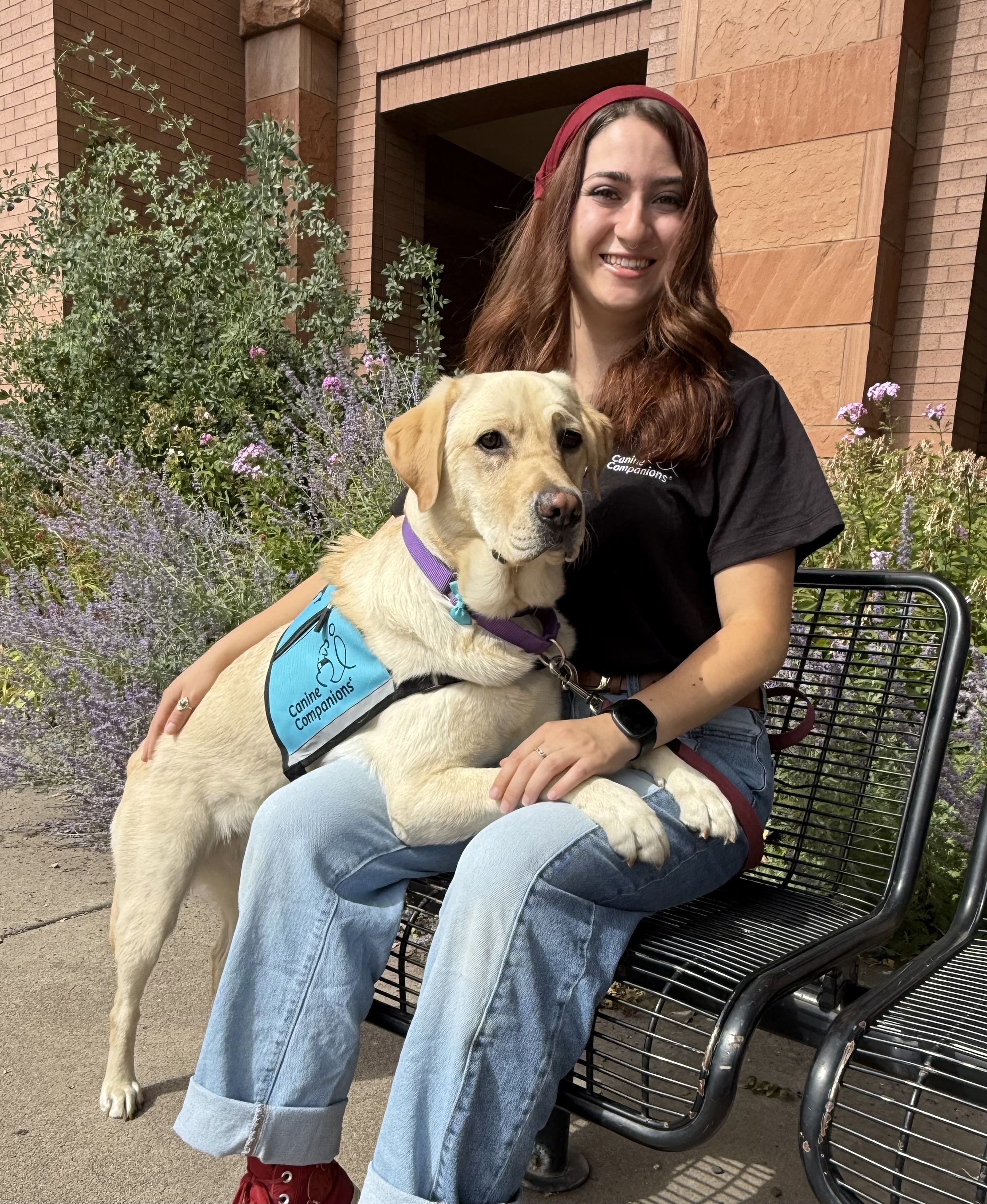 The psychological sciences major aimed to top off her college experience by merging her love for animals with her social work studies. To do this, she told Sealander she wanted to raise her own service dog and pair the experience with thorough research into the different kinds of working animals. The only problem? She had no idea where to start.
Luckily, Sealander did, and she immediately connected Cornelius with Canine Companions.
“She has been the most amazing cornerstone and mentor for this thing that I’ve gotten myself into,” Cornelius said. “This was a great way to combine my passion for psychology and social work with an opportunity to have a cool dog in my life.”
The cool dog in question, and the centerpiece of Cornelius’ capstone project, is Lorrey.
The pup grew up as a participant in Canine Companions’ prison puppy training program, which allows qualified inmates to volunteer as puppy raisers and gain valuable job experience while serving out their sentences. The golden retriever moved into Cornelius’ care when she was 8 months old and accompanied the senior as she traveled to class, work, the grocery store and home again for nine months.
Cornelius was no stranger to animals, having volunteered at Bearizona Wildlife Park and grown up with a menagerie of pets. Even so, she said learning on the go alongside Lorrey was uniquely fulfilling in a manner that told her this was what she wanted to pursue after she completed her degree.
When it came time for Lorrey to start professional training, Cornelius dedicated the rest of her project to outreach. She hosted on-campus events and an Honors Exploration seminar to raise awareness for the life-changing support service animals provide. She also helped educate locals on the differences between service dogs, therapy dogs and emotional support dogs, since the groups are often falsely conflated.
Lorrey, unfortunately, failed to qualify as a service dog. Yet, knowing first-hand that the pup had a knack for calming people down, including herself, Cornelius adopted Lorrey and got her certified as a Canine Companions therapy dog.
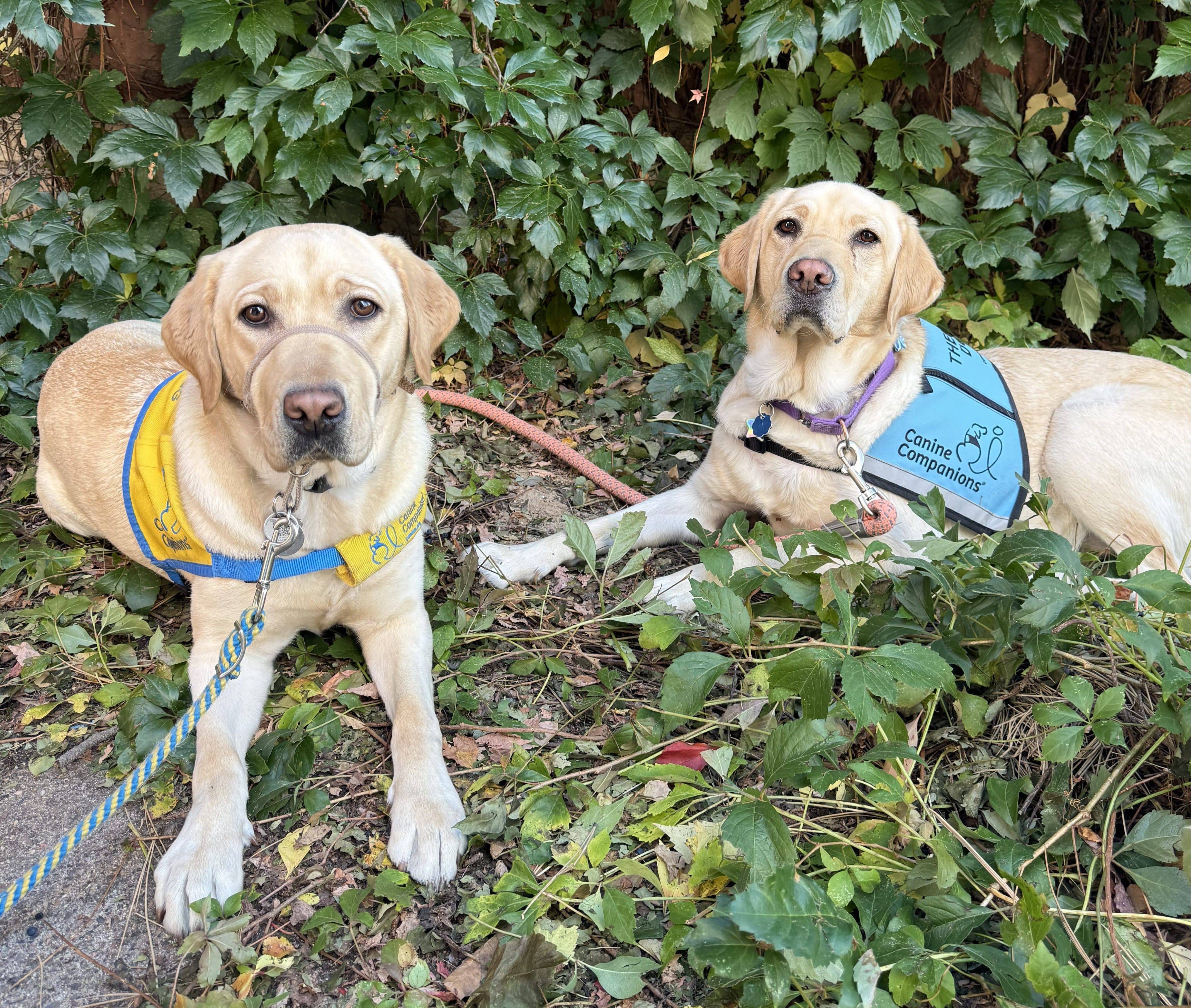 Cornelius, now a temp worker in the College of Education, can be found around campus with her 2-year-old puppy partner in tow.
“It was kind of like we were a single unit,” Cornelius said. “After I turned her in, I continued to say ‘we,’ referring to myself, because I got so used to having her with me. I really wanted to keep her involved in the NAU community because I saw the impact she was making on people who spent time with her. She was already so therapeutic.”
Cornelius aspires to become a professional Canine Companions trainer in the future. In the meantime, she and Sealander hope to establish an NAU branch of the organization’s college club, Collar Scholars, which allows qualified students to collaboratively raise a Canine Companions puppy on campus.
“There is a huge shortage of service dogs in the U.S., and more puppy raisers are vital to make sure people have the increased independence those animals provide,” Cornelius said. “I hope to see more people do it, especially at NAU and in Flagstaff, because it’s such a good space for it. When you can take the dog everywhere, and you adjust to the dog being there all the time, it’s doable, and the impact it has on the community is immense.”
To learn more about the puppy raising position, visit the Canine Companions website at canine.org.