

In an industry where trends shift overnight and innovation has become the standard, NAU’s School of Hotel and Restaurant Management (HRM) is reinventing how it prepares the next generation of hospitality leaders.
 No longer confined to the traditional classroom, students are now immersed in a dynamic learning environment designed to mirror the fast-paced world they are about to enter. Through career-readiness training, hands-on classes, immersive field trips and direct connections with industry professionals, the school is shaping graduates who are not just prepared for today’s hospitality landscape but ready to lead its future transformation.
John Hattab, assistant professor of practice at HRM, said he recognized the need for this transformation before he began working at NAU, when he recruited students for summer jobs at the country club where he was employed.
“Through my years staffing students and training them, I noticed that a lot of them leave school without really knowing what to expect post-graduation,” Hattab said. “Theory is great and necessary, but they also need to get real-world experience and practice. When I was hired at HRM, my first approach was to find a way to help students be more prepared for what the actual working world is and give them innovative experiences to prepare them for the changes in the industry.”
Adapting and changing
In his first year at NAU, Hattab started learning the operations and became involved in the HRM Curriculum Committee, learning how the academic process works and looking at current courses to evaluate if they need to be revamped, eliminated or just combined.
 “We look at what classes are still relevant and which ones might be outdated and need to be combined into something else,” Hattab said. “Housekeeping, for example, will now be part of facilities management; by combining both classes, we will be able to free space for a new class.”
Some of the new classes they are considering will incorporate AI into the curriculum, since it is now part of this ever-changing industry. Hattab said that after the COVID pandemic more processes were automated, and now there is a need to incorporate AI strategies into hospitality such as hyper-personalized guest experiences, labor efficiency, cost controls, menu engineering and operational analytics.
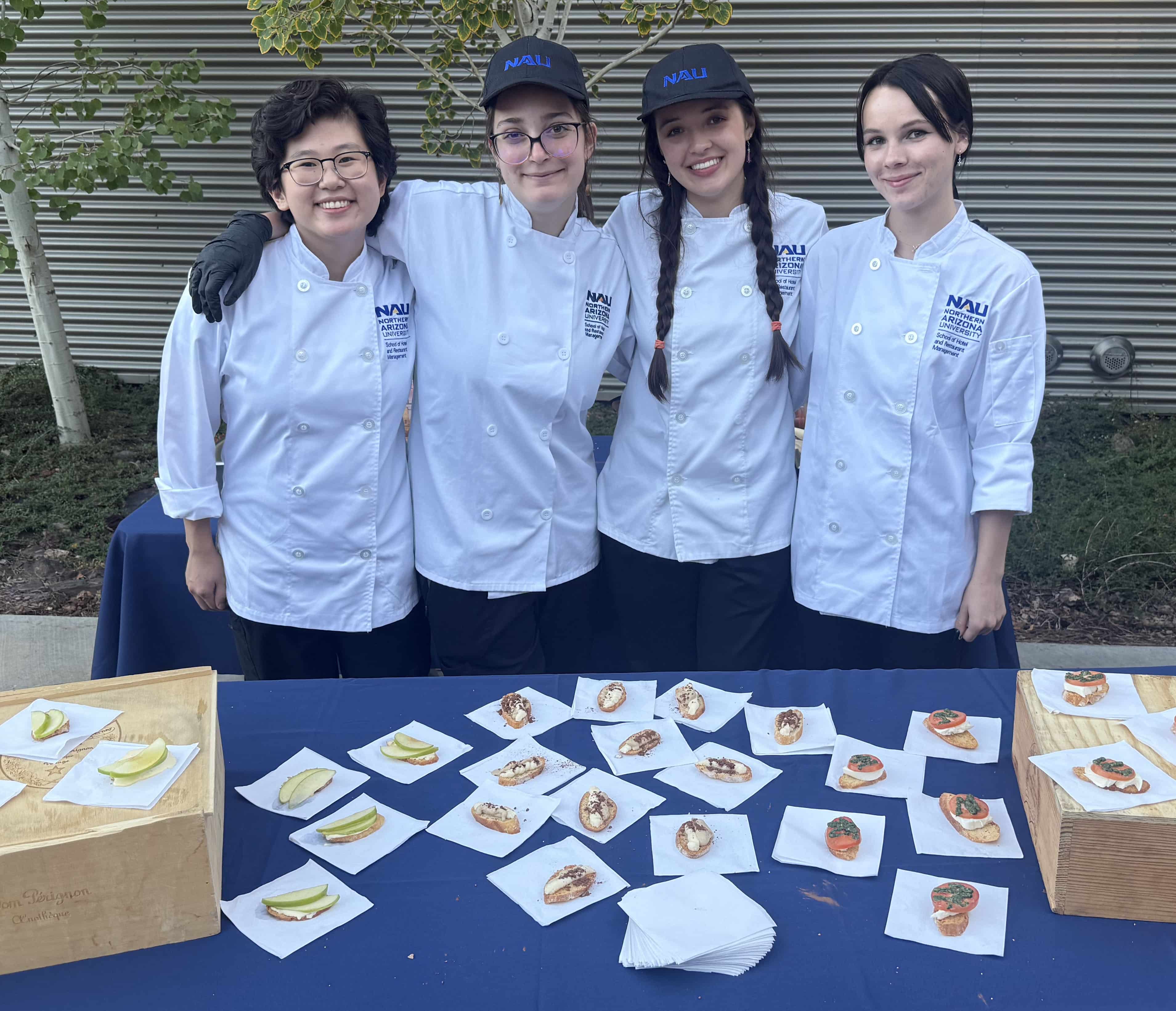
“You’ll still need to have some personalized touches around, but for the most part, the daily monotonous things can be automated now,” he said. “We’re currently designing four or five master’s-level hospitality courses, one of which focuses on digital strategies. However, HRM is already incorporating AI in the classrooms so students can embrace AI in leadership roles to streamline their operations. Students in trade programs, especially in culinary arts, will soon have new opportunities to bridge the gap from technical training to leadership roles.”
Show and not tell
An important part of Hattab’s strategy to prepare the next generation of hospitality professionals consists of giving them practical experiences and connections that will follow them after graduation.
 “My philosophy has always been: I can tell you about it, or I can show you, which do you think would be more impactful?” Hattab said. “I am fortunate to have worked in the area for many years and have great connections, so when I call my friends to see if I can take my students to see their operations, they are always happy to welcome us.”
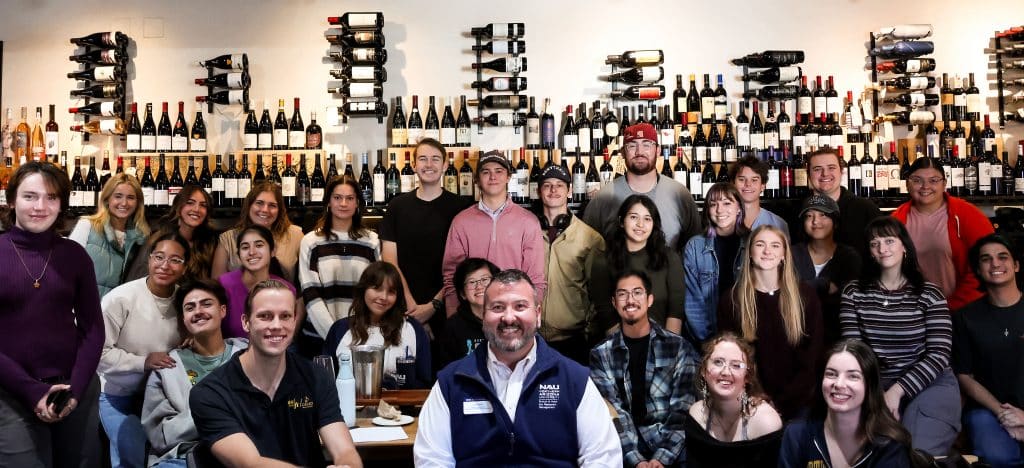
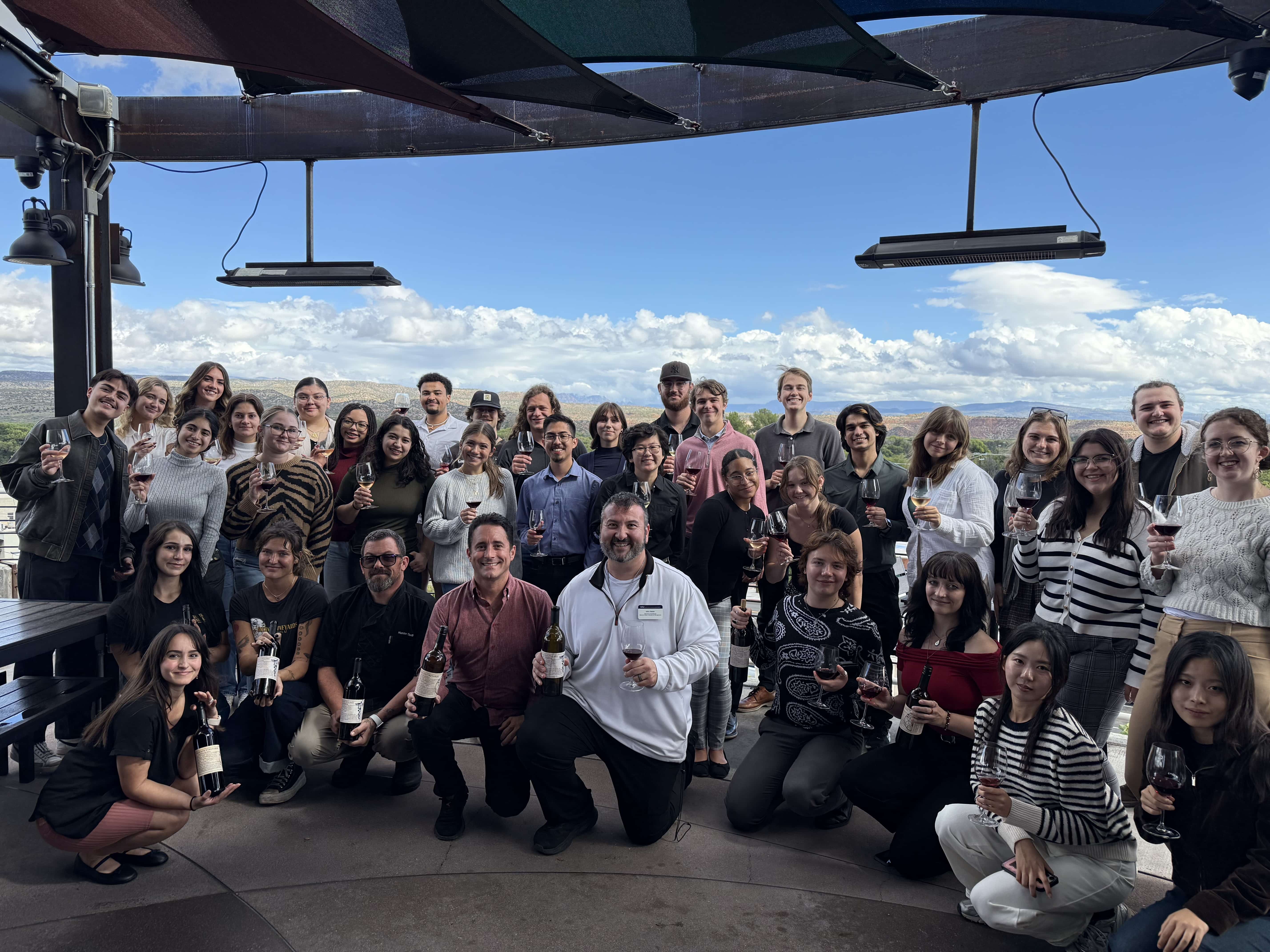
His wine class, Wines of the World, has traveled to Cottonwood the last two fall semesters to visit Merkin Vineyards Trattoria, where they experienced the winemaking process and what goes on behind the scenes at a winery.
“We have an American viticultural area just 45 minutes away in the Verde Valley,” Hattab said. “If I am going to teach about wines, why not see an actual winery? Have students walk around, pick a grape and eat it straight from the vine and let them add this experience to their portfolio. To me, this is more impactful and something that the students will remember.”
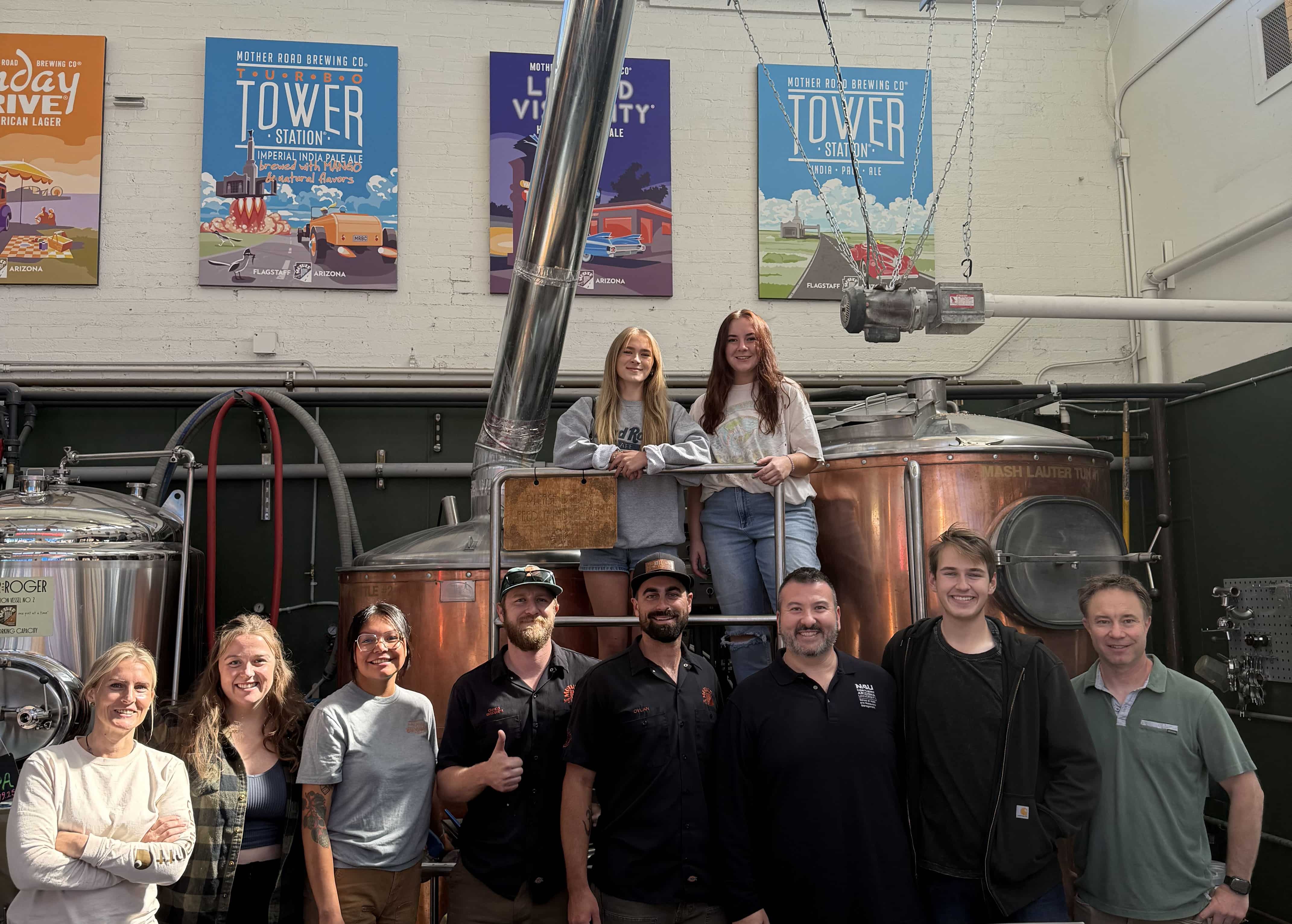
Hattab has also taken his class to different restaurants, campus dining outlets, breweries and country clubs in the Flagstaff area to see how they operate. But he is not the only one who believes in experiential learning for his students: he said chef Travis Bradford and hospitality expert James Drake have taken their casino class to Las Vegas to get a look behind the scenes, and hospitality management faculty member Darwin Mann takes students to conferences and invites industry experts to the classroom to provide students with inside information on how the industry is changing and what they should expect after graduation.
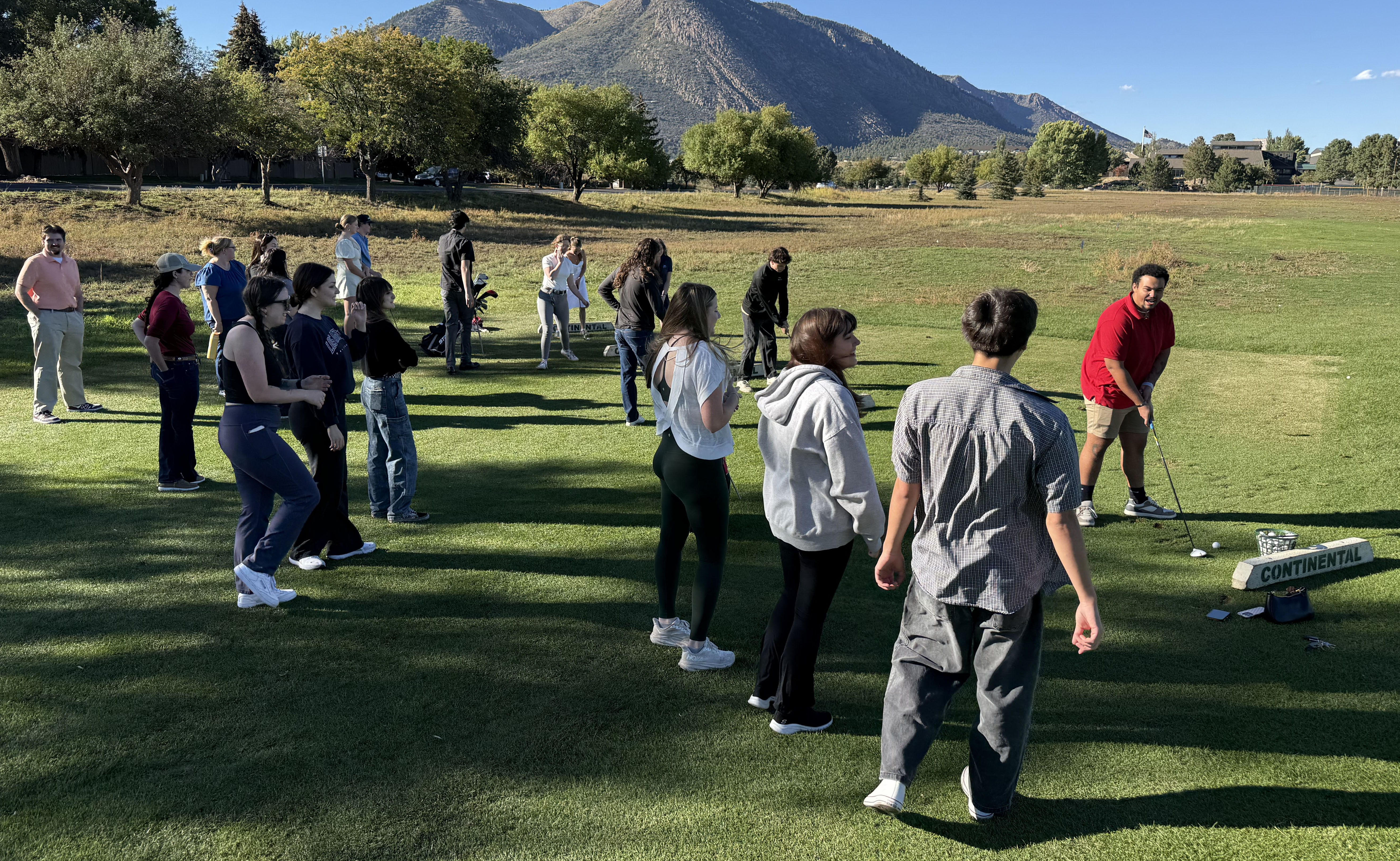 “I’m all about experiences,” he said. “I have created experiences in all my work environments, and I want to do that for the students. I want to show them how they can create experiences and start thinking outside of the box. How they can apply something they learned in the future.”
Creating experiences for students while also covering the theory is something Hattab believes will equip them with the tools they need to apply the concepts they learn in their future jobs.
“Every class we offer at HRM is a potential career,” Hattab said. “Because in hospitality it is not just about hotels and restaurants, it’s about finance, human resources, marketing, etc. That is the benefit the students get from this program. We connect your soft skills, your negotiation skills and your marketing skills, and incorporate them into what we do. We create a tool belt for each student, offering many certificate programs in a school that is really operations-focused. We equip students to not just graduate with a bachelor’s degree, but with everything they need to be successful in the workforce.”
 Mariana Laas | NAU Communications
(928) 523-5050 | mariana.laas@nau.edu