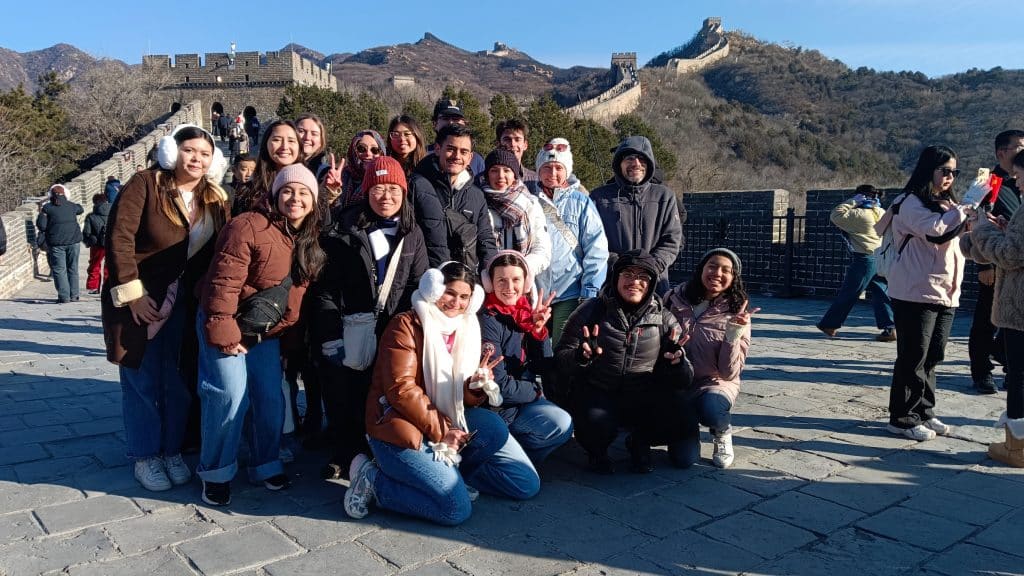


Imagine stepping into a classroom where, instead of four walls and rows of desks, there are caves full of secrets to be discovered, ancient city streets, vibrant markets, world-class museums and peaceful landscapes. That’s what you get with NAU-led study abroad programs, which offer more than just a change of scenery—they open doors to new skills, global perspectives and unforgettable experiences.
Under the guidance of NAU professors, students immerse themselves in hands-on learning, connect with local communities and see their coursework come to live in real-world settings. For students, this journey does more than fulfill academic requirements. It is a transformative experience that expands their understanding of the world and themselves.
Melanie Caron, program manager for the Center of International Education (CIE), works with faculty to provide a wide range of programs for students who want to experience the world for academic credit.
 “Our programs are designed with our NAU students in mind, and we offer a wide variety of programs suited for freshmen, sophomores, juniors and seniors,” Caron said. “We have everything from biology, forestry and engineering to psychology, art and languages, all in different parts of the world. Just this summer, we have 40 NAU-led programs currently accepting students.”
Students can complete major and minor requirements, as well as general studies credits, in locations as far-flung as Rwanda, Malawi and Vietnam and as close as Mexico, choosing what they want to learn while discovering a new country.
Caron said the difference between faculty-led programs and study abroad programs is that in the former, students earn NAU credits, while in the latter, students usually take classes at a university or learning center abroad and earn credits that can later be transferred to NAU. Most of the faculty-led programs take place during the summer, but for students who work during that time, there are some programs that take place during the spring and winter breaks to allow for more flexibility.
“One of the things we like to try to do in education abroad is create accessible programs,” said Angelina Palumbo, director of Education Abroad. “We have done this through programs like the Global Citizens Project Scholars and other regular faculty-led programs that are focused on volunteering, global citizenry, language learning and community engagement.”
Learning at every latitude
 CIE has been working on expanding its offerings to provide students with more affordable opportunities in Mexico, Costa Rica and Honduras. Some of the programs engage with Indigenous communities and provide volunteer community development opportunities for students who not only want to learn about these cultures but also want to make a difference.
“Recently, we expanded our faculty-led programs in Africa,” Palumbo said. “We have an NAU-led program about the genocide in Rwanda; a program offered in South Africa on understanding Apartheid and another one that specializes in global health in Malawi. Students can now learn about these topics and can connect with those communities in ways that are different than just reading about them in a book or watching a movie.”
 Palumbo said they are working with Charles Chadwell, dean of the Steve Sanghi College of Engineering, to build more options designed for engineering students, in both NAU-led and semester abroad programming.
Most of the teaching in the faculty-led programs happens in the country the students travel to, but sometimes, professors might have an online component that students need to finish before going abroad or a final project they need to work on when they get back.
“We have faculty members who have reached out to us with amazing ideas on programs they have dreamed about doing abroad, and we work with them to help create them,” Caron said. “They build the academic content of the program, and we assist with the logistical side of things.”
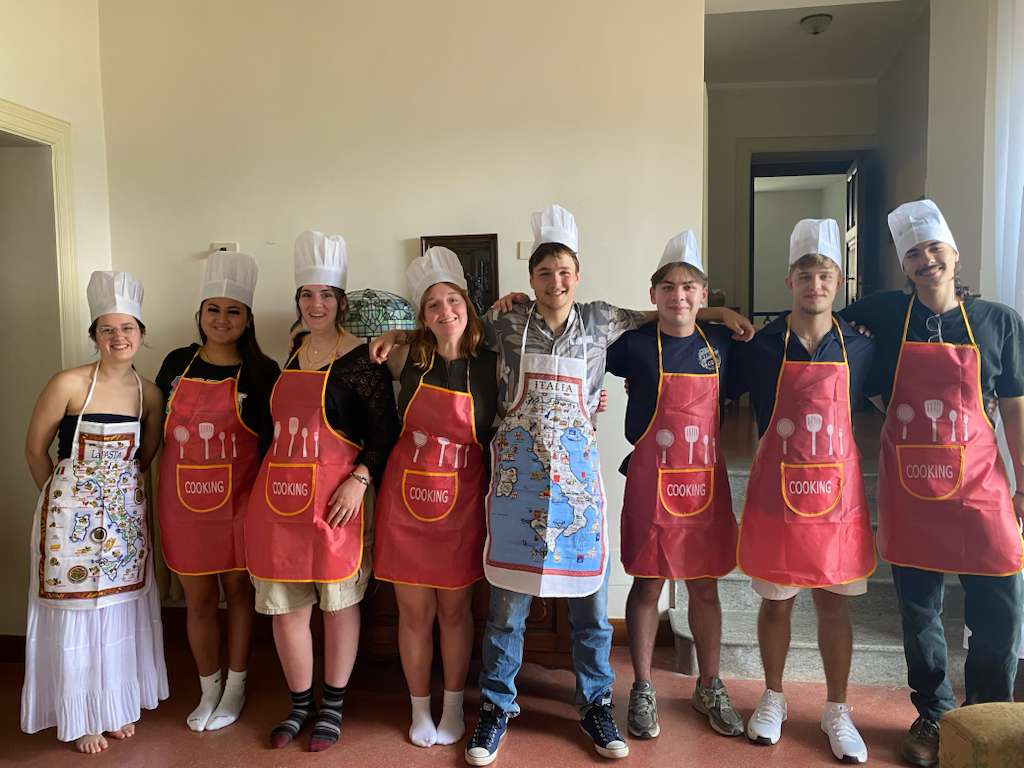
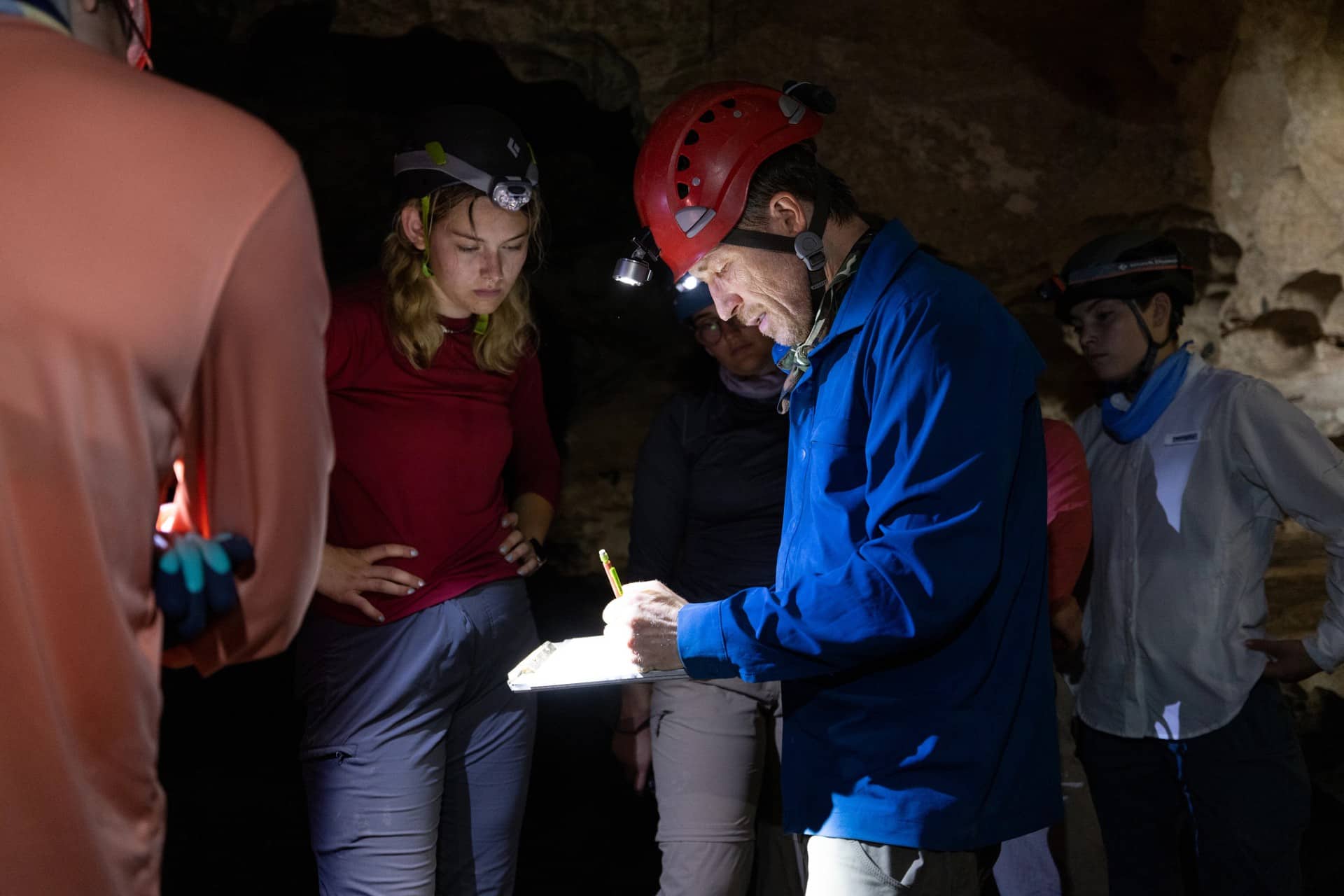
Caron said some programs are so popular that students join the same program yearly in different locations. Such is the case of NAU in Italy: Integrated Curriculum and Place-Based Education led by Brian Stone from the College of Education, which has been offered for more than10 years. Another popular program is NAU in Belize: Tropical Ecology Field School led by Jut Wynne from the Department of Biological Sciences. This program focuses on tropical ecology, wildlife conservation and management in the Maya Forest Corridor of Central Belize.
Global paths and endless possibilities
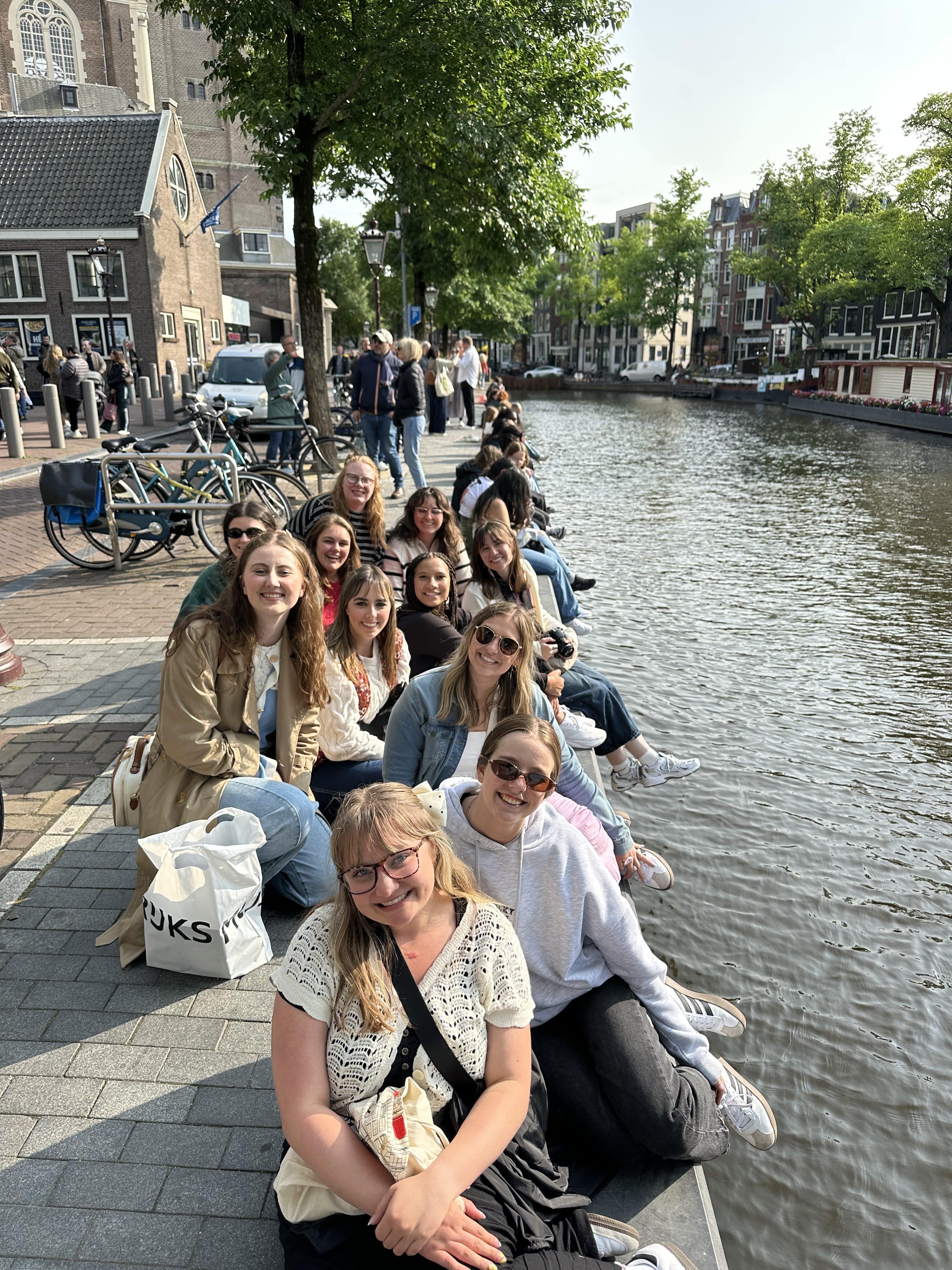 “NAU-led programs offer a lot of flexibility for students,” Palumbo said. “Students who would like an international experience while they’re in college but maybe can’t go abroad for a semester or for a full academic year because they have to work to help pay for school or maybe because they’re a little bit unsure and don’t want to make such a big commitment, can take advantage of these shorter opportunities. In these programs, students interact with other students and faculty and for the most part, all activities are planned. This could feel safer and more familiar to them.”
The descriptions and costs of each program are listed on the NAU-led Programs website, where students can get a clear idea of what is included and what other expenses they need to budget for.
“The benefits students get by participating in NAU-led programs abroad are endless,” Caron said. “They get academic credits, cultural immersion and guided learning, cohort experiences, safety and support and professional growth that will help them build their resume and, in some instances, they build networks in the industries they are planning on joining after graduation.”
Students interested in applying to an NAU-led program must complete an application and provide a valid passport. Those who don’t have a passport can apply for one at CIE.
For more information on NAU-led programs, visit the CIE website or contact a CIE advisor.
 Mariana Laas | NAU Communications
(928) 523-5050 | mariana.laas@nau.edu