

Pablo Picasso once said that painting is just another way of keeping a diary, since art documents the life and experience of the artist. But art also reflects the social forces around it, such as the cultural and political atmosphere of the period it was created in, as well as the religion, nationality, class, gender and interpersonal connections of its creator.
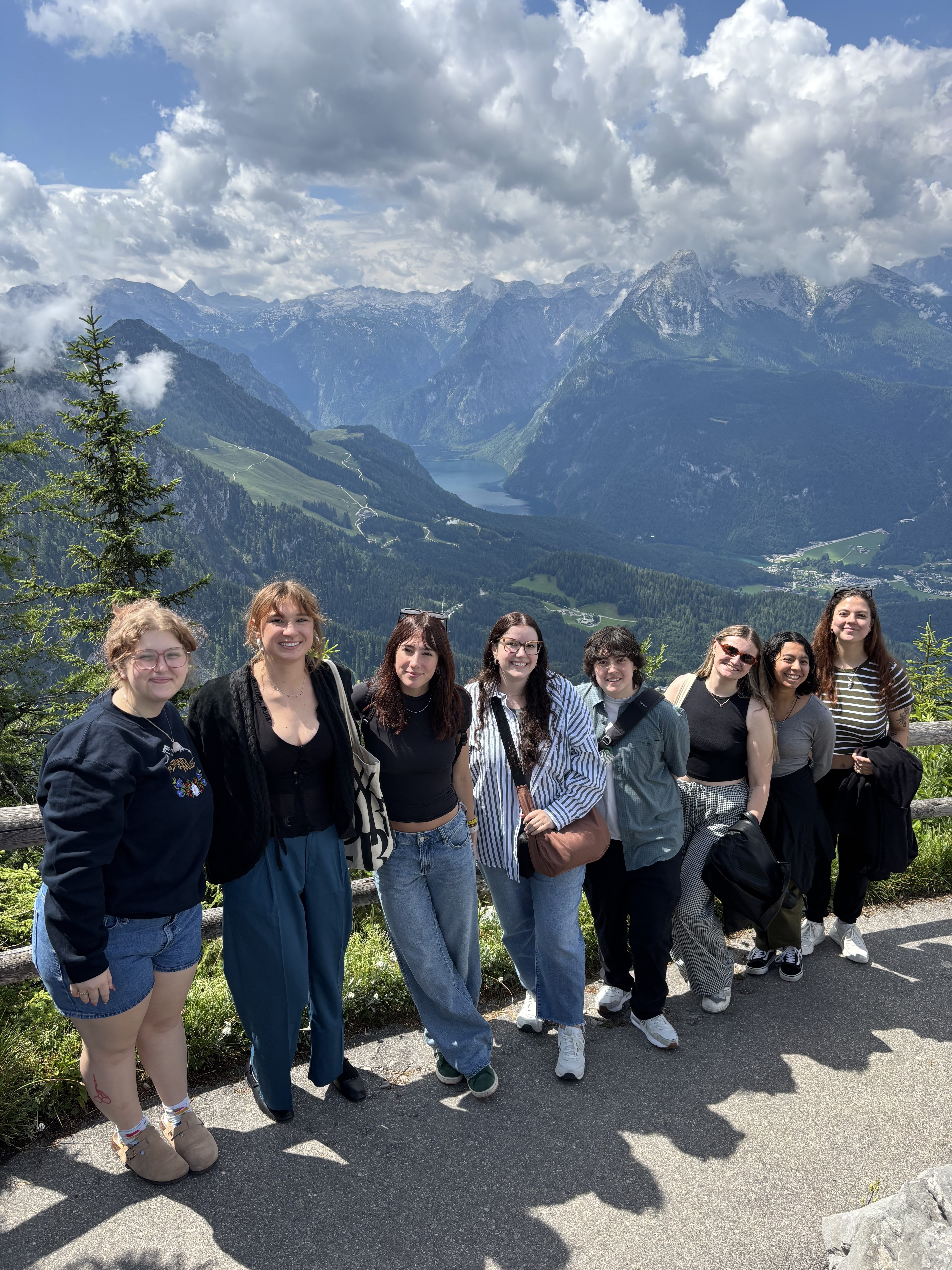
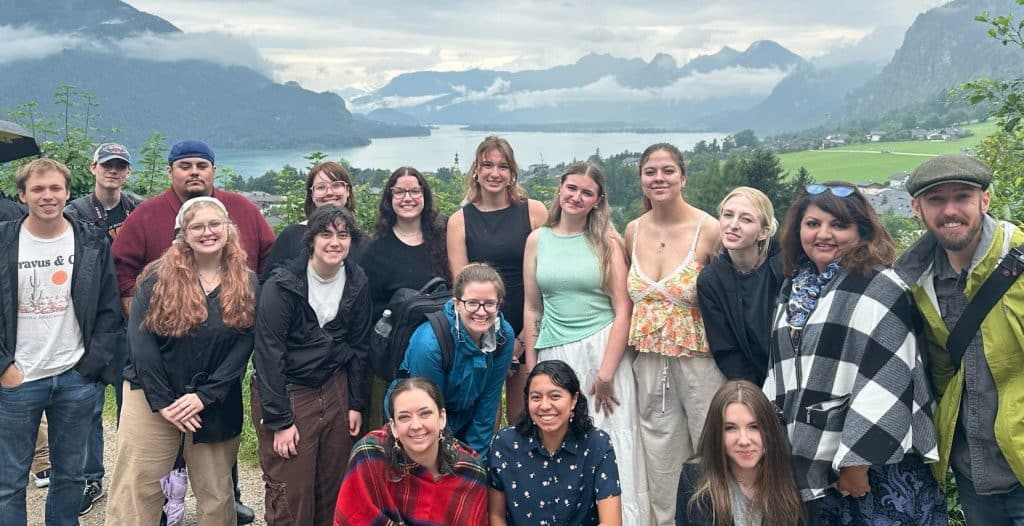
This summer, armed with sketchbooks, theories and a healthy dose of curiosity, 19 NAU students traveled across the Alpine region to decode the invisible forces that have shaped art in this area for centuries. Led by Jessie Finch, chair of the Department of Sociology, and Neal Galloway, associate director of the School of Art and Design, the Sociology of Visual Art and Culture class took a two-week journey across Germany, Austria, Switzerland and France.
“There is a complex web of social systems and conventions that both construct and constrain the world of art that we experience,” Finch said. “This class helps students recognize and understand the structures that underlie the world of art and visual culture with a focus on the art and culture of The Alps region in Europe.”
The class taught students to speak and write about these topics with clarity, original insight and depth. Students not only delved into cultural and artistic experiences while abroad but also created written and photographic projects.
“A major lesson for this course is the myth of the photographic truth,’” Galloway said. “Students turn in pairs of photographs taken during their journey that are not as straightforward and objective as they may seem, using different photographic techniques. The first photograph sets up one reality, and the second photograph breaks or changes this reality in an interesting way. They must catch one instant in time, take out the surrounding details and control the objects in the picture, as well as the light and the camera angle. After that, they have to reflect and write about the feeling, narrative or concept they are trying to communicate in each photo.”
Learning and discovering
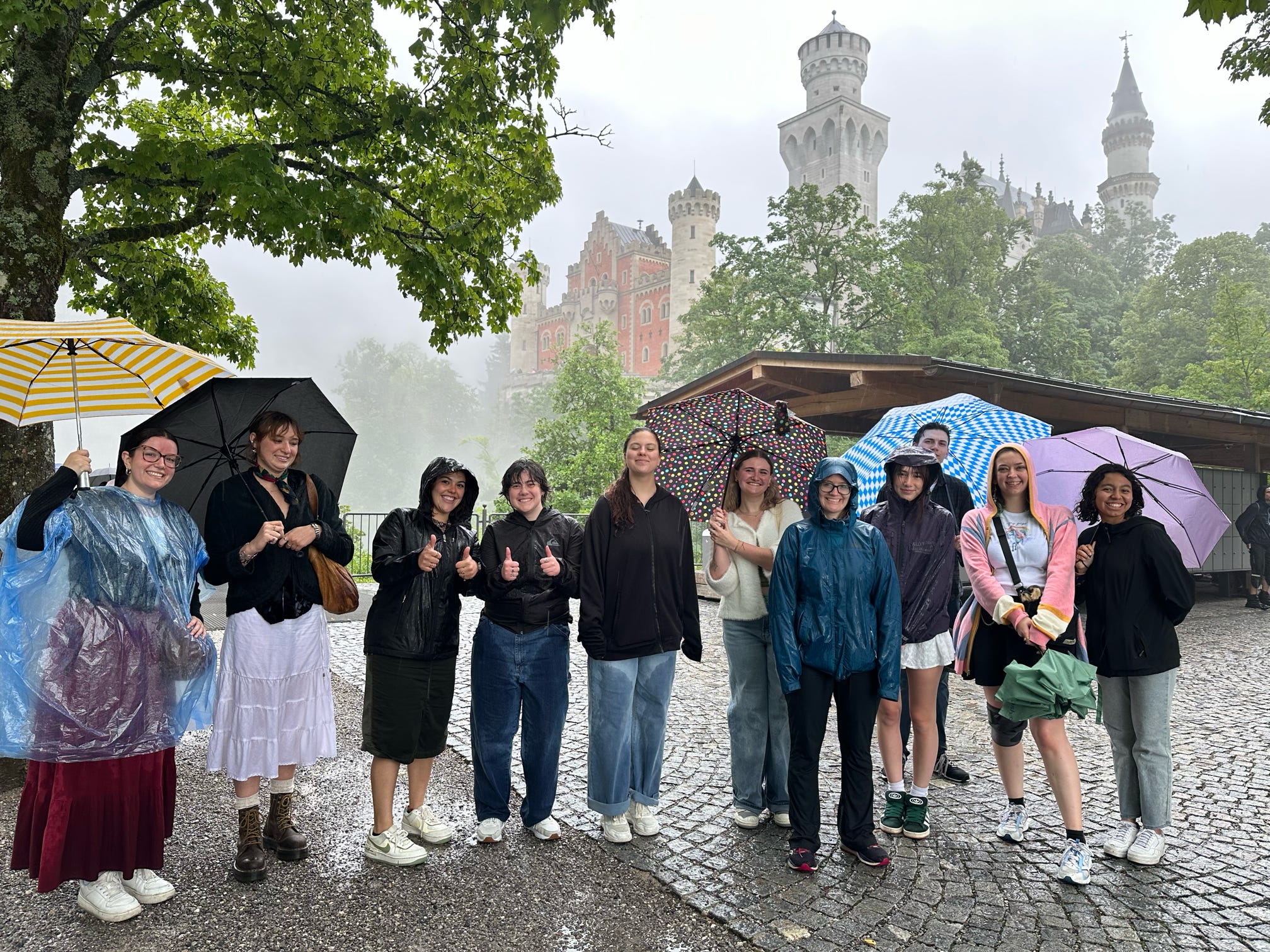
The class is not just an opportunity for students to learn about art and sociological theories. It’s also a chance to discover other cultures and countries they might not be able to visit on their own.
Violette Valencia, a junior majoring in sociology with a minor in ethnic and international studies, always wanted to travel to Europe, specifically Germany, to learn more about its culture and history. She enrolled in the class because it offered her the opportunity to make this dream a reality.
“Honestly, it was a bonus to find out that I could earn a sociology credit,” Valencia said. “When I enrolled, I expected to be given a slightly non-traditional structure of a class but also provided with materials such as readings and lectures to assist with how to connect our experience with concepts like culture or social systems, along with viewing it through the world of art and sociology. After taking this class, I can say that the course went above and beyond my expectations.”
This class is taught exclusively as a study abroad option to show students how national and social contexts affect the production and consumption of art. During the journey, academic lessons come to life for students.
“After our discussions in class about art and culture, it became easier to identify these aspects in real-time,” said Sophie Robinson, a senior majoring in sociology who was in the class. “High versus low culture, locals versus tourists and seeing these beautiful historical places with your own eyes, thinking about society in that time versus now. It was a real eye-opening experience.”
Getting new perspectives
Bobbie Evans, a senior majoring in secondary English education, was not new to an experience abroad, since she did a summer abroad in New Zealand last year. However, this class was right up her alley, since she wants to bring as many perspectives into her classroom as possible.
“All my expectations were met with fun experiences and a creative outlet that made me appreciate everything I did just a little bit more,” Evans said. “My favorite part was being a nerd about Frankenstein: going through Geneva and other areas of the Alps that are explicitly mentioned in the novel, turning and seeing a random castle and miles upon miles of beautiful greenery.”
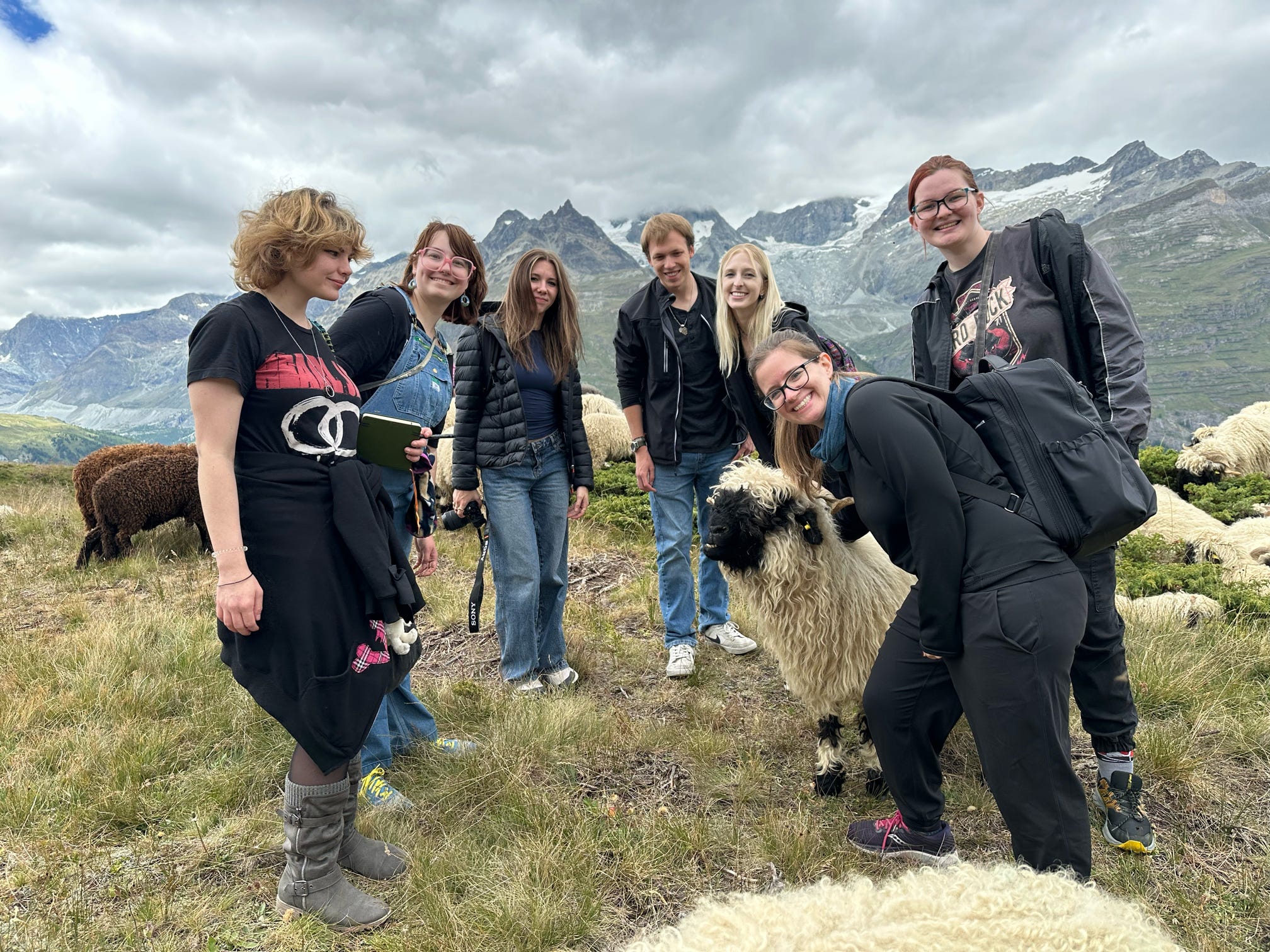
Students hugged sheep near the Matterhorn, swam in Lake Belvoir in Zurich and visited the Contemporary Art Museum in Salzburg, learning and developing friendships that will last a lifetime.
“I absolutely would recommend this class to others,” Robinson said. “Not only was it a beautiful thing to experience cultures across the world, but it was also so much fun to make new friends and create new stories. Our professors made the classes fun and helped us make observations about what we would talk about in class, in real-time situations.”
What’s next?
Next year, the Sociology of Visual Art and Culture class will take students ‘down under,’ specifically to Melbourne, Sydney and Cairns, the gateway to Australia’s Great Barrier Reef.
“Any and all majors are welcome, and there are no prerequisites,” Finch said. “SOC 301 can be a General Studies ‘Social and Political Worlds’ credit, and ART 399 is a great elective!”
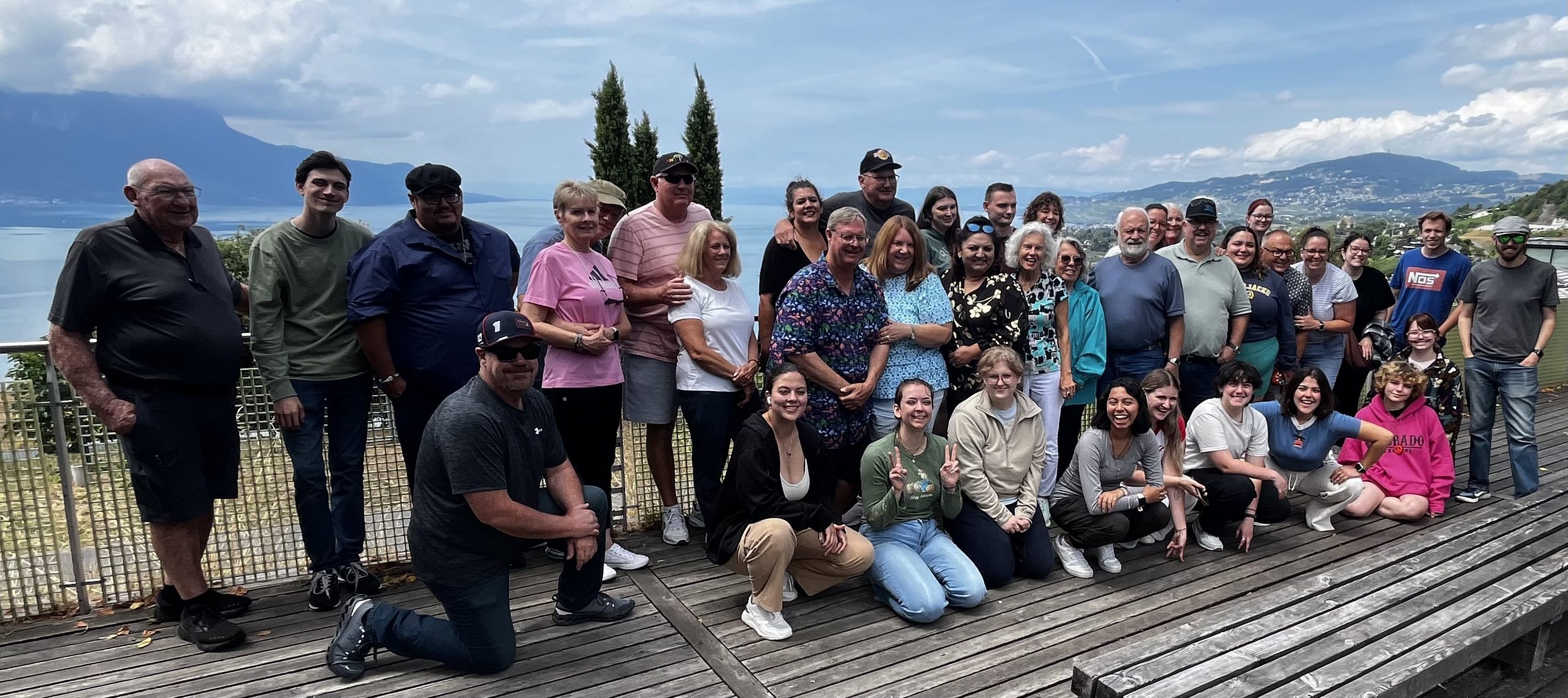
Students interested in taking this course next summer can enroll through the CIE website. Links will be available in October, and the deadline to apply is Feb. 15. There are funding and scholarship options available at https://nau.edu/education-abroad/scholarships/
 Mariana Laas | NAU Communications
(928) 523-5050 | mariana.laas@nau.edu