

Indigenous territories contain 80% of the world’s remaining biodiversity and a deep well of native plant knowledge. What if that knowledge could save our communities and our environment?
Flagstaff-area residents and visitors can dig into that question when they explore a new digital exhibition on community food resilience, created by faculty and students at NAU. The exhibition, titled “Stories of Resilience & Diversity on the Colorado Plateau,” is presented alongside the in-person plant exhibit “Shifting Life Zones” at the Museum of Northern Arizona—but it’s also available to view online anywhere, anytime.
“Stories of Resilience & Diversity” dives into how plants and community have always been deeply intertwined for Indigenous peoples in this region—and how we could all benefit from learning more about native plants on the Colorado Plateau, which is home to more than 300 species that exist nowhere else.
“Indigenous and land-based communities have generational knowledge of how to live in right relationship with a place. It shouldn’t then be a surprise that lands under the care and decision-making authority of Indigenous communities also support higher levels of biodiversity,” said Rosemary Logan, an associate teaching professor in the School of Earth and Sustainability who led the creation of the digital exhibition. “So much time is spent learning about the destruction that humans have caused to the planet. I wanted to bring to life for my students the ways humans have participated in the caretaking and healing of the planet. I wanted to give them pathways to action.”
She was right: In Fall 2022, while teaching a class of juniors, the former MNA staffer mentored them as they enthusiastically developed an exhibition proposal. After viewing the museum’s permanent collection, speaking with museum leaders and gathering research on biodiversity on the Colorado Plateau, the students pitched their exhibition idea to MNA staff.
Kristan Hutchison, MNA’s director of public engagement, loved the students’ idea for a digital complement to the museum’s “Shifting Life Zones” gallery.
“There is so much to say about plants and people on the Colorado Plateau that we can’t fit it all into a single gallery, so we were really happy to include ‘Stories of Resilience & Diversity’ on a computer within the gallery,” Hutchison said. “We hope that both exhibits will inspire people to help plants, whether it’s by removing invasive weeds or tending crops in a community garden. People have always depended on plants, and what we do impacts the plants too.”
In Spring 2023, students in another of Logan’s classes got to work refining and enriching the exhibition text. That fall, two Interns-to-Scholars students continued the work. Logan credits two Americorps volunteers—Kira Farmer, now an adjunct faculty member, and Shonri Begay, a master’s student in communications—for taking the project to the finish line in Fall 2024.
Together, Logan, Farmer and Begay built what she calls a “collaborative story map”—an interactive website that lets visitors explore traditional Indigenous homelands, tour the diverse biomes of the Colorado Plateau, listen to interviews with local gardeners and Indigenous leaders and learn more about how growing plants can help foster community and connection.
In one interview filmed by Begay, Flagstaff Mountain-Town Market founder Meg Kabotie-Adakai shared memories of gardening with her Hopi father. She recalled how they planted the “three sisters”—corn, beans and squash—just as their ancestors have for centuries.
“That’s real human stuff: Moving your body, knowing where your food comes from, eating well and just knowing you’re part of this amazing, beautiful web of life,” Kabotie-Adakai said. “To love this planet and love the living things on it and love your fellow humans…it makes this life worth living.”
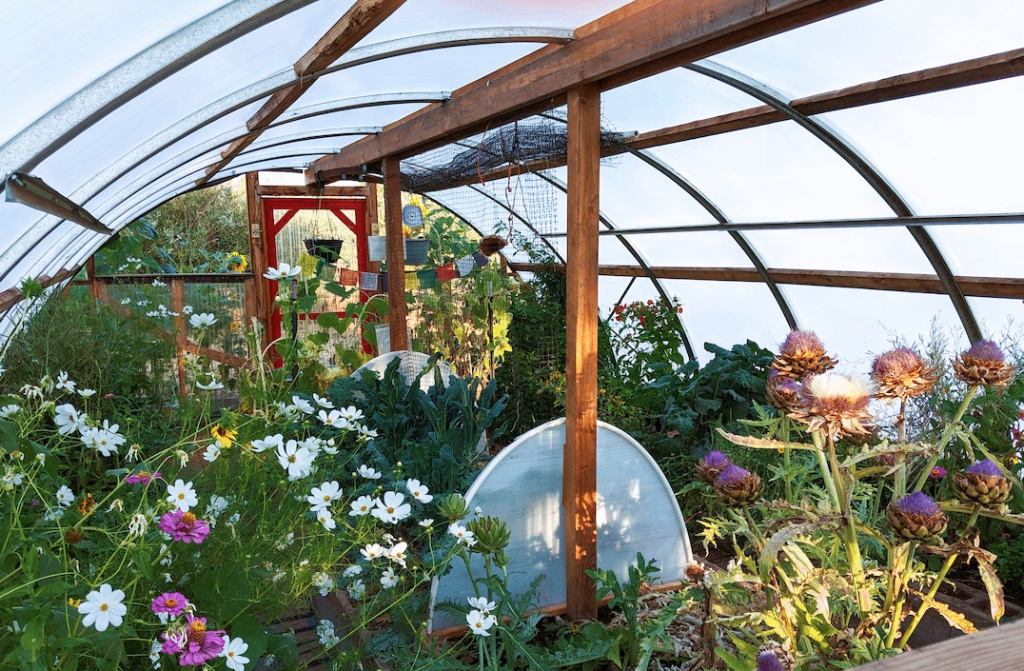
That resonates with Logan, who made lifelong friends and learned more about Indigenous food resilience when she discovered MNA’s Colton Community Garden, a volunteer-run space full of native edible and medicinal plants.
“Colton really became a refuge for me during the pandemic,” Logan said. “When people first come here, they go, ‘Oh my god, I didn’t know this was here; I didn’t know you could actually grow food in Flagstaff.’ Then they become part of the community, and they feel this sense of belonging, and the whole community becomes stronger. I think that’s what I want people to take away from this: The more connection—through place, culture and food—the more resilient we will be.”

Jill Kimball | NAU Communications
(928) 523-2282 | jill.kimball@nau.edu