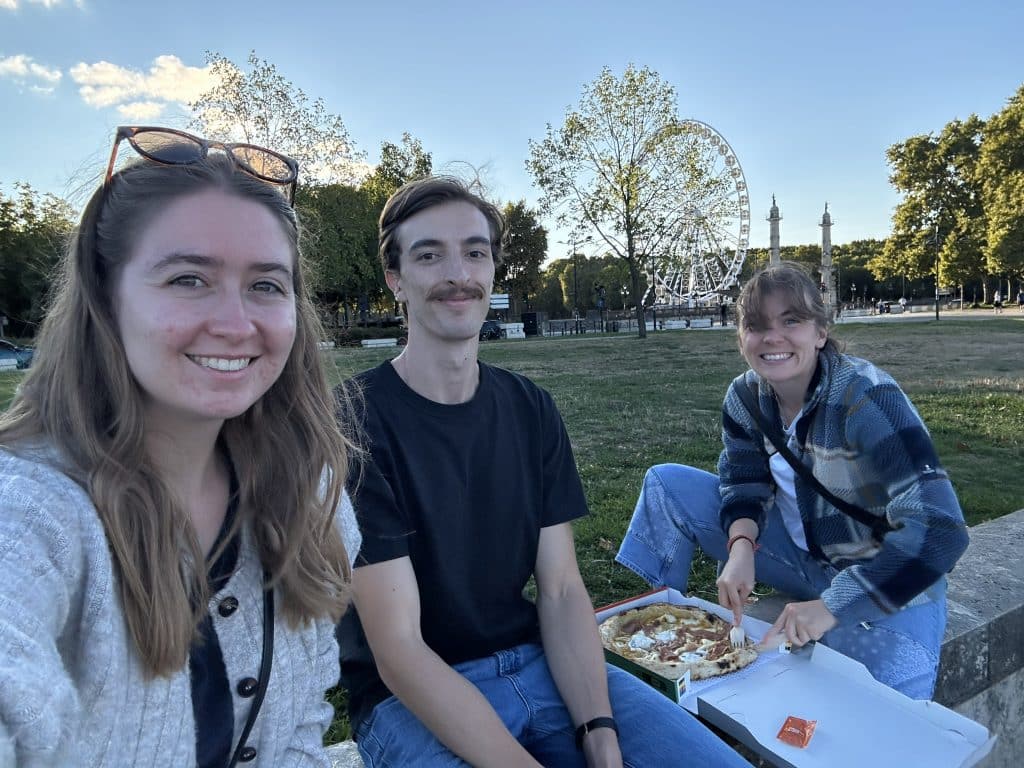


Madelein John will be walking on the stage this fall as she graduates with not one, not two, but three degrees—two from NAU and a third from the University of Bordeaux, where she experienced a year abroad through the Interdisciplinary Global Programs. Read what advice this native Arizonan has for those who want to learn a new language and where she is headed next to get her master’s degree in cancer sciences.
Where did you study and why did you choose this particular country for your study abroad program?
I studied abroad at the University of Bordeaux for one year through the Interdisciplinary Global Programs (IGP). Although I had previously studied abroad in France, I had never visited Bordeaux, so I was excited to discover a new part of France. The University of Bordeaux particularly appealed to me because it offered the chance to earn a third degree through a dual-degree program. This combination of studying abroad, earning an additional degree and completing an internship abroad made NAU and the IGP program the ideal choice for me as I knew it would set me apart for future graduate studies or career opportunities. In fact, this experience has already shaped my path as I am now preparing to study abroad again, pursuing an MSc in Cancer Sciences through the Barts Cancer Institute at Queen Mary University of London.
 What class(es) or research did you complete while abroad, and for how long?
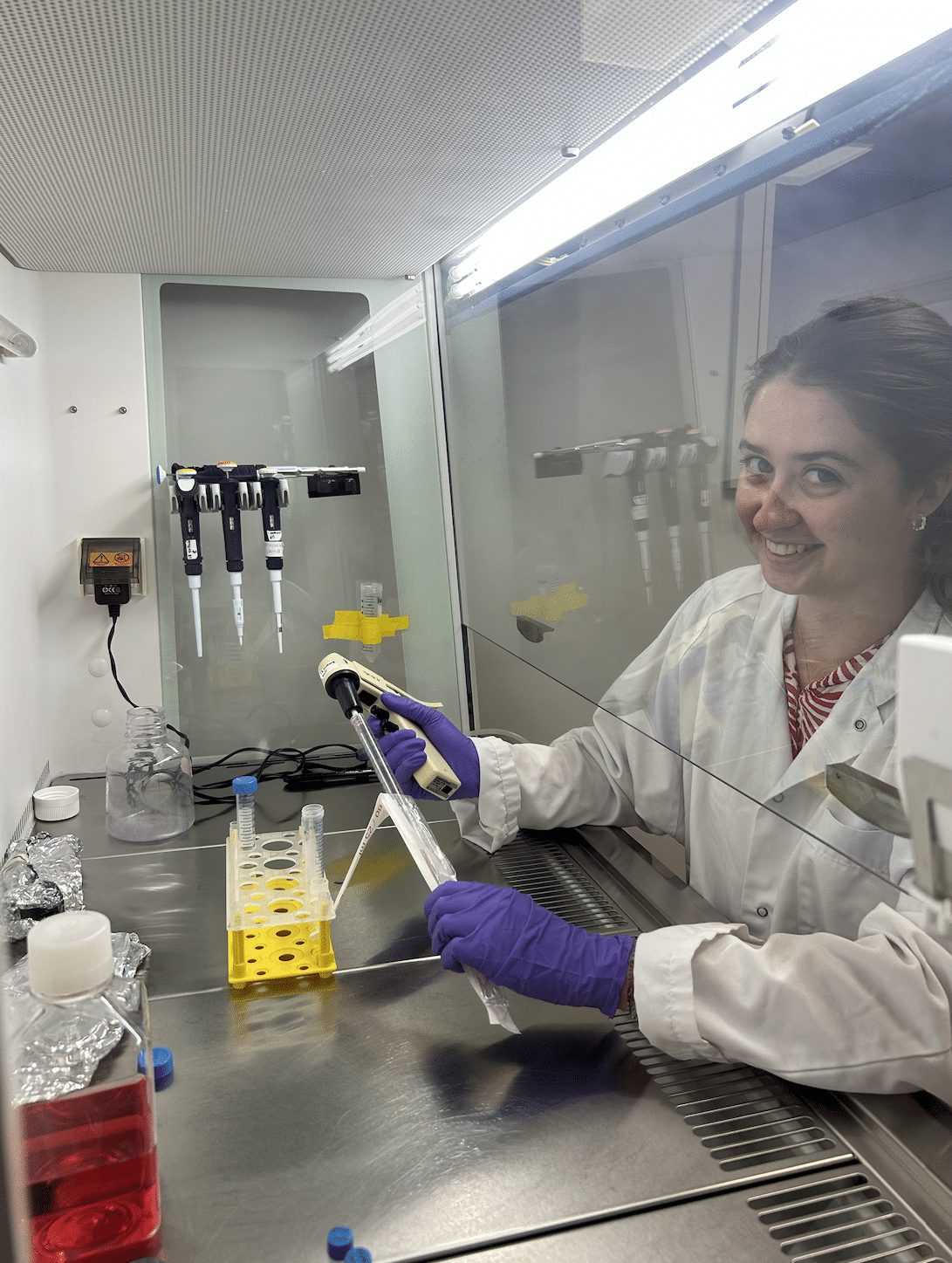
My goal while I was abroad was to earn a third degree from the University of Bordeaux. As a result, I mostly took the same classes as the other final-year French students. I completed 10 out of the 12 courses in French. In January, I began my 6-month internship at the Institute of Chemistry & Biology of Membranes & Nano-objects (CBMN) in Bordeaux, where I studied glioblastoma stem cell migration in a 3D environment. Although completing coursework and an internship simultaneously was challenging, I thoroughly enjoyed my internship.
How did you fund your study abroad experience?
Living in Bordeaux turned out to be far more affordable than life in Flagstaff. My studio apartment cost just under 400 euros per month, and a good meal at the student dining hall was only 3.30 euros. Before departing, I worked and saved as much as I could, and I was grateful for some support from my family. I was also a recipient of the Education Abroad Rise Scholarship, which helped make this experience possible. Finally, I was also paid during my internship. In France, interns who work longer than two months are required to be paid, so I was paid just over four euros an hour.
What aspects of your host country do you find the most different than your home country, and why?
I found the French academic system to be the most different and difficult part of studying abroad in Bordeaux. Students are graded out of 20 points where a 10/20 is passing. From an American perspective, it sounds like it would be pretty easy to earn at least a 50% to pass, right? This is actually not the case in France, and it is surprisingly difficult to earn. In my French cohort, only 28% of students earned an overall grade of at least 10/20 to pass and earn their degree. The reason I believe this is difficult is that students typically receive two to three grades per course. For example, I had only two graded assignments in my immunology course: a lab practical at the beginning of the semester worth 15% of my grade and the final exam worth the other 85%. That said, this system isn’t impossible, just different. Once I learned to pace my studying, things became much more manageable. My biggest advice for anyone considering studying in France is to stay organized from the start and not to hesitate to ask questions.
What was your language-learning process?
Since I had previously studied abroad in NAU’s Vichy Program, I arrived in Bordeaux with a solid foundation in French. I always recommend that other students consider an experience like this, because it truly helped prepare me for my year abroad. To keep improving, I tried to expose myself to as much French as I could. I watched French shows, listened to French music and tried to integrate the language into my daily routine. My favorite piece of advice for anyone learning another language is to watch reality TV from that country and in that language. Watching French reality TV shows taught me everyday slang and how people actually speak. By the time I arrived in France, I was already familiar with the vocabulary and way of speaking that is not always taught in class.
Tell us about your favorite—and/or least favorite—dish abroad.
Bread and pastries are probably what I miss the most in France. I loved stopping by my local bakery after class for a pain suisse or picking up a baguette. Occasionally, I treated myself to canelés from La Toque Cuivrée, a Bordeaux specialty I highly recommend. If I wasn’t at the student dining hall for lunch (Crous), I loved making a simple jambon beurre, a baguette with ham and butter. Food at the Crous was also always delicious and healthy, and I wish the American dining halls were more like this.
How has this study abroad experience influenced your personal, academic and career goals? Has it opened up new possibilities or changed your direction?
Living and studying in Bordeaux showed me that I love experiencing new cultures and life in new places. During my internship studying glioblastoma, I discovered how interested I am in cancer research. I developed new research and laboratory skills and also became more confident and independent as I learned to navigate daily life in another country. Studying in Bordeaux encouraged me to explore further international academic opportunities and because of this experience, I am excited to be pursuing a master’s in cancer sciences at the Barts Cancer Institute, Queen Mary University of London starting in January.