

As a high schooler growing up in Deer Valley, Henry Garland dreamed of becoming a psychologist.
“I was playing a lot of sports and a lot of video games,” Garland said. “I was fascinated by the people who get so good at these things that they get paid to do them. I wanted to understand what makes them different. I think it has something to do with their mental state.”
Now on the brink of graduation from NAU, Garland has pivoted from psychology to physics. But he’s still drawn to people who push their minds and bodies to the limit—so much so that he’s become one of them.
“When I find something I like,” Garland said, “I notice I get completely immersed in it, maybe a little obsessive about it.”
Take academic achievement, for example. Once the Honors College student and chemistry major found a research topic he loved, he went all in, winning three undergraduate research grants and co-authoring two peer-reviewed papers in the span of four years. Those are stats most graduate students would envy.
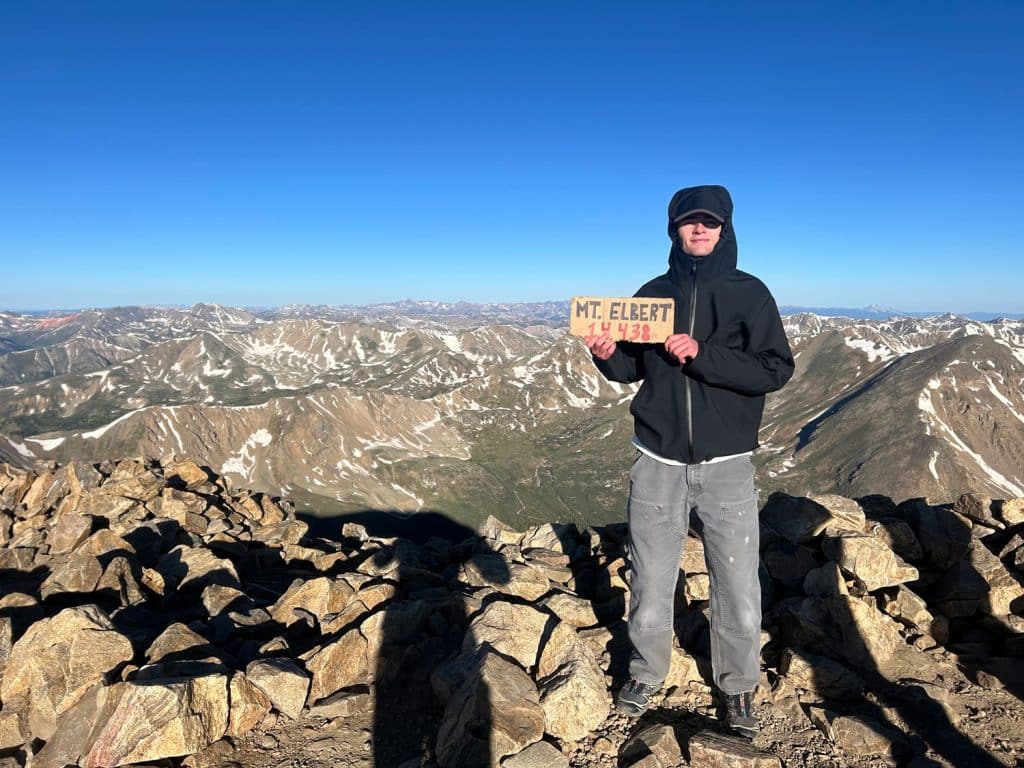
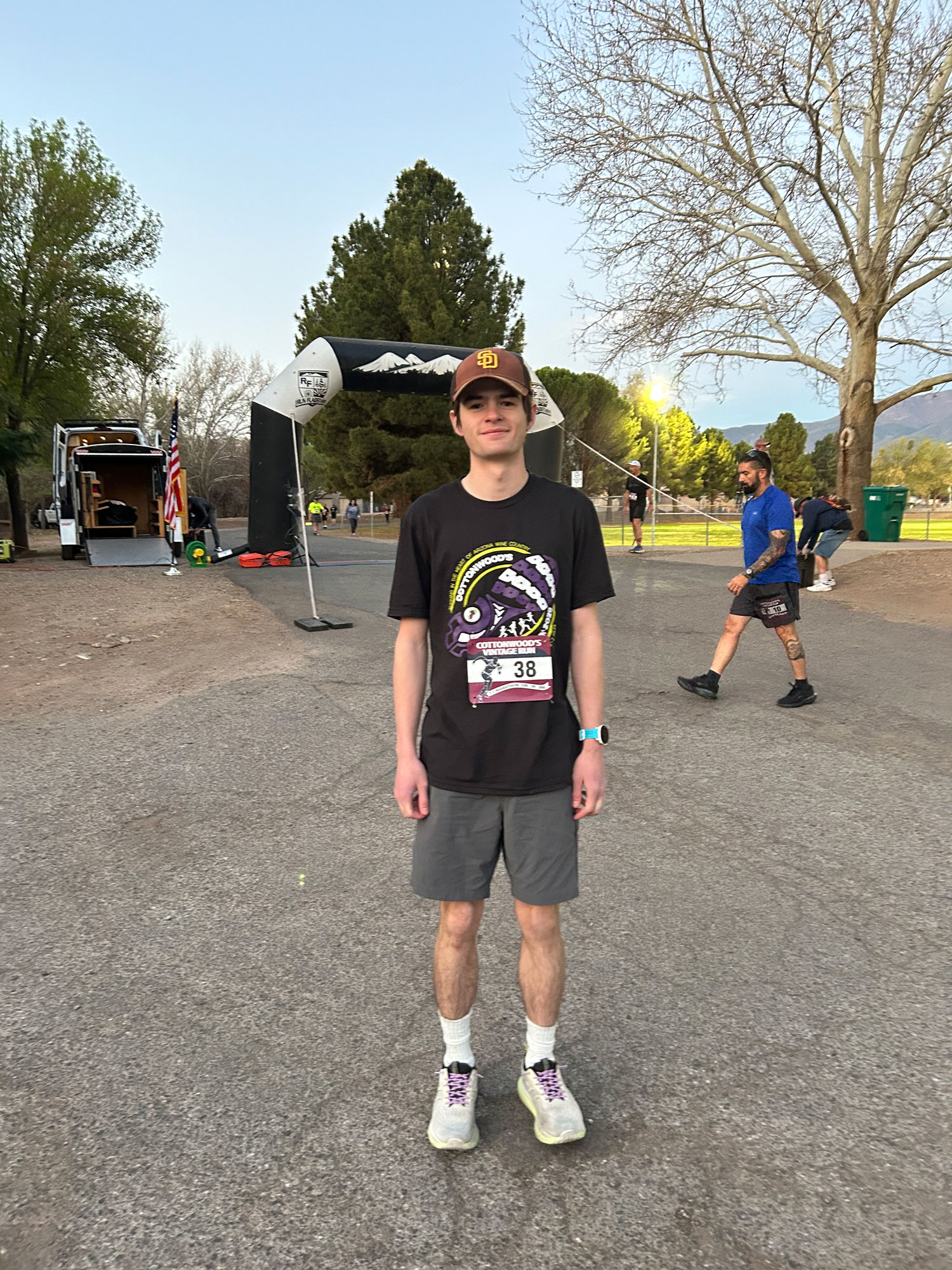
And then there’s the outdoors. Rather than summit any old Colorado fourteener, Garland had to climb Mt. Elbert, the tallest peak in the Rocky Mountains at 14,440 feet. His newest hobby is running, and he’s already scheming to achieve that elusive sub-3-hour marathon pace.
When it comes to the future, Garland’s goals are no less lofty. He hopes to attend a top graduate school, earn a Ph.D. in materials science and engineering, find work in an esteemed lab and potentially become a college professor.
NAU chemistry professor Stephanie Hurst thinks those are fitting aspirations for “one of the most promising undergraduates” she’s ever worked with.
“Over these years I have had the privilege of watching him grow into not only an exceptional young scientist, but also a thoughtful, generous and keen member of the NAU community,” Hurst said. “In my experience, it is rare to encounter someone who combines such intellectual ability, research creativity and thoughtfulness.”
From languishing to leveling up
Garland’s vision for the future wasn’t always so clear. For much of high school, he had little interest in academics beyond computer science. His world revolved around team sports and in-person gaming with friends—until the COVID-19 pandemic hit.
“I’m an only child, so I spent pretty much an entire year alone,” Garland said. “I would spend the whole day watching YouTube videos, and at the end of the day I’d feel really bad. I thought, ‘I’m wasting so much time.’ It scared me, so I started asking questions about who I wanted to be and what I wanted to do.”
Garland realized that if he wanted to attain an advanced degree, he needed to do some soul-searching and get his act together. He paid more attention in class. He put more thought into his assignments. And soon, he discovered subjects he loved: chemistry and physics.
“I had a very caring teacher for AP Physics-C, which is a mechanics class,” Garland said. “He really stressed the importance of breaking down complex problems into multiple simple steps, and that made it more digestible to someone like me who hadn’t really paid attention in math or science before. It was fulfilling to make sense of a problem and solve it on my own.”
In pursuit of more problem-solving, Garland enrolled at NAU, won a NASA Space Grant and joined Hurst’s lab. There, he leveraged the power of the NAU supercomputer Monsoon and his own experience with the coding language Python to enhance a graduate student’s research on thin film materials that are used for superconducting devices, like those that power quantum computers, MRI machines and particle accelerators.
“I realized I loved figuring out answers to things that aren’t in the back of a book,” Garland said. “You use a different part of your brain than you use as a student doing homework or taking an exam.”
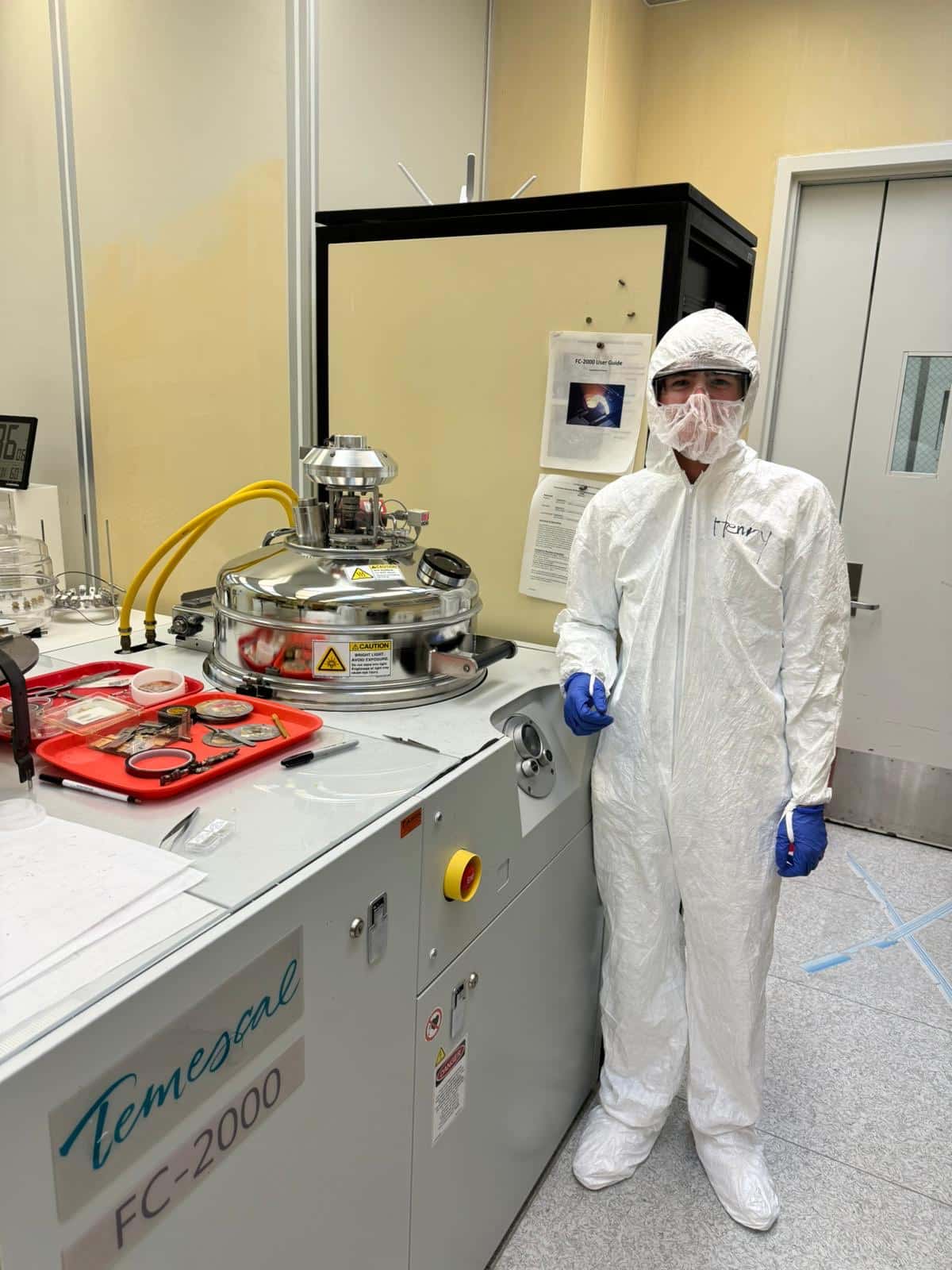
Like an elite athlete, Garland realized that to reach the top of his game, he needed more experience. With Hurst’s mentorship, he landed an internship at the National Renewable Energy Laboratory (NREL) in Golden, Colorado. Rather than logging hours on a computer, Garland was in the lab, blasting metal oxide targets with a high-powered laser to create thin-film materials that could be used in future renewable energy technology.
“I was thrust into pretty hardcore solid-state physics, which is a completely different kind of research,” he said. “I absolutely fell in love. It informed all of my next steps.”
STEMming with compassion
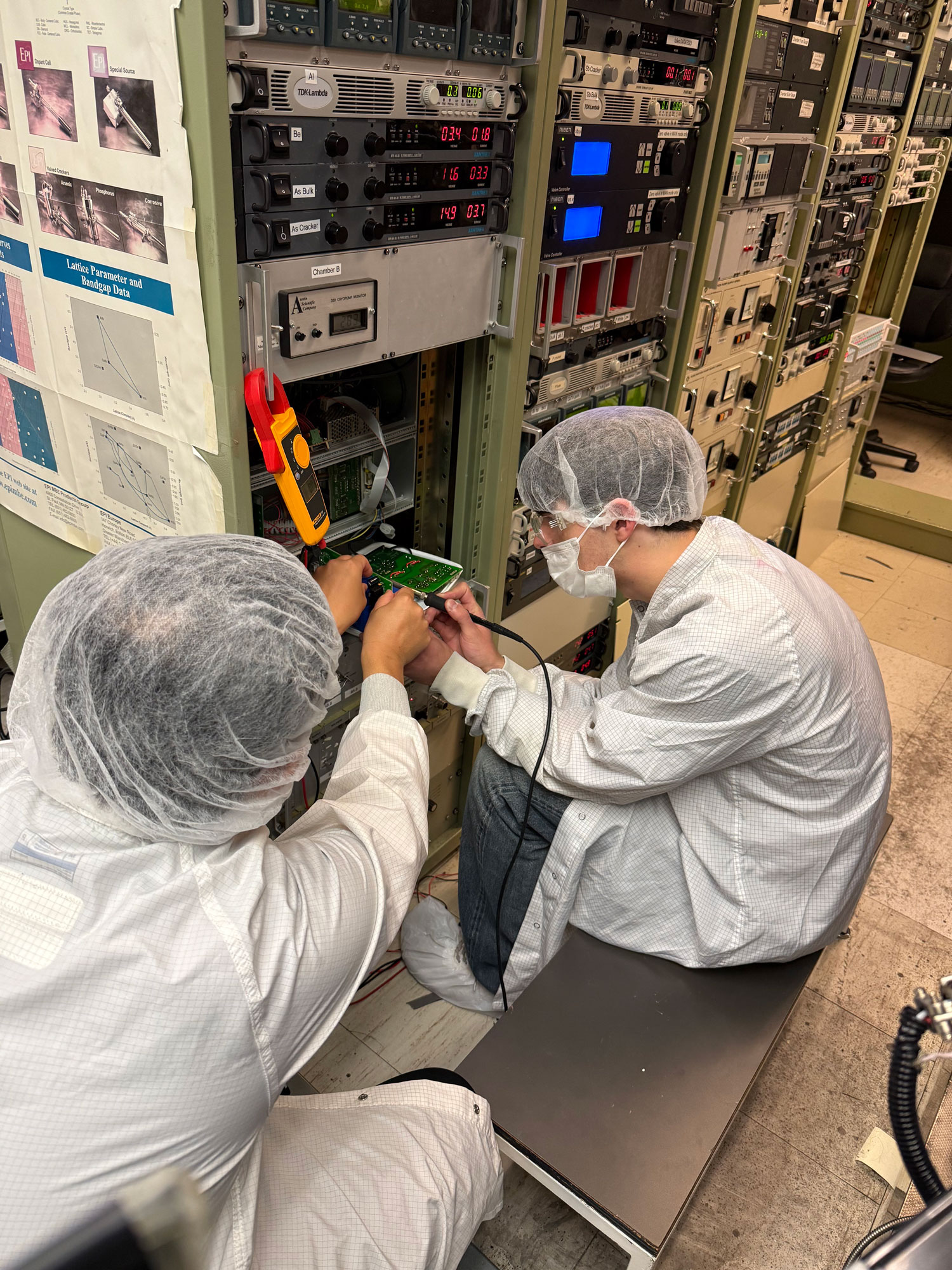
Garland’s goals got even more specific when, later, he spent a summer with ASU’s molecular beam epitaxy (MBE) machines.
“With MBE, you use the world’s strongest vacuum systems to create molecular beams of atoms,” Garland said. “It gives you very precise control over the atoms so that you can create materials from the ground up”—materials that help power computers, renewable energy grids and more.
MBE machines are like the printers of the science world: They break all the time, and fixing them requires lots of creativity and saint-like levels of patience.
“I don’t think a lot of people have that, but it called to me,” Garland said. “With all the troubleshooting and the cool physics involved, I think I can have a really fulfilling career doing this. I’ll never get bored.”
Garland said he doesn’t just have professors like Hurst and Gerrick Lindberg to thank for pushing him in the direction of a problem-solving career. He also gives credit to the Honors College, whose liberal arts-focused courses helped round out his otherwise highly technical education and whose writing support staff helped him craft personal essays that stood out to NREL, ASU and NASA Space Grant.
One specific Honors College course—Melissa Schonauer’s Biology of Cancer—bolstered not only his chemistry knowledge but also his relationship with his dad.
“There was an assignment where you had to interview someone who had cancer, and I interviewed my dad,” Garland said. “I was in elementary school when he was diagnosed, and at the time I didn’t know how sick he was. I learned so much more about him and his cancer treatment because of Professor Schonauer.”
Garland’s time at NAU also taught him how to become a compassionate mentor. Through NAU’s Research Assistant Mentoring Program, he helped connect fellow undergrads with valuable research opportunities, passing on the helpful tips he’d gotten from Hurst and other faculty. He hopes those skills will someday come in handy, whether his career takes him to a lab, to the head of a college classroom or both.
“Eventually, I’d love to become a professor, because it’s a good way to still do research while also making an impact and passing down your knowledge,” Garland said. “I think it’s important to give back in some way.”
Jill Kimball | NAU Communications
(928) 523-2282 | jill.kimball@nau.edu