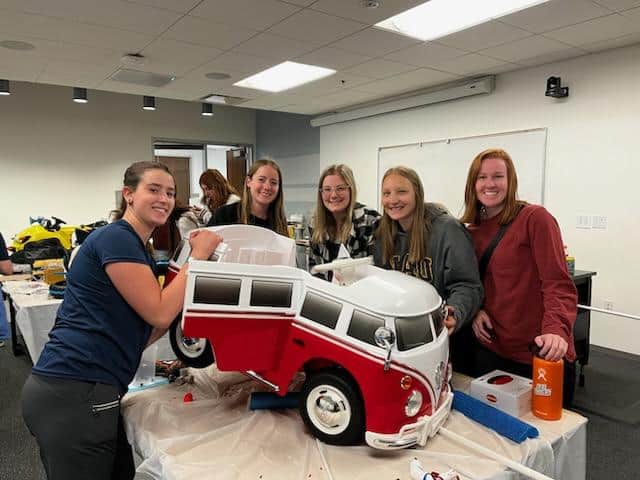


A small but mighty group of occupational therapy students and Sara Stephenson, associate clinical professor of occupational therapy, gathered recently at the Phoenix Bioscience Core (PBC) to review case notes for Analu, a smart and sassy 5-year-old who has spina bifida. Analu cannot walk and like most children with such physical limitations, she does not have a power wheelchair. Power wheelchairs, or electronic wheelchairs, can cost upwards of $20,000, and health insurance often won’t cover such costs for a child who is still growing. That leaves children like Analu either in the arms of a parent or caregiver or in a manual wheelchair that requires a certain level of strength and coordination that not all children with physical disabilities have.
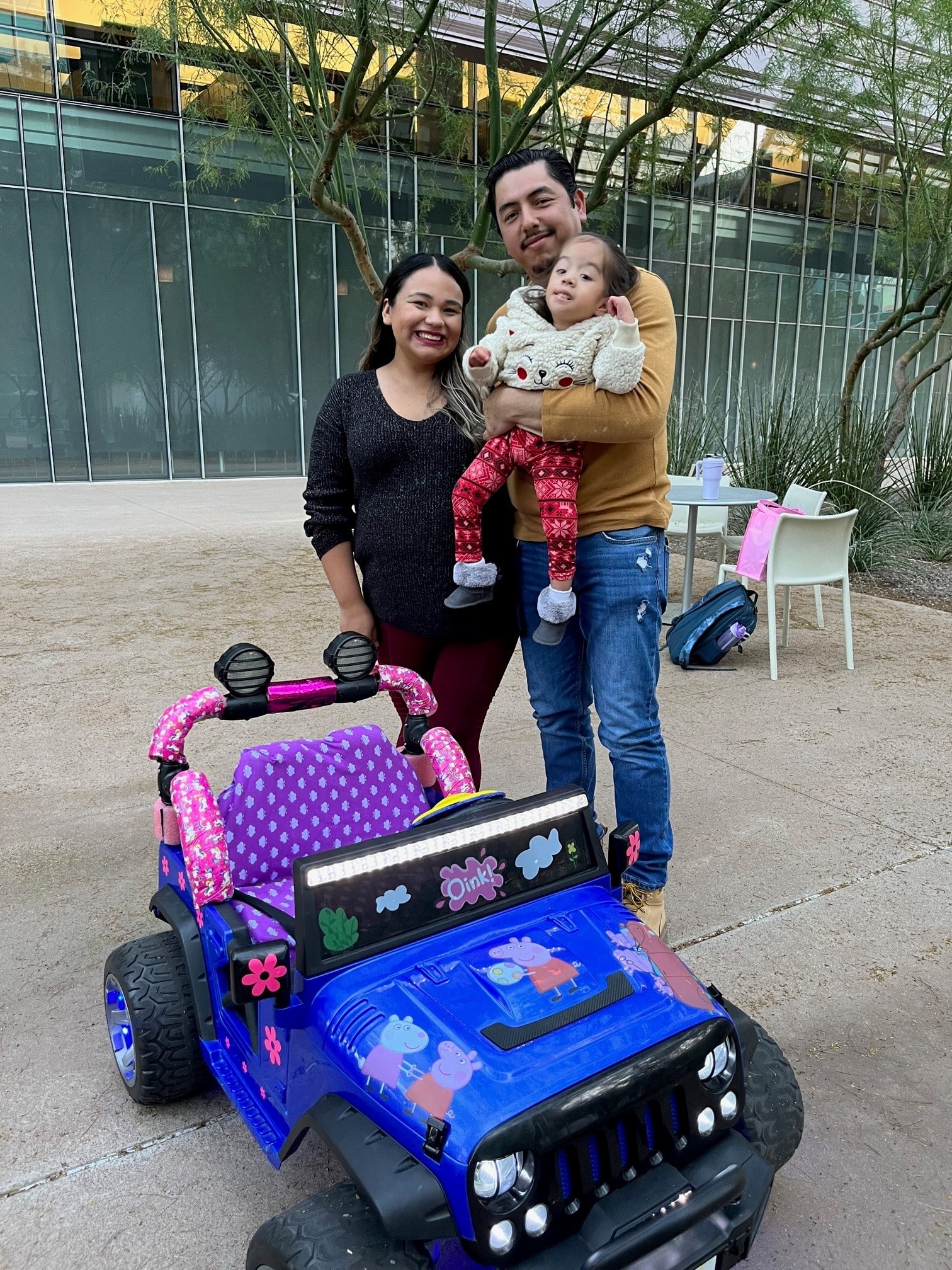 After an extended hiatus due to COVID-19, NAU occupational therapy and physical therapy students have resumed the work they do with Go Baby Go, a nonprofit organization with chapters nationwide, including at NAU’s Flagstaff Mountain Campus and PBC. Go Baby Go takes ride-on electric cars for children, such as Power Wheels cars, and adapts them to meet the needs of children with physical disabilities, giving them mobility and independence.
“If you’ve spent any time with kids, you know that they are constantly moving and exploring,” said Liz Butler, the president of the Go Baby Go Chapter at PBC. “This is vital to their development. Children who can’t explore their environment by walking or crawling are at high-risk for developmental delays. Adapting these cars changes that for these kids.”
After thoroughly reviewing case notes for each child, the occupational therapy students develop a game plan to adapt the cars, which are either donated or bought secondhand online, and share that plan with the Robotics Club at Saguaro High School. Together, they adapt the car to meet each child’s needs, giving them newfound mobility.
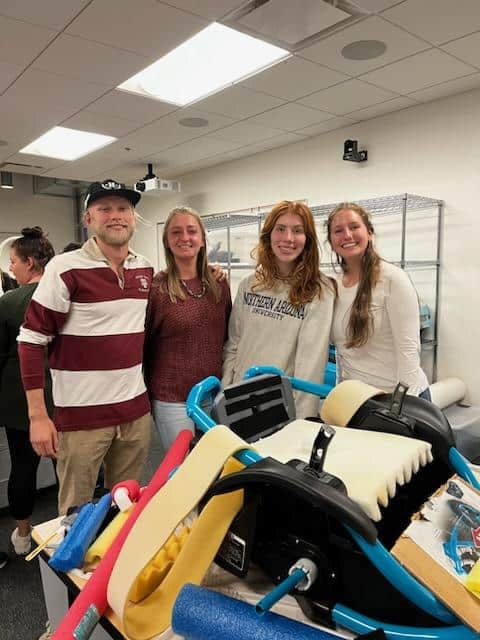 In Flagstaff, physical therapy students take a similar approach. They work with Kyle Winfree, associate director for graduate programs in the School of Informatics, Computing, and Cyber Systems, and NAU engineering students to make the adaptations. They recently built a car for a 2-year-old boy who lives on the Navajo Nation and is served by NAU’s Institute for Human Development’s Growing in Beauty Early Intervention Program. This child is not yet walking independently and has limited strength. Additionally, he has limited range of motion of his left upper arm, so the vehicle was adapted to allow his arm to be propped up as he uses the “steering wheel” of the car. With his new car, he can move about independently, something that hadn’t been possible until now.
The students are eager to continue adapting ride-on electric vehicles for children all over the state of Arizona so they can go, go, go.
Alexandra (Alex) Fischer | College of Health & Human Services
(928) 523-2465 | Alexandra.Fischer@nau.edu