

It’s only a matter of time before four cameras built by students and faculty at Northern Arizona University will launch into deep space on a dual spacecraft bound for Mars.
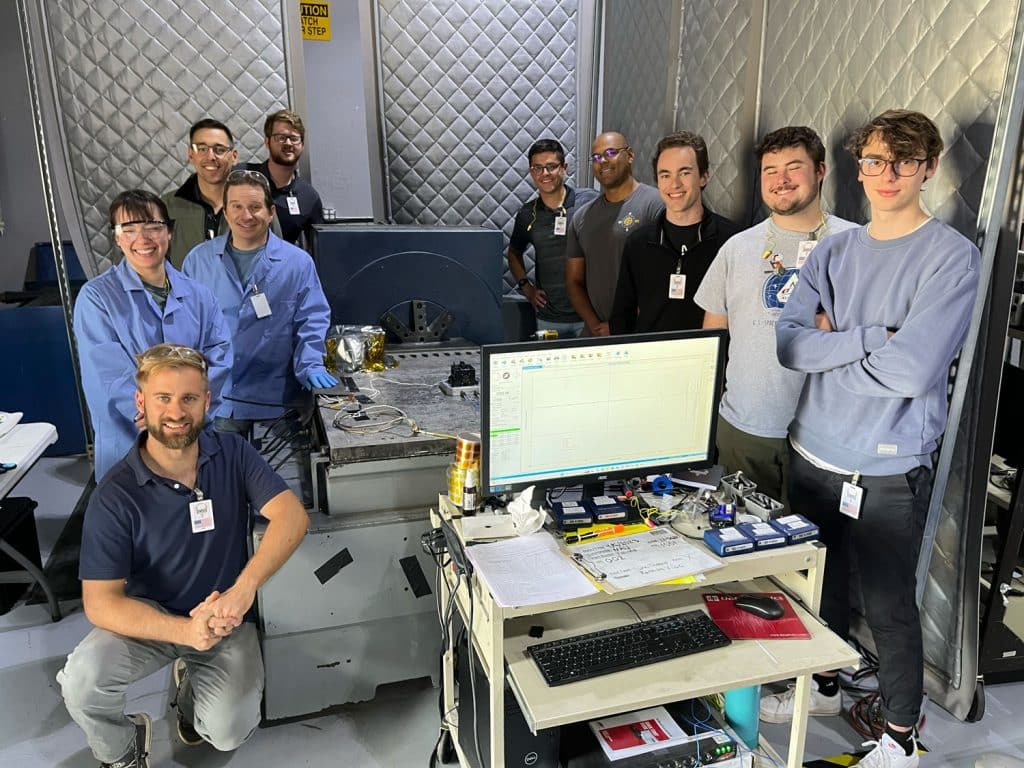
Two traditional cameras and two infrared cameras, designed and constructed by 35 NAU students over the course of three semesters, will capture images from NASA’s science mission ESCAPADE, conceived by UC Berkeley physicist Rob Lillis in partnership with NASA and space technology company Rocket Lab.
The mission is set to launch no earlier than Sunday, Nov. 9 aboard a Blue Origin New Glenn rocket from Cape Canaveral Space Force Station in Florida. For soon-to-come details on the launch time and the livestream, follow Blue Origin on X.
Christopher Edwards, a professor of planetary science and director of NAU’s new Radiant Center for Remote Sensing, said that when Lillis first approached him about building a camera for the mission, he knew he wanted students to get involved. After all, for future planetary scientists and engineers, there’s no better training than a hands-on collaboration with NASA—a unique opportunity for college students to gain real-world experience.
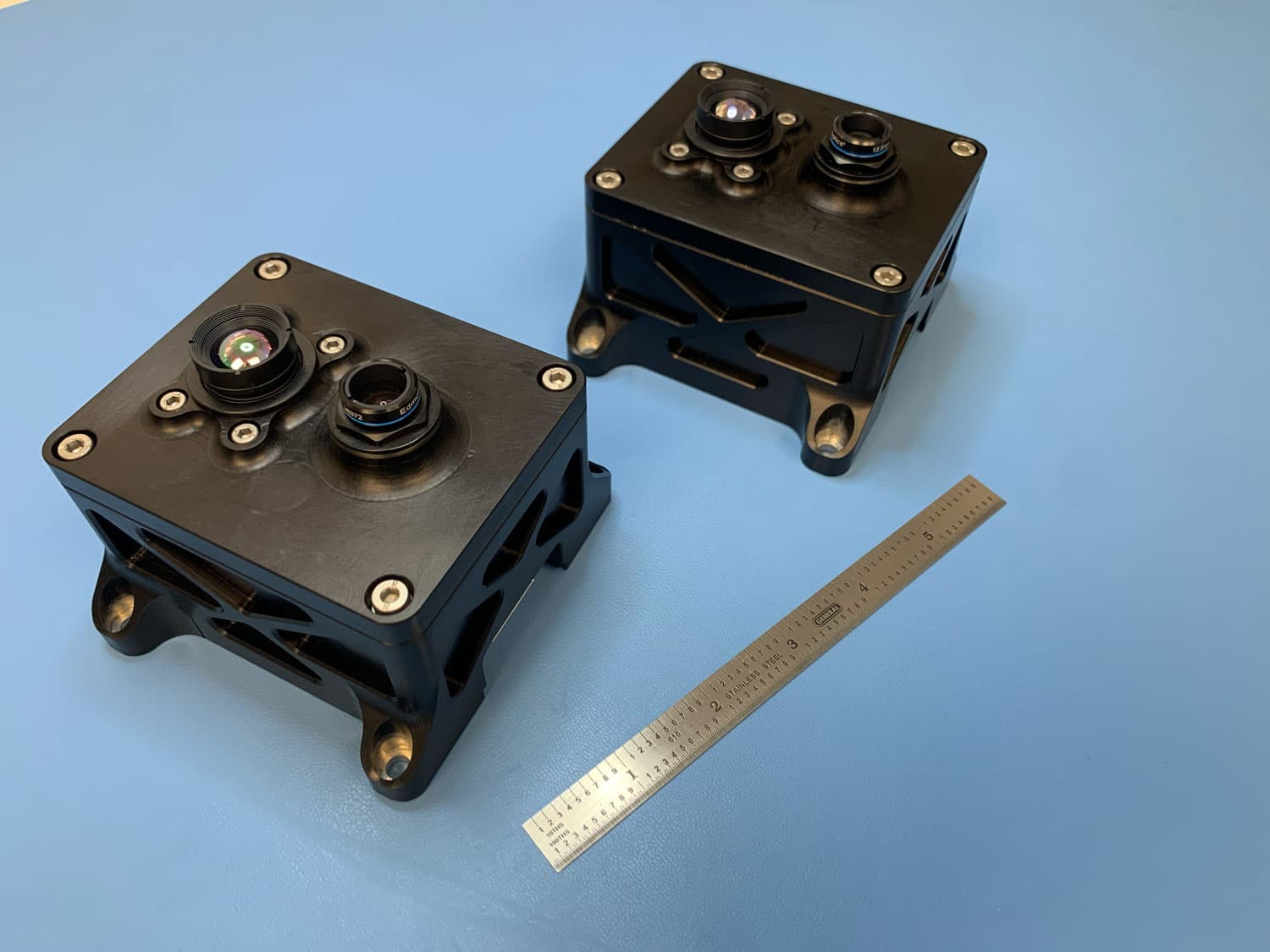
“The students got to engage with NASA all the way through a project, from conception to design to testing to launch and beyond,” Edwards said. “Whether it was figuring out the mechanism to secure a tiny electronics board, transferring heat from that board to the instrument chassis in an environment where you can’t use fans or mounting the optics and sensors in a way that will survive launch, the students had to deal with it all.”
With support from the Arizona Board of Regents’ Technology Research Initiative Fund, Edwards created the courses and oversaw the students’ work alongside professor David Trilling and assistant research professor Chris Haberle, both in the Department of Astronomy and Planetary Science, and professor of mechanical engineering Michael Shafer.
It’ll be some time before the NAU team begins analyzing images collected by ESCAPADE’s two spacecraft. If all goes according to plan, the spacecraft will be in a “loitering” phase up to 2 million miles away from Earth for several months before conducting a camera test and eventually continuing on to Mars, for arrival in September 2027. Edwards estimated that it could be up to a year after that before the cameras begin capturing images of the Red Planet in earnest.
When that does happen, Edwards said, the results could be groundbreaking.
“We have northern lights here on Earth, and theoretically, so does Mars,” Edwards said. “We think we can capture the aurora with our cameras.”
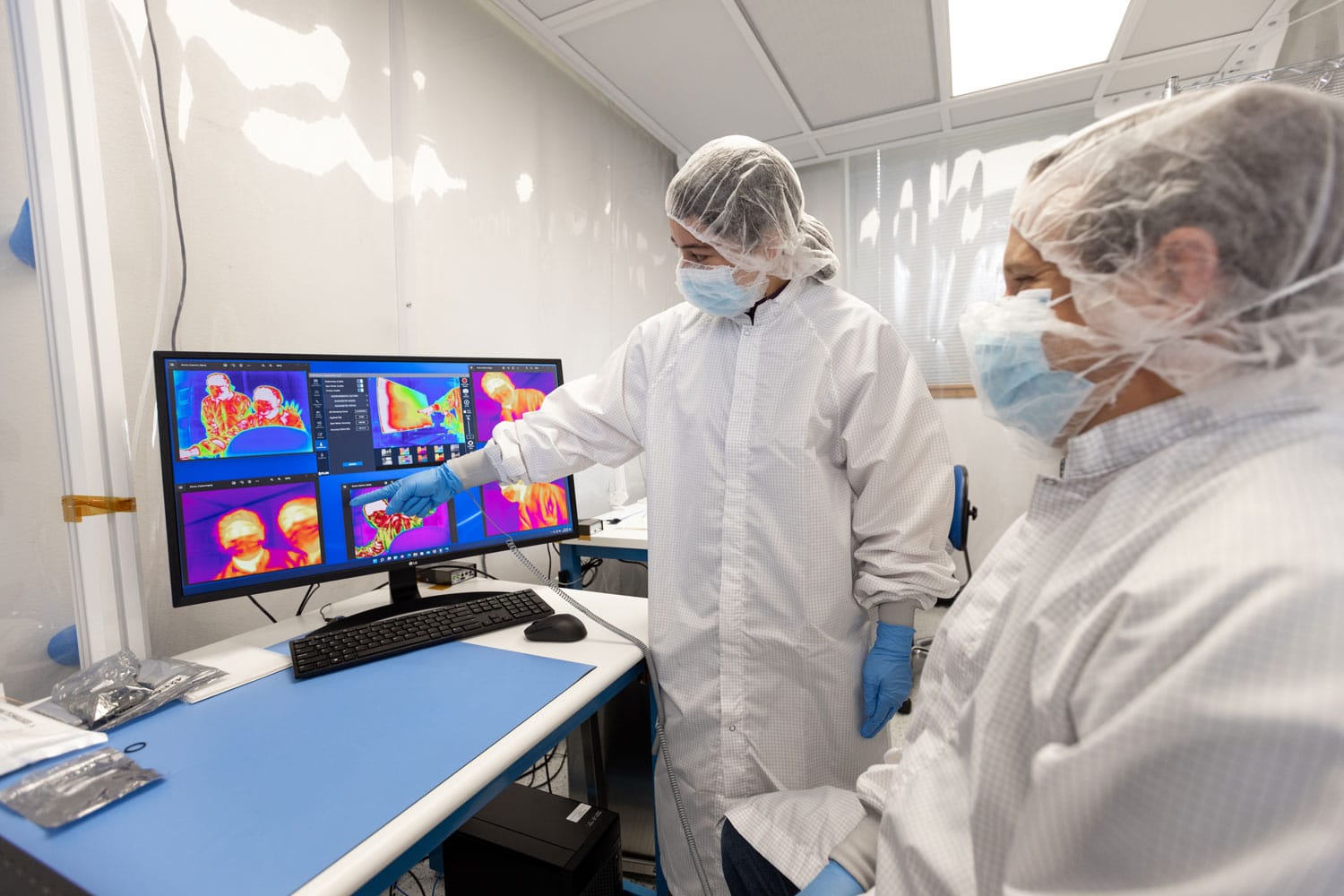
The cameras could also capture true-color views of Mars from never-before-seen angles, providing proof that gathering high-quality data from space doesn’t have to break the bank. Plus, the students’ infrared cameras might help provide new data on Mars’ polar cap evolution.
If that happens, it’s possible Edwards and his colleagues will turn to students for help analyzing the images and adding them to an online database—providing them with unparalleled experience and setting them up for career success.
“For the operations and analysis phase of the project, we plan to recruit students who have a strong background in computing and data analysis as well as science,” Haberle said. “It’s going to be an exciting time operating an instrument around another planet and analyzing the data that are returned.”

Jill Kimball | NAU Communications
(928) 523-2282 | jill.kimball@nau.edu