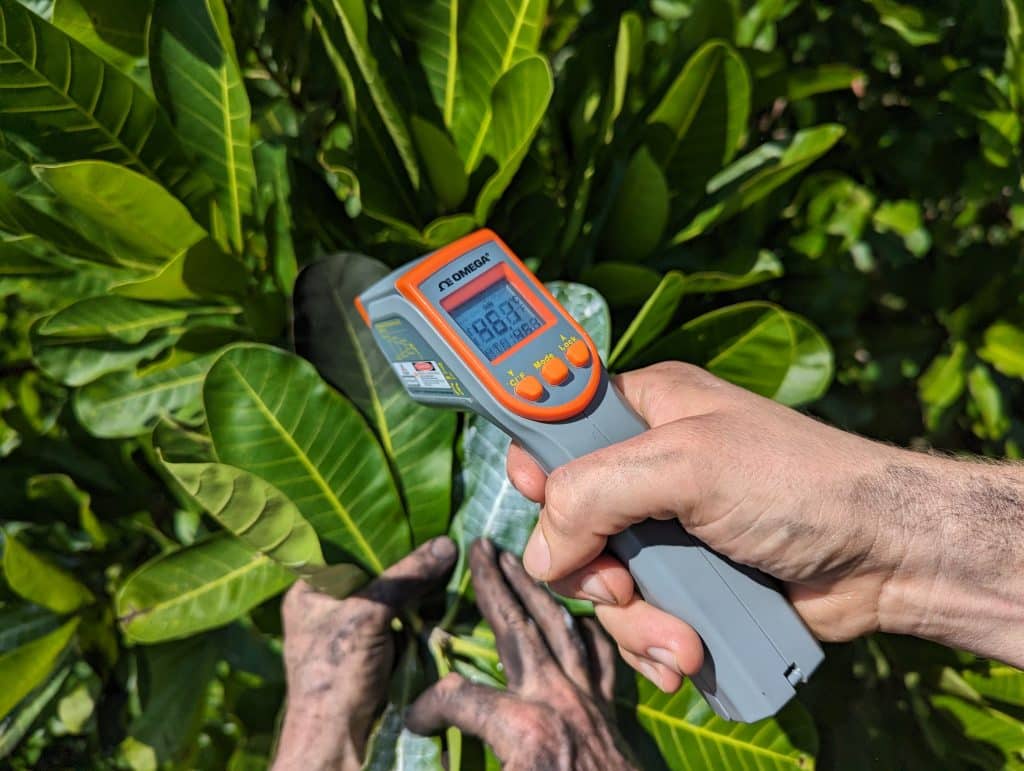


Researchers at Northern Arizona University and the Smithsonian found an unconventional method to understand how rainforests will survive with climate change—making tea with living leaves at the top of the rainforest canopy.
The results, published this week in JGR Biogeosciences, are encouraging: The researchers learned that tropical forests may be less sensitive to climate change than originally feared.
“Experiments like these will help us improve the models that predict not only how tropical forests will respond to future warming, but also what Earth’s climate will look like in the future—even here in Arizona,” said Ben Wiebe, a doctoral student in ecoinformatics at NAU and second author on the study.
Reading the tea leaves
 The study, led by Chris Doughty, an ecoinformatics professor at NAU, built on prior work in Nature that found some leaves in tropical forests could become hot enough to die under future climate change. Widespread leaf death in tropical forests could be accelerated if, when one leaf dies, it heats up the living leaves around it. However, no one had tested this at the top of a rainforest canopy before.
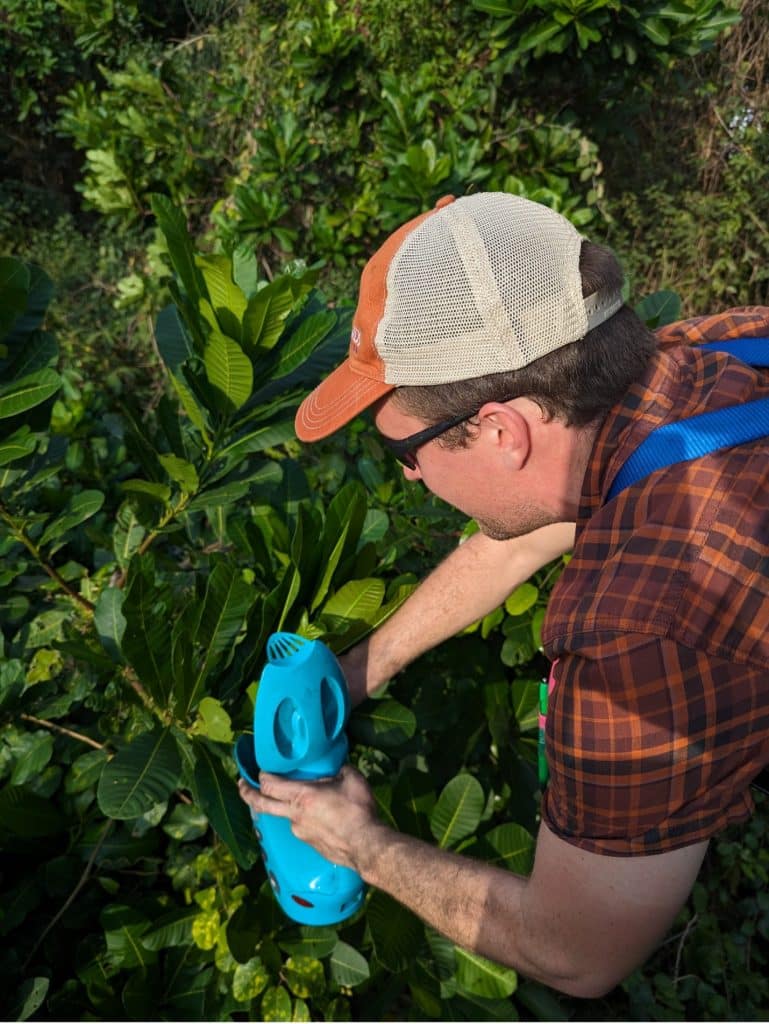
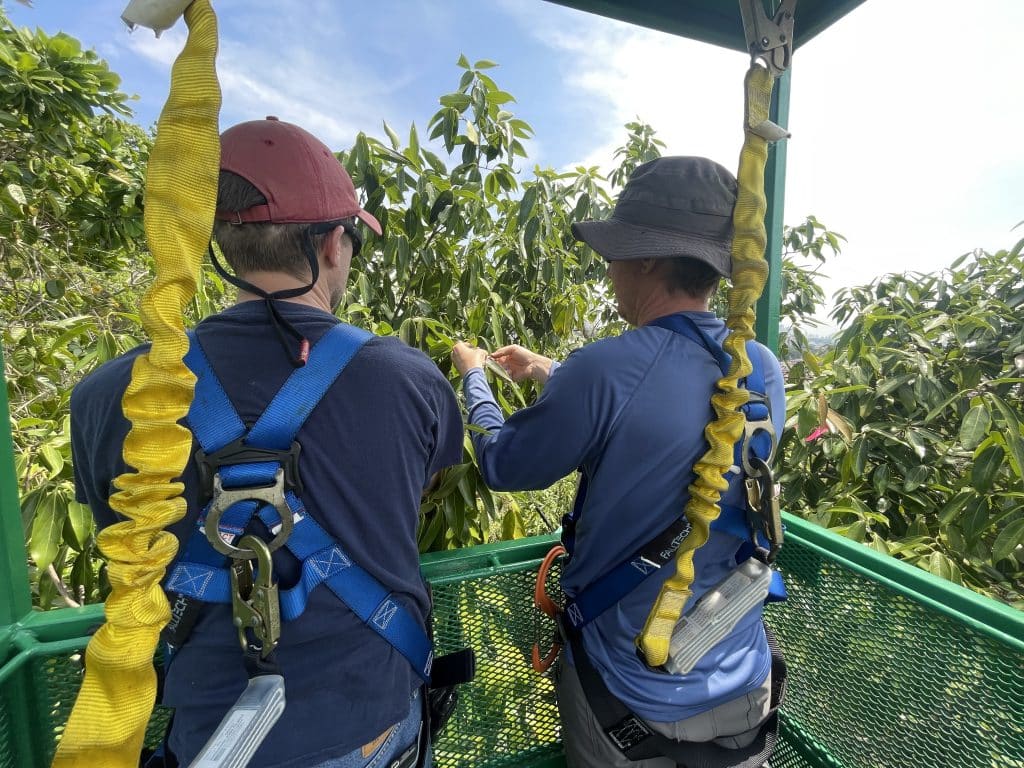
To test this hypothesis, the researchers submerged living canopy top leaves from a Panamanian rainforest in boiling water while the leaves were still attached to the trees. In collaboration with the Smithsonian Tropical Research Institute, the researchers used a canopy crane to access to the uppermost canopy leaves of multiple tree species. Submerging the leaves in boiling water was the quickest, easiest way to kill them from heat death, which replicates future climate change-driven heat death. They then monitored the surrounding leaves.
Over time, the researchers saw that dead leaves did heat nearby leaves but less than expected because when leaves died, they also got much brighter. Dead leaves will not cool themselves by evaporating water, but they cool themselves by reflecting more of the sun’s energy away.
“This unexpected result is good news because it means that upon death, leaves do not heat up surrounding leaves as much as we thought, so tropical forests may be less sensitive to climate change,” Doughty said. “While boiling leaves at the top of the canopy may sound unconventional, this method of reading the tea leaves delivered insights that bring us closer to understanding the future of tropical forests.”
 While at the top of the canopy, the researchers studied what happens if leaves get darker. In prior work, members of the team found that climate change might lead to thinner, darker leaves. The team tested this by artificially darkening canopy top leaves with charcoal. A darker leaf would either evaporate more water to maintain its temperature or get hotter, but it was unclear which outcome would happen. The team found that the leaves mainly evaporate more water, but this is different from predictions by Earth System models. This simple difference could lead to different future climates predictions.
“It may seem silly to boil leaves at the top of a rainforest, but it actually led to some results that can help us to understand the future fate of these bastions of carbon and biodiversity,” said Smithsonian Tropical Forest Researcher Martijn Slot.