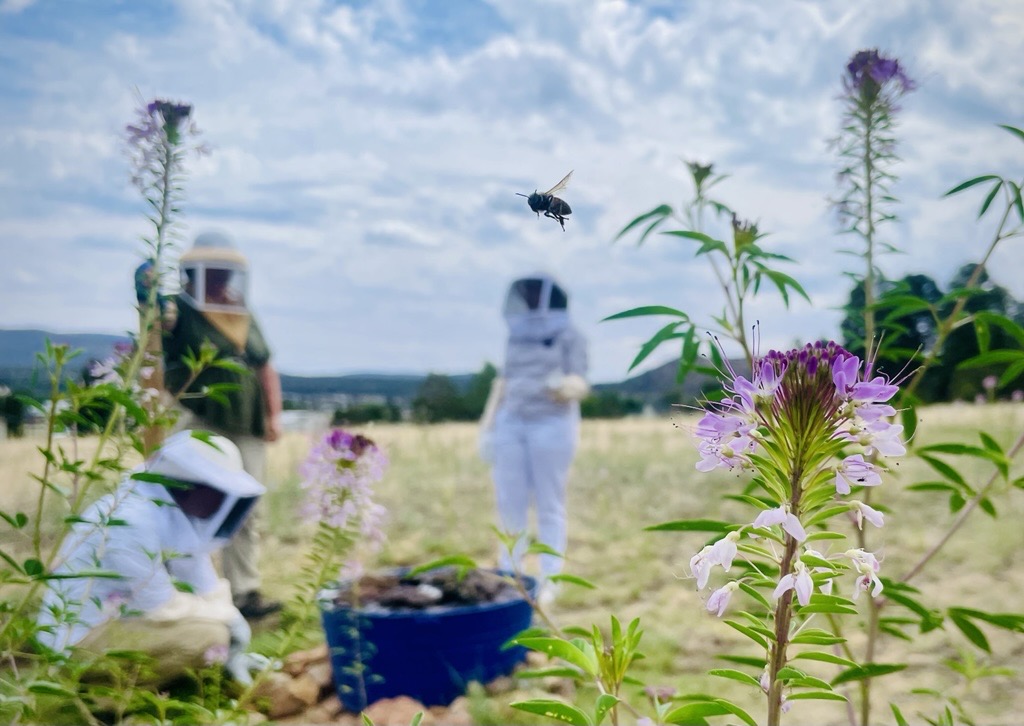


In a world increasingly aware of its environmental footprint, beekeeping is about more than just making honey—it’s a powerful way to support biodiversity, strengthen local ecosystems and reconnect with nature.
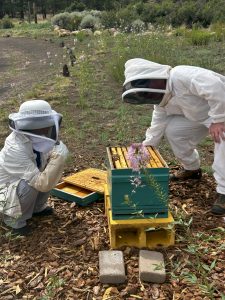
Patrick Pynes, an assistant teaching professor with NAU’s Department of Applied Indigenous Studies, has been a beekeeper since 1991. Every year, he hosts an Introductory Beekeeping Workshop to give those interested in fostering these fascinating buzzing creatures an up-close, hands-on, unforgettable experience.
The four-part workshop is a partnership with the Sustainable Communities Program at NAU and the Northern Arizona Organic Beekeepers Association. It focuses on local and sustainable beekeeping practices that emphasize the health of bees, reducing environmental impact and promoting long-term ecological relationships.
“My interest in beekeeping goes back to when I was like 5 years old and I was visiting my grandfather’s hometown,” Pynes said. “My parents took me downtown to the little jewelry shop and watch repair store that my great-grandparents owned in this little town called Atlanta, Texas.
My grandfather’s brother was a beekeeper and he had big jars of cut comb honey, along with the watches, clocks and jewelry in the front window. I just fell in love with the beauty of that honeycomb in the bottle of honey. In that moment, I became a beekeeper, but it took me 20 years before I did it on my own.”
Pynes started his beekeeping journey by taking a class at the Rio Grande Nature Center in Albuquerque, where he learned how to catch a swarm. That is how he got his first hive.
“It is one of the most fun things in beekeeping, finding a swarm,” he said. “It hangs down like a beachball from a light pole and you just catch it. It is amazing because the swarm is so beautiful and powerful. They look like they could kill you, but in fact, they are very docile, very gentle. It is only when they are in a colony with a comb that they can be more defensive or if someone is threatening their environment.”
To bee or not to bee
Bees are essential pollinators that contribute to food security and play a role in maintaining a healthy ecosystem and biodiversity, but they are struggling to survive due to changes in the environment. Beekeeping is not only an interesting hobby that can provide income through the sale of honey, beeswax and other hive products; it also offers a way to actively interact with bee populations and help mitigate their decline due to habitat loss and pesticide use.
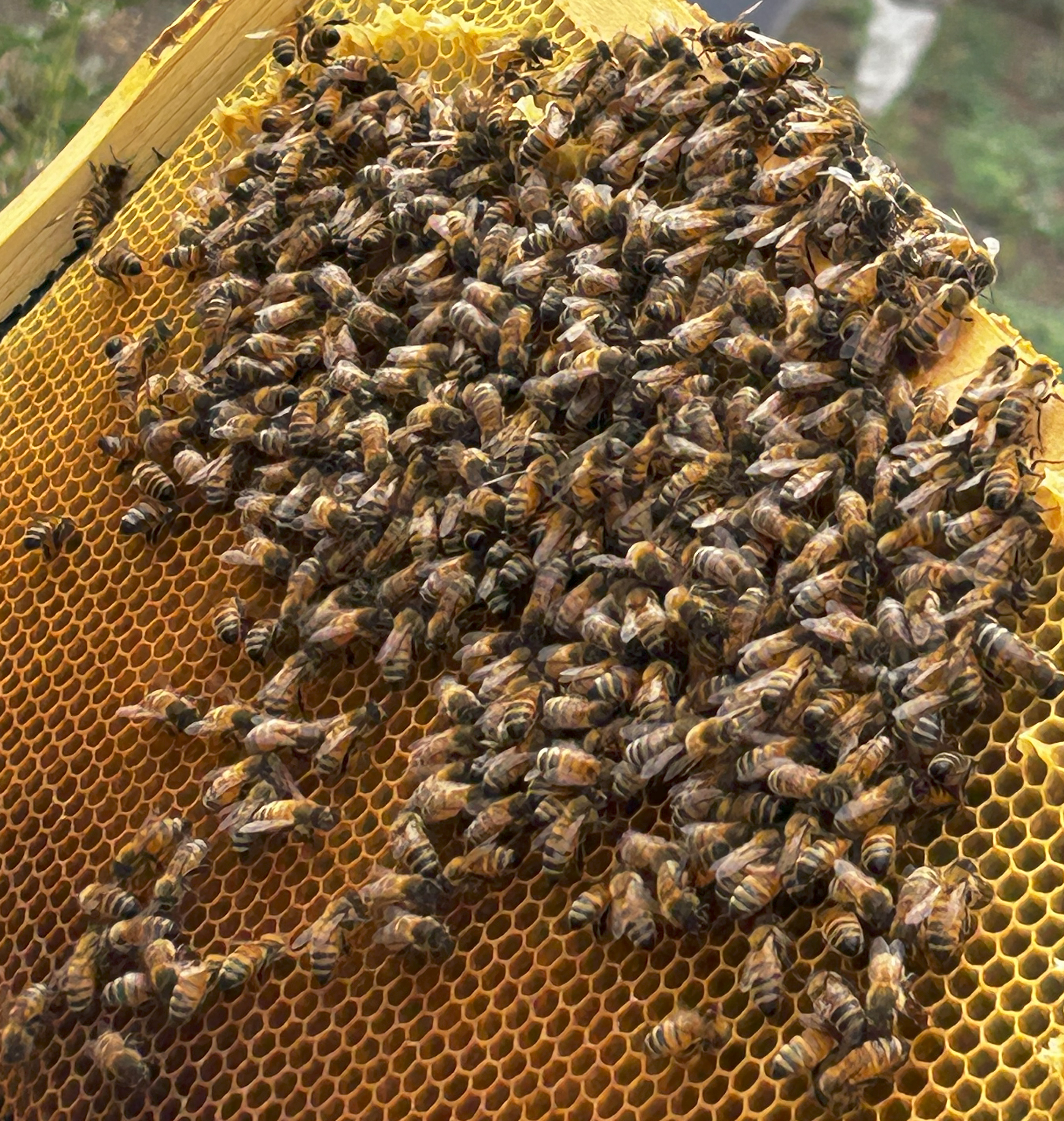 “One of the main challenges we are seeing right now is the lack of flowers due to drought conditions,” Pynes said. “That is a big challenge for beekeepers, making sure that you keep the bees in a place with abundant floral resources.”
The cold temperatures in the winter also have a profound effect on the well-being of the bees since they might prevent them from getting out of the hive to fly around and can contribute to unhealthy conditions inside the hive.
Beekeepers make adjustments to their hives as they assess weather conditions, flower resources, and even fire warnings in their area. They move hives when needed and can also choose to feed their bees as a last resort if the environment around them is not conducive to their survival.
“The honey’s color, texture and taste are influenced by the flower,” Pynes said. “For example, in Flagstaff, bees collect primarily nectar from plants like the Rocky Mountain Bee plant. It has a distinct taste, like different wine grape varieties, but the taste can also be influenced by the soil and the environment around it.”
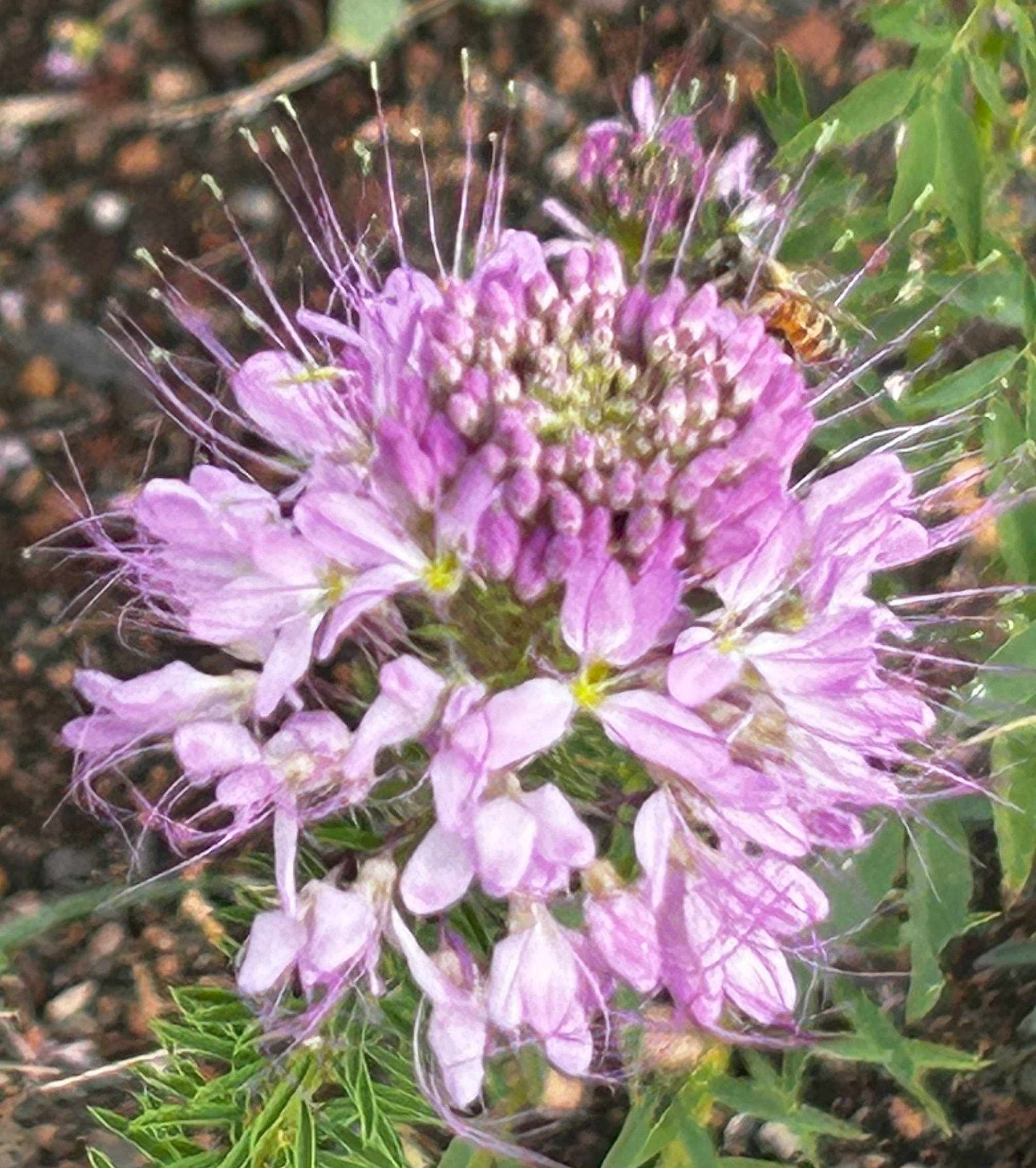 This is why some believe that eating local honey helps combat seasonal allergies since it contains the pollen and nectar of local flora that, taken in small doses, can help build immunity to certain allergens in the environment. Honey can also act as a medicine due to its anti-inflammatory capabilities.
An un-bee-table hobby
Denbie Nash, who is originally from Texas, was one of the participants in the Pynes workshop. She always wanted to become a beekeeper and was able to do so when she got together with her partner three years ago. She enrolled because she appreciates Pynes’ unique perspective on organic beekeeping, his understanding and his respect for the environment.
“We’re just fortunate to have him,” Nash said. “There are many beekeepers and great teachers and I want to learn as much as I can and I appreciate his approach.”
Other participants were there to learn how to become beekeepers and help the environment, and according to Pynes, attending a workshop such as this one is just the first step.

“You have to educate yourself,” he said. “Take a class, do research, read books, look at websites, talk to other beekeepers and find a mentor. All beekeepers struggle in the beginning and they sort of figure it out as they get more involved. I encourage people to become lifelong beekeepers because bees are so important to the health and well-being of people and the environment itself.”
For those who are not interested in fostering these buzzing pollinators but want to help them thrive, Pynes said there are ways they can do just that, like planting flowers, avoiding the use of harmful pesticides and insisting that their towns have policies that are good for the health and well-being of flower plants, honeybees and other pollinators.
For more information about the workshop, visit https://honeybeeteacher.com/.
 Mariana Laas | NAU Communications
(928) 523-5050 | mariana.laas@nau.edu