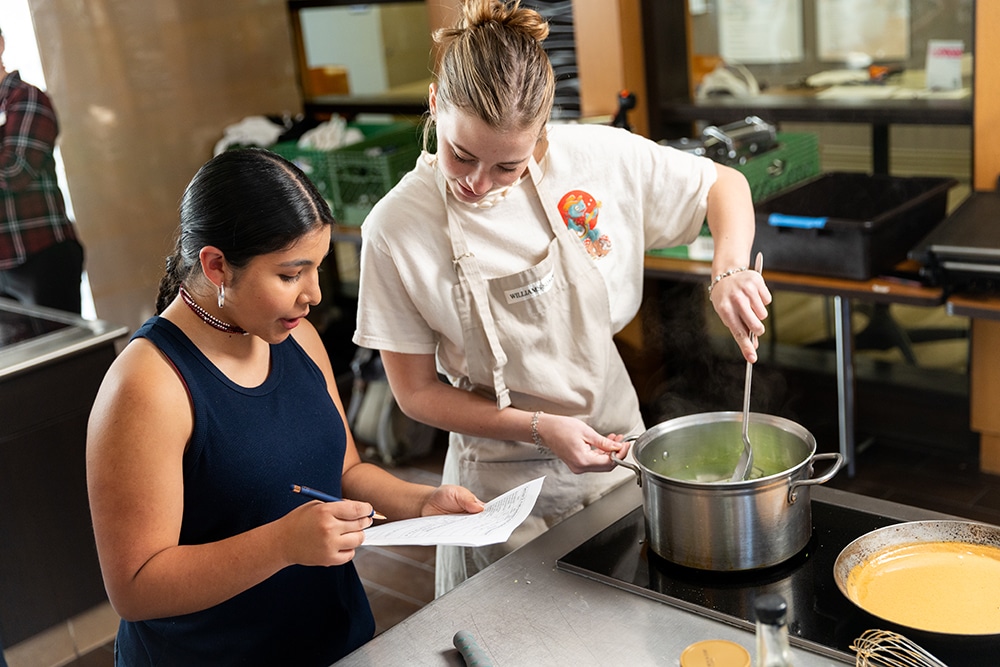


Students in the Food is Medicine class were hard at work in their final lab of the semester. With aprons on and hair pulled back, groups of four students gathered around a cooking station in the HRM kitchen and read through their recipes. One group washed and chopped mushrooms, another mixed cookie batter and others prepared chicken or jackfruit to marinate.
This week, though, another group of students joined the lab. These public health students had clipboards, checklists and thermometers, and they were looking closely for any slips in food safety. They quizzed the other students about handwashing and kept their eyes peeled for (plastic!) bugs.
It was career-ready learning for everyone—cooking and nutrition for the Food is Medicine students and how to do a restaurant safety inspection for the public health students. And at the end, everyone got stuffed mushrooms, skillet cookies and stir fry.
“It’s easier for them to learn when they’re cooking vs. reading a slide,” said Megan Meyer, a faculty member in nutrition and food, while public health faculty member Kasondra McCracken added, “It’s really cool for the students to give it a try.”
Gastro-pupils
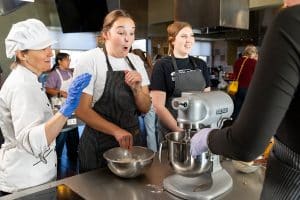 Senior Lizzie Greene reviewed the recipe for skillet chocolate chip cookies with her group. These weren’t standard cookies; they were vegan and had no refined sugar, which can help keep a diner’s blood sugar down.
Making cookies that are lower in fat and sugar is a great way to make sweets part of a balanced diet, said Greene, a biomedical science major. All semester they’ve studied how to use food as medicine in a person’s everyday practice, and cookies help.
“That’s going to be more fun than just eating fruits and vegetables,” she said.
Her goal after graduating is to work in immunology at Flagstaff Medical Center, and this class will be beneficial. Plus, Greene said, she has her own health issues and is always looking for ways to feel better.
For freshman Joseph Keleher, a nutrition and foods major, adding the extra element of the health inspector—and a reporter with a notepad and photographers with cameras—upped the ante of the cooking.
“It’s fun! It reminds me of cooking shows,” Keleher said. “It really is nice to be in this environment.”
He’s studying nutrition and food and loves cooking, so this class has provided a welcome look into how a commercial kitchen is different than a home kitchen. He wants to be a dietitian with the goal of eventually returning to graduate school and becoming a professor.
In addition to broadening his palate—throughout the semester the students have cooked tofu, jackfruit, bison and other less common proteins—Keleher appreciates the different outlook on food that professor Jay Sutliffe shares in the classroom and culinary lab director Chloe Sutliffe creates in the kitchen. The class focuses on plant-based recipes, new ways to cook vegetables, what can be done with different ingredients and how including a generous dose of naturally occurring nutrients like fiber, iron and vitamins can make food a key part of managing chronic conditions and helping to prevent disease.
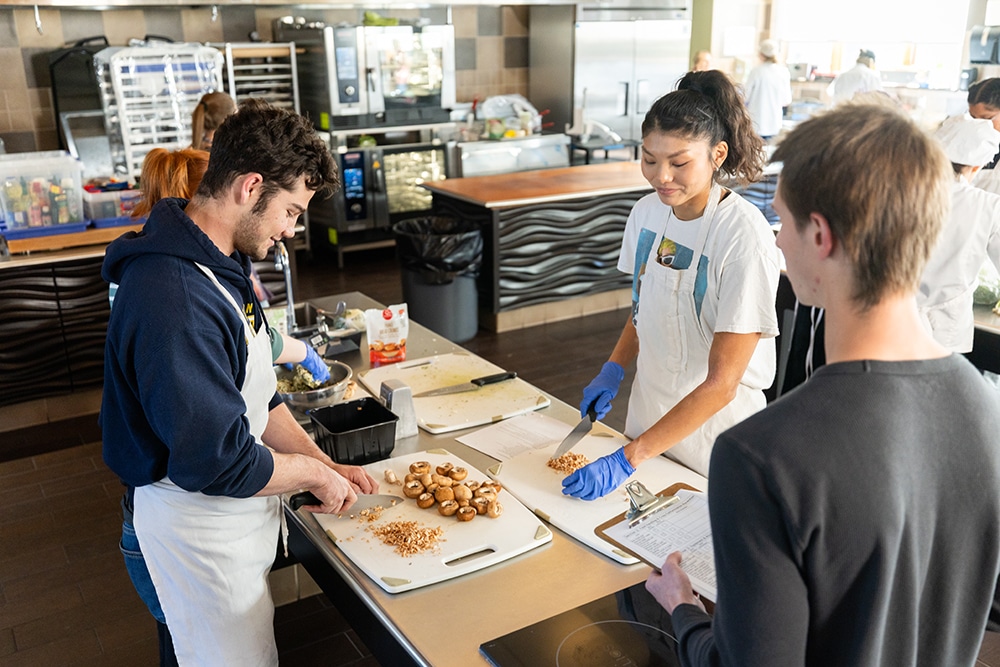 Chloe Sutliffe, who oversees the lab, said the hands-on experience wasn’t just about cooking. The students get to taste everything as well and develop a broader palate and appreciation for different ways of cooking and flavors from other cultures.
“We’re looking at foods that can heal us,” she said. “We really want them to experience different foods and gain the culinary skills so they can take food to a different level in their homes.”
Bryce Bolin weaved his way through the kitchen, food thermometer in one hand, clipboard on the other. He was on a mission: Did the tofu get to a safe temperature?
For Bolin, a sophomore environmental science major taking McCracken’s environmental health class, getting to be a health inspector was a lot of fun. He always walked past the kitchen and wondered what got taught in there.
“I actually get to see what’s going on in here today,” he said.
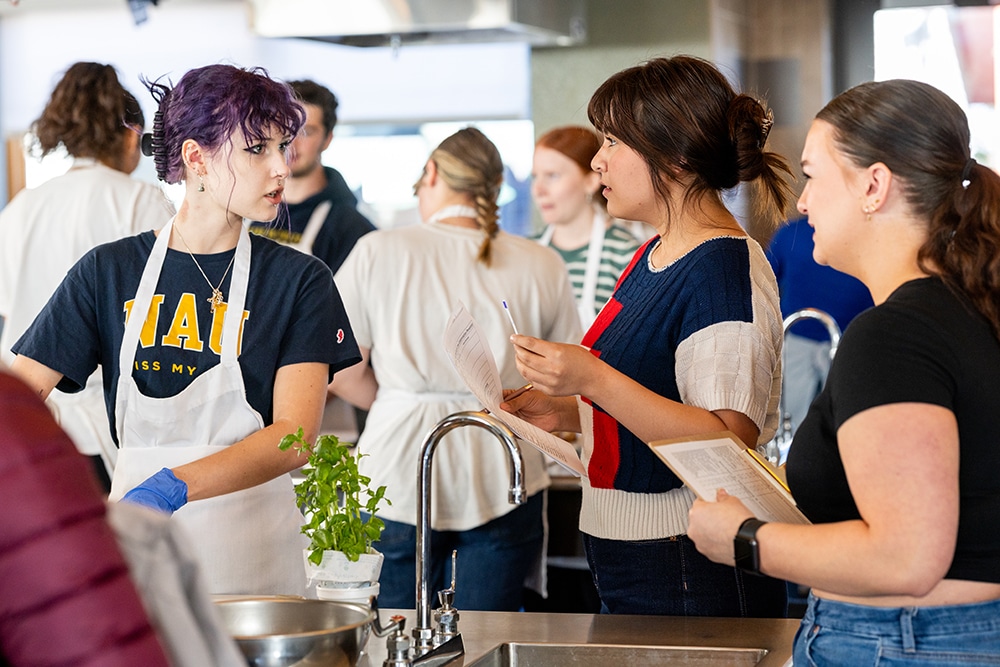 The restaurant, he was able to report, was pretty clean—he found a trash can without a bag and a couple of stations were out of hand sanitizer. He also found four plastic bugs that McCracken planted.
He wants to be an environmental lawyer, so this doesn’t go directly into his career plans, but for some students, it’s a great fit. McCracken said this is the second semester they’ve done this joint class, and two students have approached her after and said they wanted to do health inspections for a career after graduating. It’s a good job for a college grad, she said; people need a bachelor’s degree and the job is usually in demand.
To learn more about the Food is Medicine class, check out the NAU course catalog.

Heidi Toth | NAU Communications
(928) 523-8737 | heidi.toth@nau.edu