

Does a root fungus hold the key to growing food on the Moon?
That’s a question Laura Lee, a Ph.D. student in the Department of Astronomy and Planetary Science, asked herself as she rotated through different specialties in her department. Her research, for which she received a Graduate Research Fellowship (GRFP) from the National Science Foundation, focuses on water in space—also a critical part of putting people onto Mars and the Moon.
But water isn’t enough to grow food. Lee, curious about the capabilities and difficulties of extraterrestrial crop growth, looked into soil ecology and mycorrhizal fungi with Nancy Johnson, a Regents’ professor in the School of Earth and Sustainability. Using her GRFP funds, she bought soil that simulated the chemical make-up of soil on the Moon and Mars. Then she grew corn.
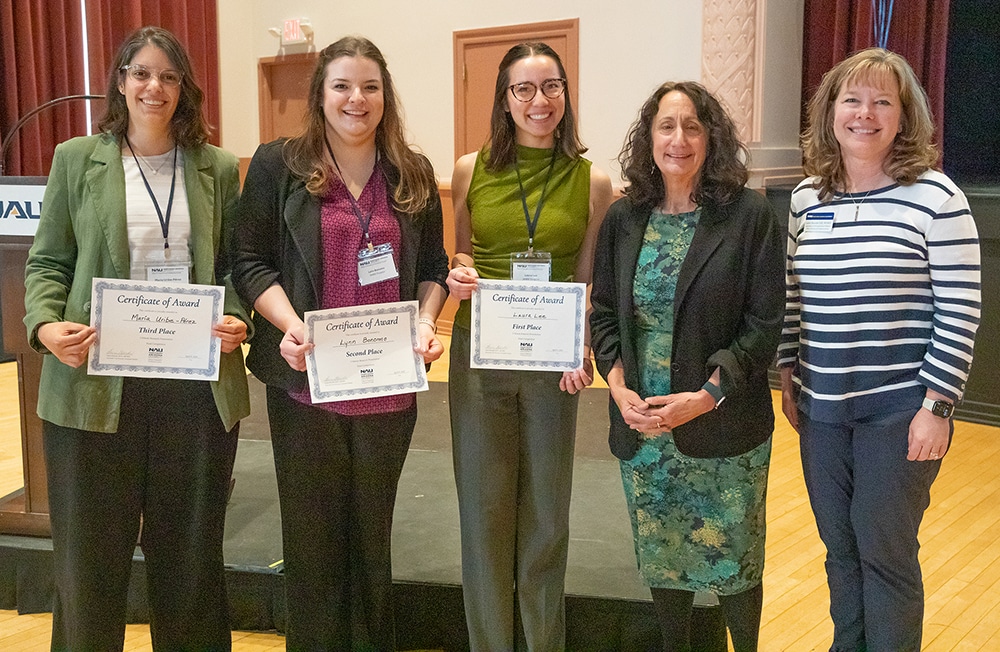
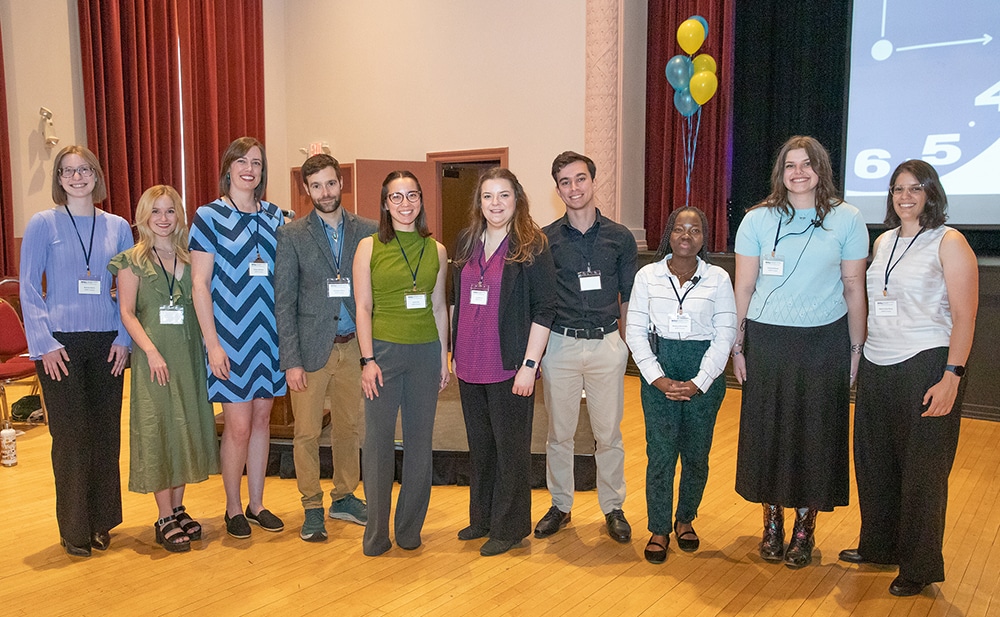
Last week, she was one of 10 graduate students who presented their work at NAU’s annual 3-Minute Research Presentation (3MRP). Lee took home first place and a $3,000 prize not only for the research—as much as it is a potential game-changer for future space missions—but also for her clear communication to a lay audience in the requisite three minutes, a challenge all by itself.
“These students all took research they spent month—sometimes years—on and made it land in 180 seconds,” said President José Luis Cruz Rivera in his opening remarks. “That’s not a parlor trick. That’s one of the hardest things anyone in this room or anywhere will ever learn to do.”
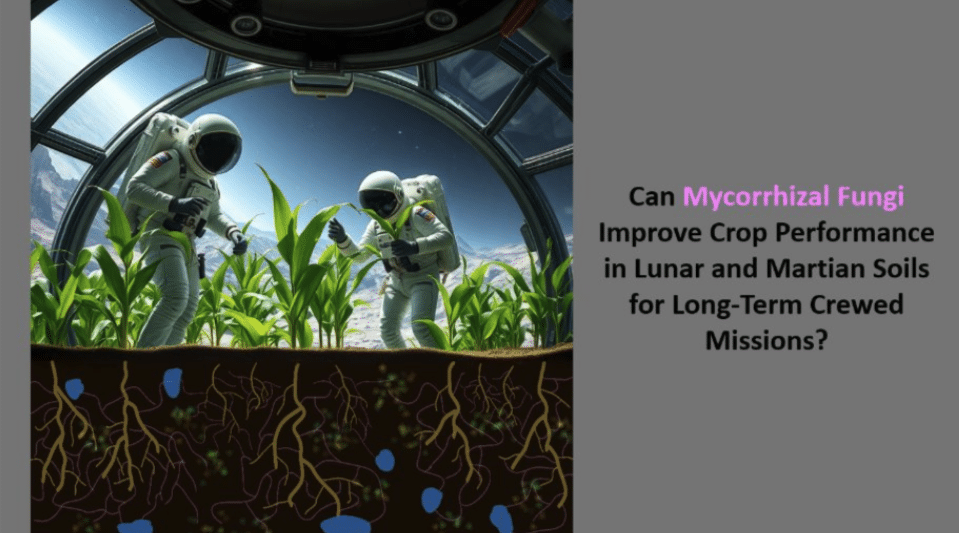 In her three minutes, Lee explained the challenges she faced and the important question her work answers. Sending food to the International Space Station works, but that won’t be an option for longer-term stays on our celestial neighbors. Mycorrhizal fungi live in plant roots all over this planet. By introducing it into the simulated lunar and Martian soil, Lee could replicate the growing environment in NAU’s greenhouses. She found the fungi contributed to improvement in biomass production, yield, overall plant health and the probability of survival. The result?
“Root fungus can build more sustainable, more reliable food production on the Moon and Mars for future missions,” Lee said in her presentation.
This work will be folded into her dissertation research as well.
Biology Ph.D. student Lynn Bonomo won second place for her research into coffee berry borers, which is no joe-ke, and María Uribe-Pérez, a Ph.D. student in Earth science and environmental sustainability, won third place for her research in water engineering in Indigenous villages in Colombia. Read about the presentations below.
The judges for the final event were Flagstaff Mayor and NAU alumna Becky Daggett; Jeff Foster, a professor of biological sciences; Vice President of Inclusive Excellence Justin Mallett; General Counsel Michelle Parker; and marketing manager Heather Weisberger.
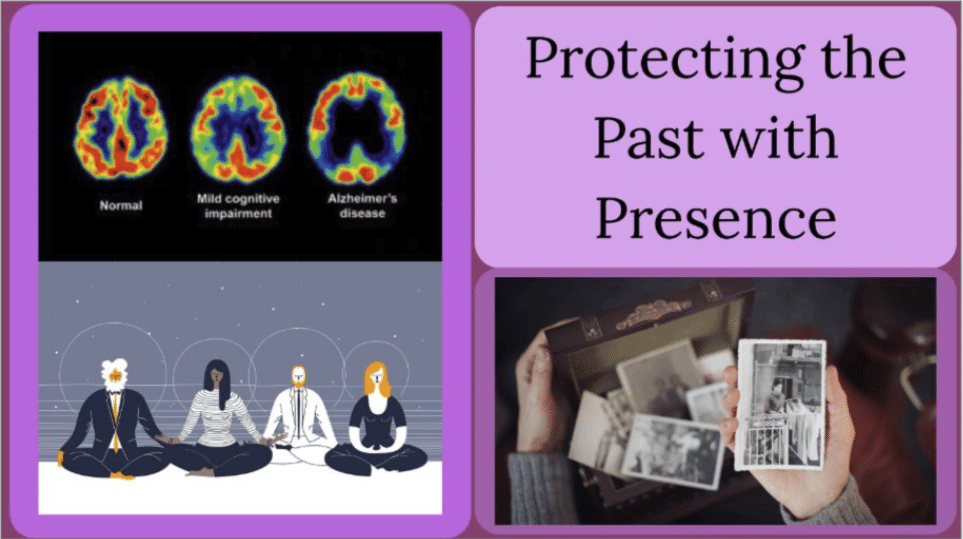
Celsey Selland, “Protecting the Past with Presence”
Can mindfulness help people retain their memories? Research from Selland, a master’s student in psychological sciences, suggests the answer is yes. Using a group of 40 older adults, Selland gave the participants either intense mindfulness meditation or mental exercises for five days in a row, then asked them to recall details of events from their past. Those who participated in mindfulness, which is a receptive awareness in the present moment, were better able to recall those details.
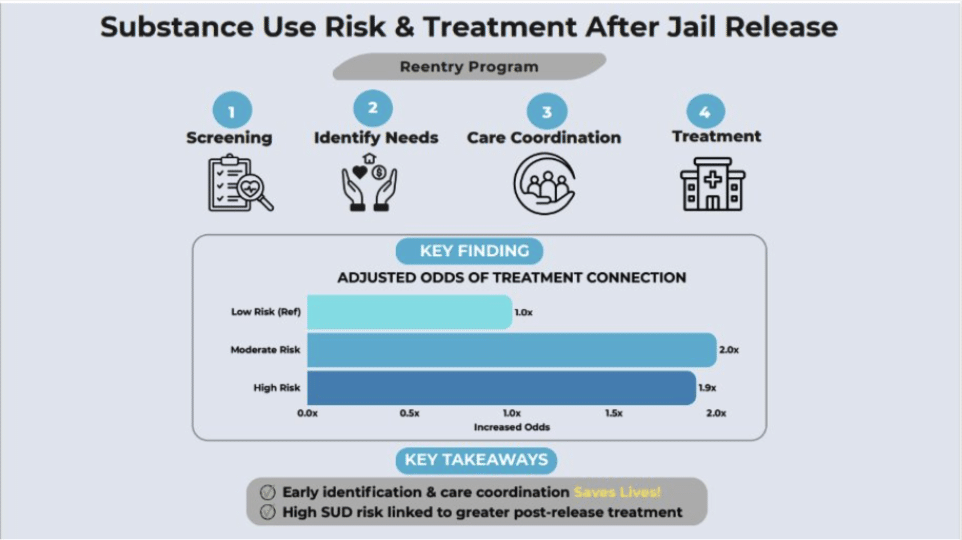
Rebecca Annorbah, “Substance Use Risk & Treatment After Jail Release”
Of the more than 5 million Americans who are in jail,prison or on parole, many have substance abuse and mental health issues—concerns that often go untreated when they are released back into their communities. Annorbah, who graduates in May with a Ph.D. in interdisciplinary health, used exit screenings of people leaving the system to examine their risk level of relapsing. What she found is those who were high-risk or moderate-risk were actually more likely to get connected to service to help them avoid relapse or recidivism.
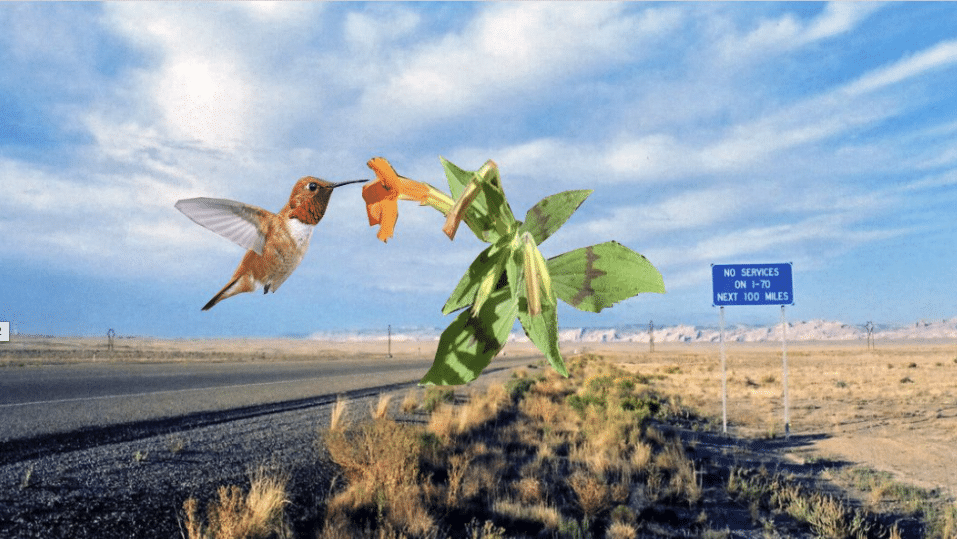
Matthew Weiss, “Uncovering the History of Relatedness and Diversity Through Types in the Genetic Code”
Every organism on the planet has an instruction manual. We just call it genetics. “Typos” in that manual contribute to population diversity. Weiss, a doctoral student in biology, studies the crimson monkey flower, which is pollinated by hummingbirds. Logically, the larger a population is, the more diverse it should be. Instead, he has found that smaller and more isolated populations are more diverse because these populations act as stopover sites for migrating hummingbirds, so those flowers see their genes spread farther and wider. However, climate change and a border wall are affecting the migration patterns and flowering times, so the future relationship is in flux.
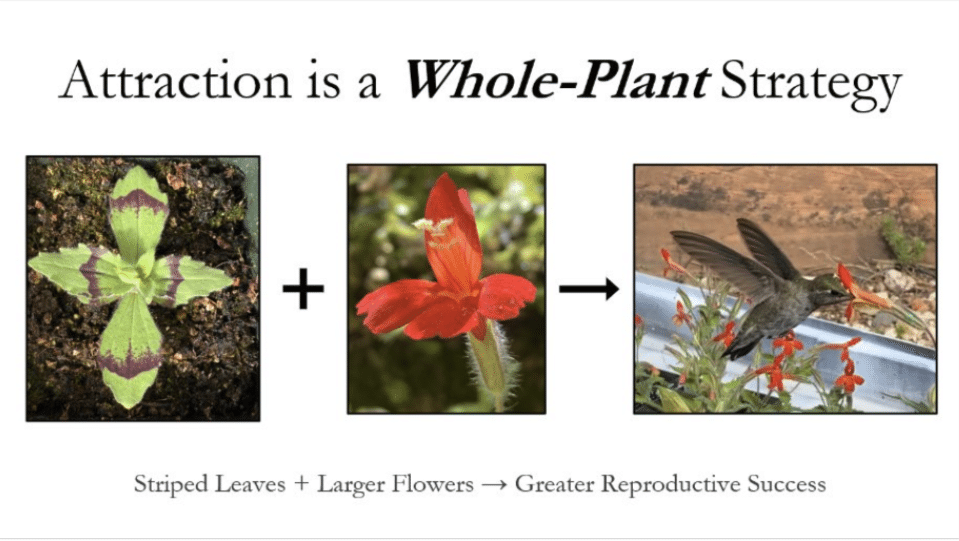
Erika LaPlante, “Attraction is a Whole-Plant Strategy”
A sexy flower gets a plant more love from pollinators, right? Yes, and, said LaPlante, a Ph.D. student in biology. In her study of flowering plants, it’s not just the flower. Rather, to be successful in attracting pollinators like hummingbirds, plants pull out all the stops—stripes on leaves surrounding the flower make a pretty target; larger flowers do better; offering more seeds helps. Enhancing a plant’s reproductive success depends on the whole plant drawing hummingbirds in—that pretty flower just isn’t enough.
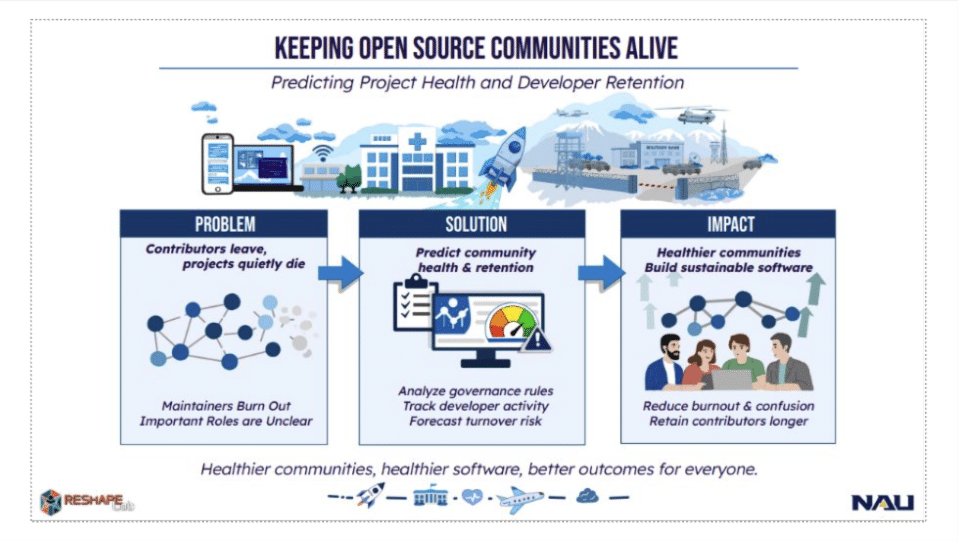
Pedro Oliveira, “Keeping Open Source Communities Alive”
Many of the apps people use daily use open-source software. The benefit of that is flexibility for users and developers and accessibility, since there’s no for-profit company on the other side. The downside is those developers often experience burnout, leave the project and the project fails, leaving its community of users without a resource. Oliveira, a Ph.D. student in informatics, built AI models to assess when communities aren’t doing well and to predict when burnout could be upcoming, with the goal of intervening before it’s too late and creating more sustainable communities.
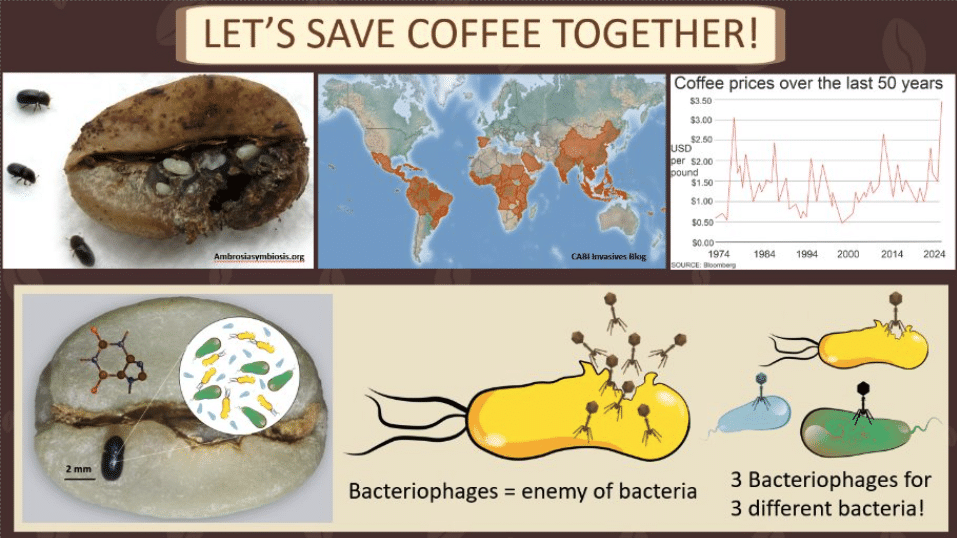
Lynn Bonomo, “Looking Into Nature to Find Solutions for Pest Control”
“Who can’t start their day without coffee?” Now that she has your attention, Bonomo, a Ph.D. student in biology, wants to talk about why the prices of coffee have risen and what she’s doing about it. In recent years, about 30% of the world’s coffee beans have been destroyed by infestations of the coffee berry borer, a pest that burrows into the coffee bean, eats out the inside and lays its eggs, fueled by bacteria in its gut that allows it to digest what should be fatal levels of caffeine. Bonomo found several bacteriophages, or viruses that attack bacteria, could target that caffeine-degrading bacteria in the beetle’s gut microbiome and keep them from burrowing into the coffee beans.
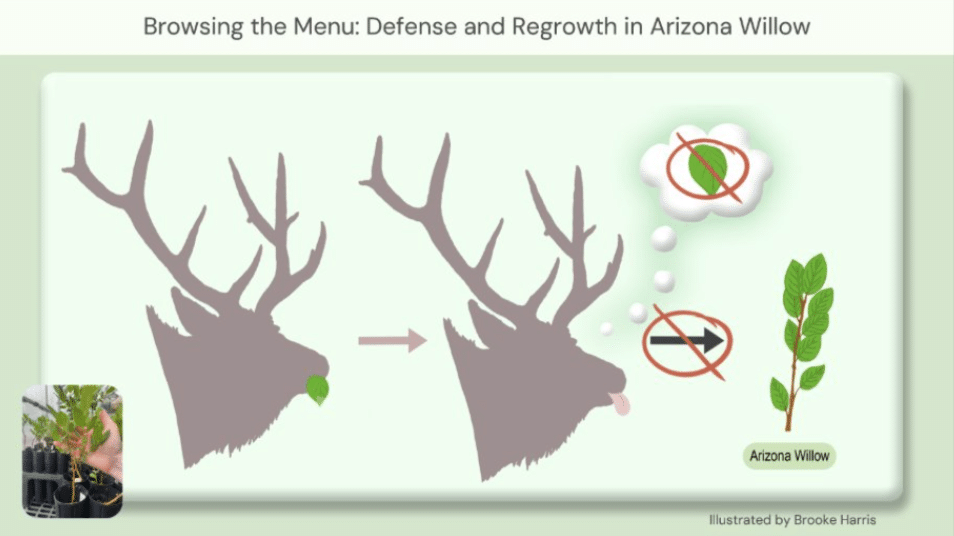
Brooke Harris, “Browsing the Menu: Defense and Regrowth in Arizona Willow”
The foodie tendencies of deer and elk in the Southwest have had a devastating effect on the Arizona willow, a rare shrub species that is an indicator of ecosystem health and provides habitat for other wildlife. Harris, a master’s student in biology, studied willows in Arizona and New Mexico to determine how they’re responding to being eaten. She found that shrubs in different places respond differently: The willows in Arizona are more likely to produce a chemical compound that makes them less tasty for ruminants, while the shrubs in New Mexico are allocating more resources to regrowth to compensate for what’s eaten. Understanding how plants respond to browsing can help researchers better develop ways to protect them.
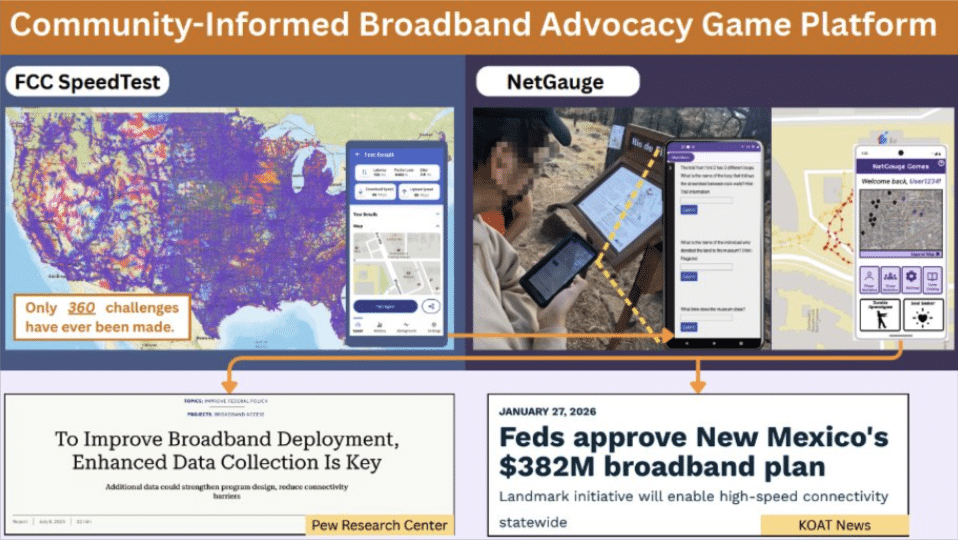
Shelby Hagemann, “Community-Informed Broadband Advocacy Game Platform”
How do you get people to take regular measurements of their internet coverage? You make it a game: one measurement equals one swing of the sword in Dragon Slayer or one zombie healed in Zombie Apocalypse. The reason to collect these data, said Hagemann, a Ph.D. student in informatics and computing, is to help inform the Federal Communication Commission’s crowd-sourced speed test app with the aim of demonstrating how poor broadband coverage is in many rural areas in the Southwest so the government will help improve it. But to challenge the maps, they need consistently collected measures across a given time period. That’s hard to do—unless you make it fun.
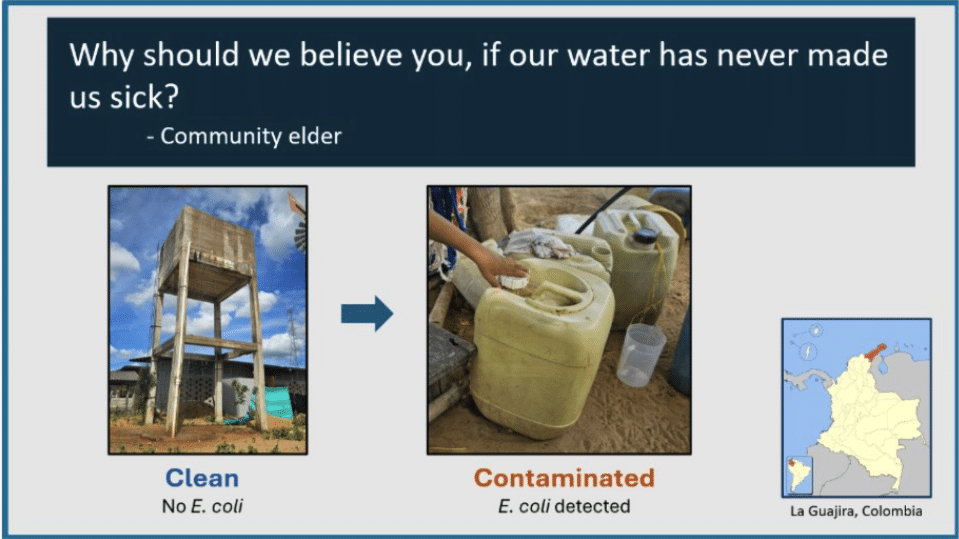
María Uribe-Pérez, “Why Should We Believe You? Bridging Engineering and Community Knowledge for Water Security”
“Why should we believe you, if our water has never made us sick?” This question changed how Uribe-Pérez, a Ph.D. student in Earth science and environmental sustainability, addressed her work as a water engineer for the Colombian government. What she was facing wasn’t an engineering problem so much as it was a disconnect. She stopped telling Indigenous Colombians what was wrong and started listening. What she learned was that what she considered sick—regular diarrhea and stomachaches—they considered normal, so they weren’t even speaking the same language. What’s more, she realized E. coli wasn’t entering the water at its source but rather in storage sites, which changed the problem she needed to fix.