

Undergraduate students dedicate thousands of hours in their higher education careers to drafting, revising and perfecting their research. Now, it’s time to show it off.
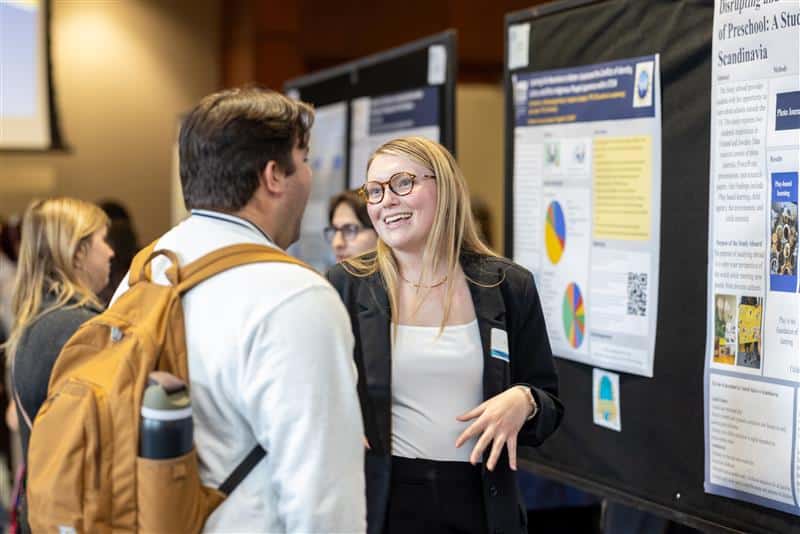
Hundreds of students in fields ranging from astronomy to business to health sciences to forestry will highlight their academic feats at this year’s Undergraduate Symposium on April 24. Thousands of visitors will have the opportunity to hear from these students and glimpse a degree’s worth of discovery on every poster board.
Presentations will start at 8:30 a.m. in the High Country Conference Center. Learn more about the symposium’s schedule online and hear from a few of the students preparing to take center stage.
Design and Validation of an Adjustable Stiffness Mechanism for an Ankle Exoskeleton
Researcher: Riley Shepard
Major: Mechanical engineering
Adviser: Zach Lerner
NAU’s Biomechatronics Lab specializes in designing wearable robotic exoskeletons to restore autonomy for those with neuromuscular and musculoskeletal disabilities. The technology has the potential to change millions of lives, but it tends to stay in the laboratory for a variety of reasons.
One major barrier to accessibility that Shepard’s research aims to address concerns the tech’s short run time. Wearable exoskeletons have a limited battery life, and the potential showcased in clinical successes is often undercut by the idea of individuals having to stop and swap out the device’s batteries mid-travel.
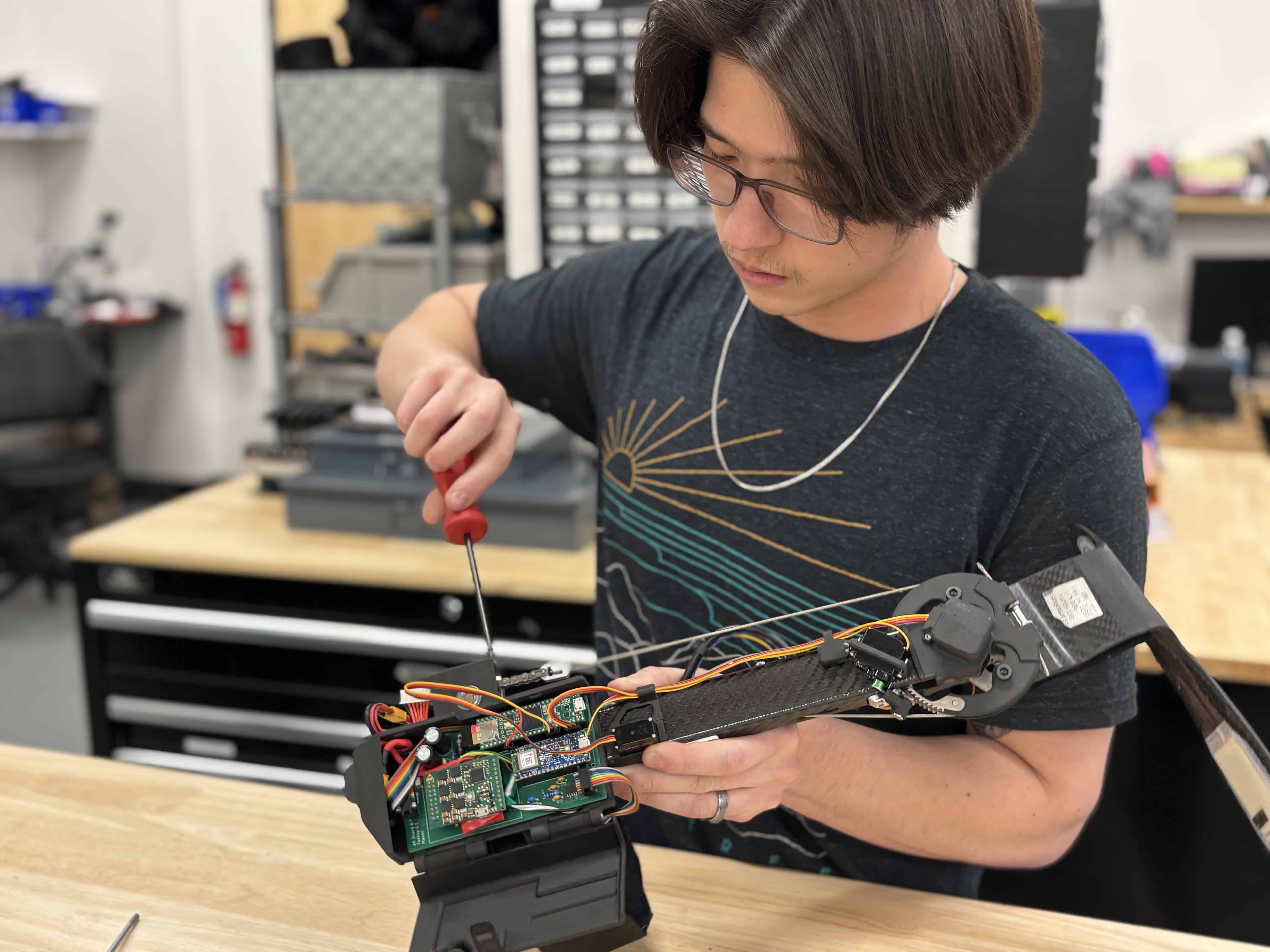 A year and a half of designing, 3D printing, prototyping, manufacturing and programming from Shepard produced an ankle exoskeleton with an adjustable stiffness element, designed to offload the device’s motor and reduce its overall power consumption. The product, in theory, will allow its user to walk for longer periods of time without having to pause for a recharge, which is a powerful step toward making wearable robotics more feasible for everyday use.
“The point of the adjustable stiffness mechanism is so we can test to see what the optimal stiffness is for current reduction, which is directly related to increasing run times, but based on other papers in the field, there is also potential for a metabolic reduction, so it may be less taxing to walk with,” Shepard said.
Shepard received a Hooper Undergraduate Research Award (HURA), which funds exemplary undergraduate experimentation, academic exploration and creative ventures, to work on the adjustable stiffness mechanism. He and his coworkers have since used the device in pilot tests with the hopes of processing the data for eventual publication.
The lab has also used Shepard’s mechanism in a few of its other in-progress devices, a fact of which he is particularly proud.
“I might not see where the work I’m doing is making an impact in the bigger scheme, but knowing that we can run studies, have participants come in, hear what they have to say about the different devices we build—it’s very validating,” Shepard said. “We’re doing hard work, and the goal is to make a difference.”
Shepard is in NAU’s accelerated master’s program, so he plans to follow the final year of his undergraduate studies with his thesis project. After that, he hopes to work in an industry robotics position where he can pursue more exploratory projects.
Dating Interests Among Asian American Women: A Qualitative Study of Women’s Interests in Inter-racial Romantic Partners
Researcher: Jane Pham
Majors: Philosophy and psychology
Adviser: Andrew Walters
Can love be boiled down to an exact science? What social, personal and cultural factors make someone more likely to choose one partner over another?
These are the questions Pham aims to answer in her project exploring the dating interests of Asian American women. She is interrogating the idea that Asian American women tend to date white men, drawing on patterns she’s seen in the media, her community and personal experience.
 “I’m dating a white man myself, and where I grew up in Phoenix, all of my Asian friends are not dating people inside of their own race at all,” she said. “I thought it was just an interesting pattern that I’ve seen, and now I see it way more often. The body of research for Asian Americans in general is also so scarce, so I hope this adds a little bit to the pot and pushes for more research to be done.”
It is a qualitative interview study, meaning Pham sits down with participating women and asks them questions about family, school, social media and how they all intersect with their identities and romantic interests. At the end, she asks them specifically how they feel about the white man and the Asian woman stereotype and why they believe the pattern shows up.
She transcribed the data verbatim and completed her own code analysis to see which topics, ideas and sentiments come up the most.
“Just from what I’ve done so far, I feel like some women don’t want to date white men, or they kind of feel embarrassed that they like white men,” Pham said. “I’m hoping this research helps everyone realize that it’s not a bad thing to fit a stereotype, but you can also fight a stereotype by living your own life.”
Pham was told all throughout high school that she was good at talking to people, a fact that led her to choose psychology as her major when she came to NAU. She has since cozied up in the space between philosophy and psychology within her research, noting that each one helps her pursue the other practically.
She hopes to continue pursuing social psychology after graduation, especially within topics like sexuality and gender, and to eventually become a professor.
PepSeqPred: Predicting Antibody Targets Across the Infectome
Researcher: Jeff Hoelzel
Major: Software engineering
Adviser: Jason Ladner
When someone becomes infected with a virus, bacteria or fungus, their immune system produces antibodies that can recognize parts of a pathogen, or “targets.” These targets, Hoelzel said, can act like a molecular fingerprint containing valuable data on past exposure to that pathogen.
Scientists can fully reconstruct a person’s infection history and better understand how diseases spread within populations by studying the targets someone’s antibodies bind to. However, pathogens have thousands of protein fragments to which antibodies could bind, making laboratory experimentation for even a single disease arduous, expensive and incredibly slow.
 Hoelzel is attempting to solve this sweeping problem with artificial intelligence. He developed a machine learning framework called PepSeqPred that learns from compiled peptide serology datasets, or data using small protein fragments rather than whole proteins.
“These datasets measure the reactivity of real antibody responses across hundreds of thousands of pathogens,” Hoelzel said. “By analyzing protein sequence features and structural information, the model learns what can make certain protein fragments more likely to be recognized by antibodies.”
After training, the program can take the protein sequence of a new or understudied pathogen and predict which fragments will trigger an immune response. Hoelzel believes his work could move the fields of pathology and immunology one step closer to revolutionary split-second profiling.
“By combining experimental immunology with computational modeling, we can better understand how humans interact with the microbial world,” Hoelzel said. “This demonstrates how modern machine learning can aid in solving real-world biomedical problems and highlights how computational tools can make large-scale immune research faster, more efficient and more accessible.”
Hoelzel came to NAU to study mechanical engineering, but he found that he was not enthralled by the problems he would be expected to solve upon graduation. The metaphorical wires connected when he found himself in a computer programming course, and suddenly, he was tackling complex problems and designing systems that operated on grander scales.
After Hoelzel graduates with a degree in software engineering, he hopes to expand his hands-on skill set by pursuing educational and professional paths emphasizing engineering’s connections to scientific discovery.
“I’m motivated by the idea that a well-designed piece of software can amplify impact far beyond what one person could accomplish alone,” he said. “Being able to build tools that help researchers work more efficiently and potentially contribute to real-world disease surveillance is incredibly fulfilling.”
Understanding the Impacts of Temperature on the Growth Rates of Arizona Frog Virus 3 (FV3) Strains and Cell Culture
Researcher: Allyson Quigley
Majors: Biomedical science and Spanish
Adviser: Joseph Mihaljevic
Quigley is another HURA recipient who works as a research assistant at NAU’s Pathogen and Microbiome Institute.
Her research concerns ranavirus, a viral genus that infects ectothermic populations, such as Arizona’s amphibians. Its growth and infection rates are impacted by differing temperatures, which makes Arizona’s blistering desert landscape a fascinating trial ground for ranavirus research.
Scientists know of various ranavirus strains in Arizona, but the one at the foreground of Quigley’s research is a nonnative newcomer — frog virus 3 (FV3).
 “FV3 is usually found on the East Coast of the United States, but through genome sequencing, they discovered about two to three years ago that there’s a strain related to FV3 in Arizona, and it was causing mass frog die-offs in certain populations,” Quigley said. “A ranavirus that is well studied and endemic to Arizona is Ambystoma tigrinum virus (ATV), and that tends to only infect salamanders. FV3 has a much wider host range and presents more severe symptoms. It has the potential to be a lot more dangerous for Arizona’s ecosystems and poses a threat to our federally threatened and endangered amphibian species.”
Quigley’s research hones in on understanding the ideal temperature range of FV3 and how it differs from that of ATV. This research may aid scientists and conservationists in planning for potential outbreaks and taking informed conservation steps.
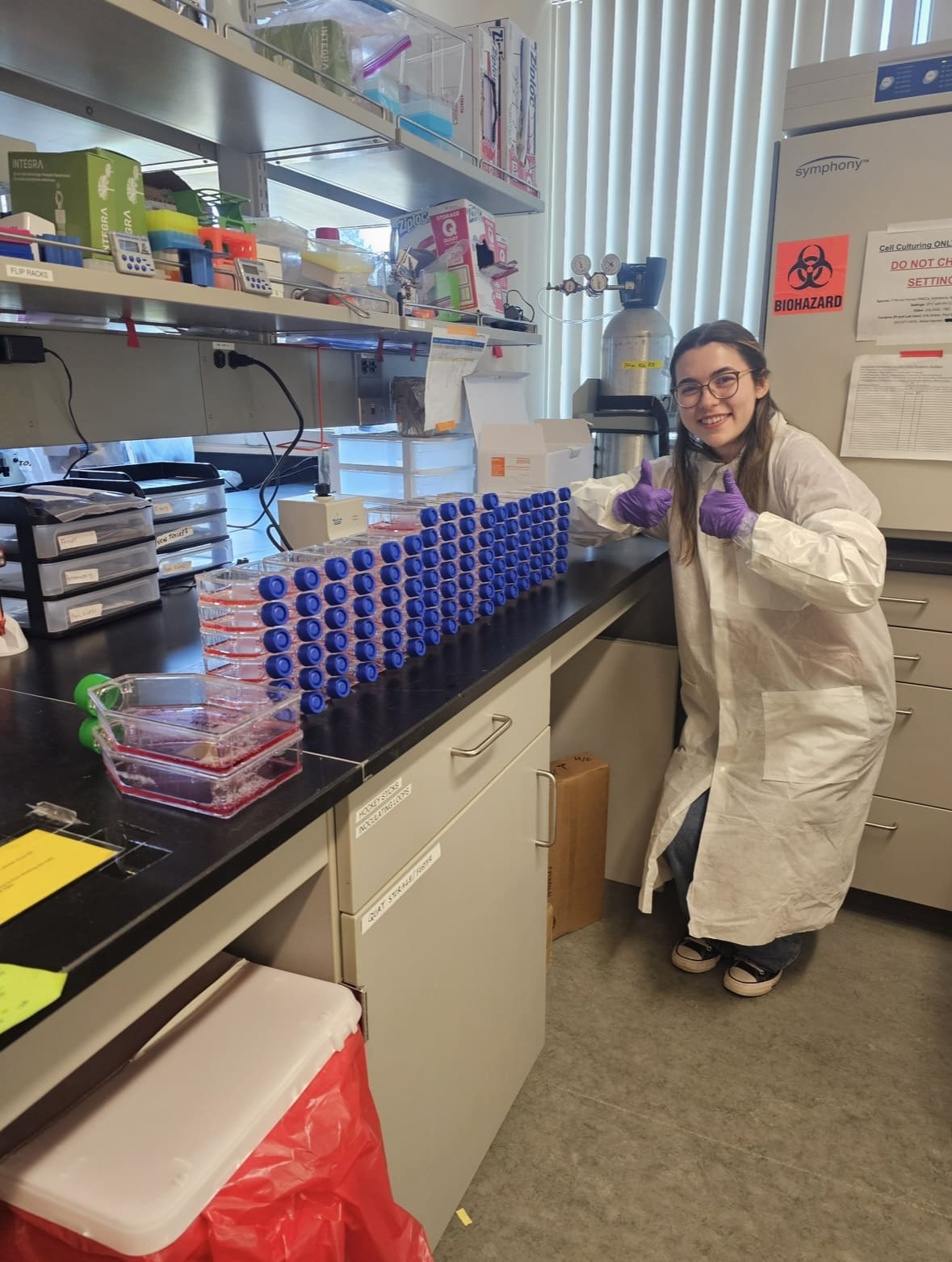
The first piece of the project entailed growing the virus itself. Quigley cultured fathead minnow cell cultures, known to be similar to amphibian cells, to serve as stand-ins for the species at risk. She split the cells into eight temperature groups, ranging from low to high, and infected some cells from each group with multiple doses of FV3. Others were infected with multiple doses of ATV. Samples were taken from each temperature and each virus every 24 hours for eight days. The viral DNA was then extracted from the samples and analyzed for temperature preference trends, comparing the two viruses and doses.
Her previous work indicates that ATV thrives in intermediate temperatures. Climate change, she said, can potentially bring more of the year up into this intermediate temperature range, expanding the infection window of ATV.
Since FV3 is newly documented in Arizona, it was imperative to begin this research to see if it follows temperature trends similar to ATV or a separate pattern entirely.
Quigley began her career in disease research, set on a career in medicine. She initially had her heart set on medical school, but quickly grew fascinated by how illness, ecology, and conservation go hand-in-hand in her laboratory work. The lab equipped her with a desire to continue pursuing emerging diseases and explore how research and medicine can be combined after earning her bachelor’s degree.
Belongingness in the Workplace: What Factors Affect Employees’ Sense of Belonging at Work?
Researcher: Kiren Kirschbaum
Major: Psychology
Adviser: Ann Huffman
Psychology may be the study of the mind, but rarely are the field’s implications confined to the space between one’s ears. Look no further than industrial and organizational psychology, a subfield that uses psychological principles to explain pervasive workplace customs and the intricacies of employee-employer interactions.
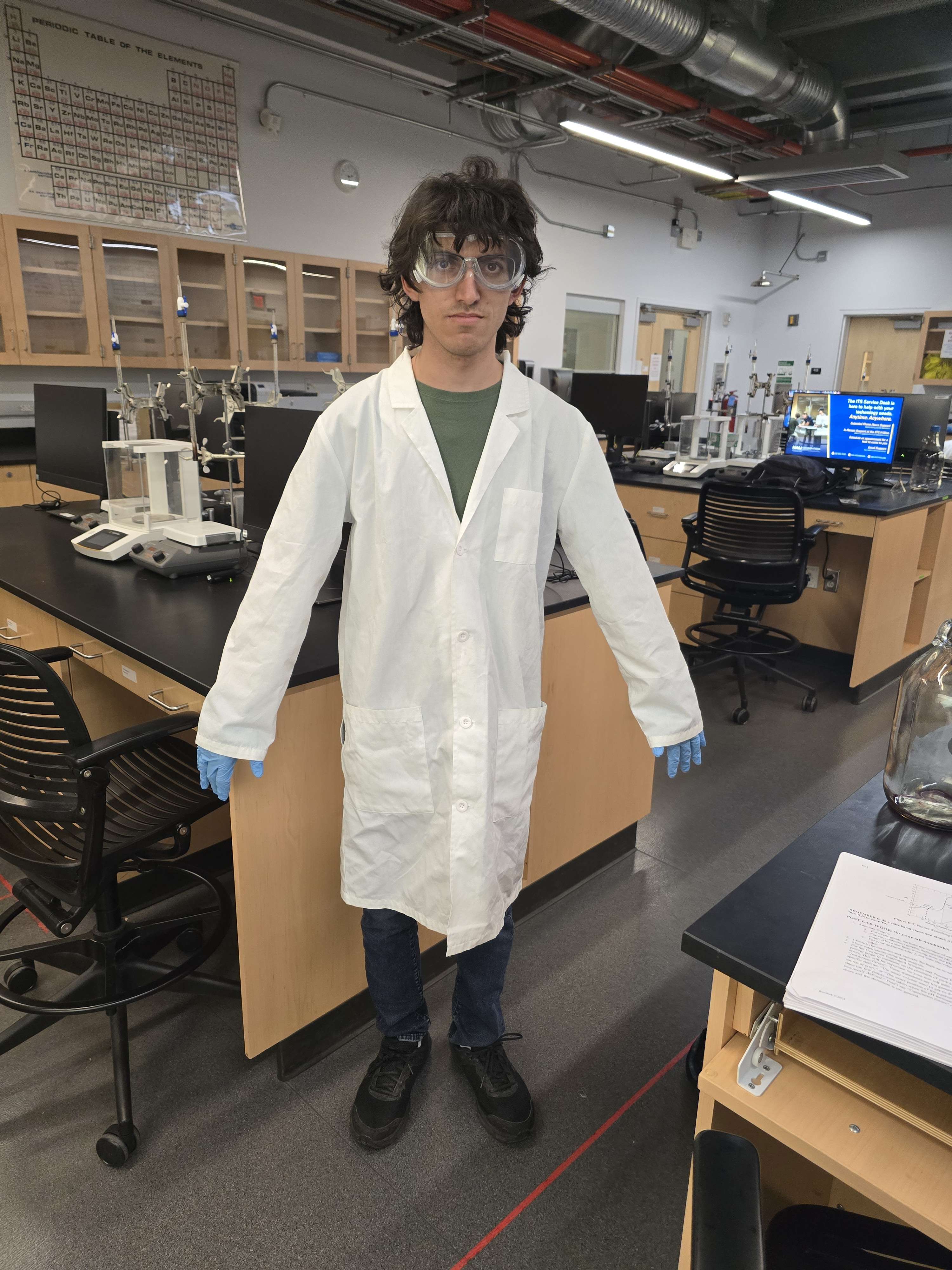 Kirschbaum’s research uses psychological principles to investigate how employees experience diversity, equity and inclusion—or the lack thereof—within one’s workplace.
Institutional prejudice leads to millions of people who self-identify within a minority group, often based on sex, race or disability status, being more likely to feel like they don’t belong in their respective places of work. This project uses statistical analysis to discover which environmental and interpersonal factors can best mitigate systemic feelings of alienation for employees within these groups.
With this research in hand, Kirschbaum hopes to spotlight the need for informed, nondiscriminatory workplace practices in various organizational structures.
“The world is only becoming more diverse as time goes on, especially the U.S.,” Kirschbaum said. “If we want to progress to be the best we can be as a society, an important aspect of that is making sure that all of our society’s members are treated in a way that makes them feel equal.”
The second-year student has always been interested in psychology, citing a fascination for how the human mind can be simultaneously defined and ambiguous. After completing his undergraduate degree, Kirschbaum aims to attend medical school and become a psychiatrist, exploring the ways medicine intertwines with his broader studies.
“I think what keeps me interested in this field is that there is a consistently shifting dynamic within it, no matter where you look,” Kirschbaum said. “This means there will always be things to learn, research and try to better comprehend.”