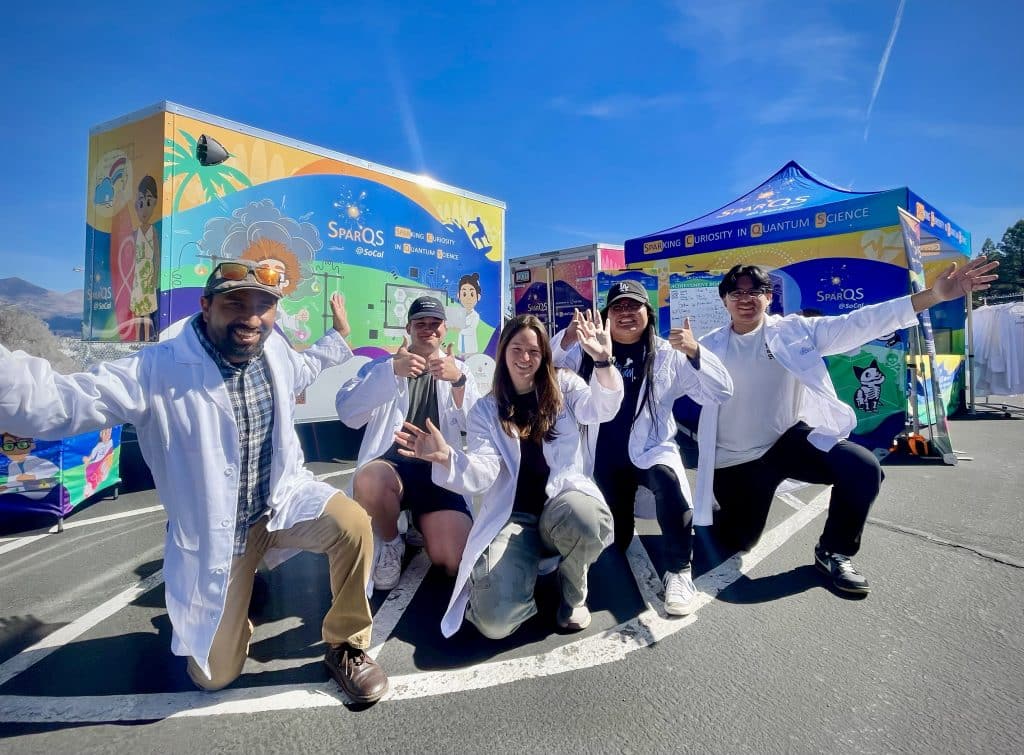


Since its creation in 2022, SparCQS has introduced thousands of individuals to the not-so-small world of quantum science.
Housed within the Center for Materials Interfaces in Research and Access (¡MIRA!), the workforce development initiative, whose name is an acronym for Sparking Curiosity in Quantum Science, delivers a trailer’s worth of colorful, approachable quantum science demonstrations to K-12 schools, colleges and community outreach events across the country.
A team of ¡MIRA! scientists spearheads the high-demand educational experience and travels for interstate gatherings up to 40 times a year. Every stop helps create a workforce that is informed on the ins and outs of quantum, a discipline becoming increasingly relevant in fields from computer science to engineering to healthcare.
Now, SparCQS is going the extra mile—or the extra 456 miles from Flagstaff to Pasadena, California—to bring a passion for STEM to a new state.
California dreaming
Grant funding from the National Science Foundation and U.S. Department of Commerce has allowed SparCQS to add a second, and soon a third, trailer to its fleet, expanding the program’s physical footprint.
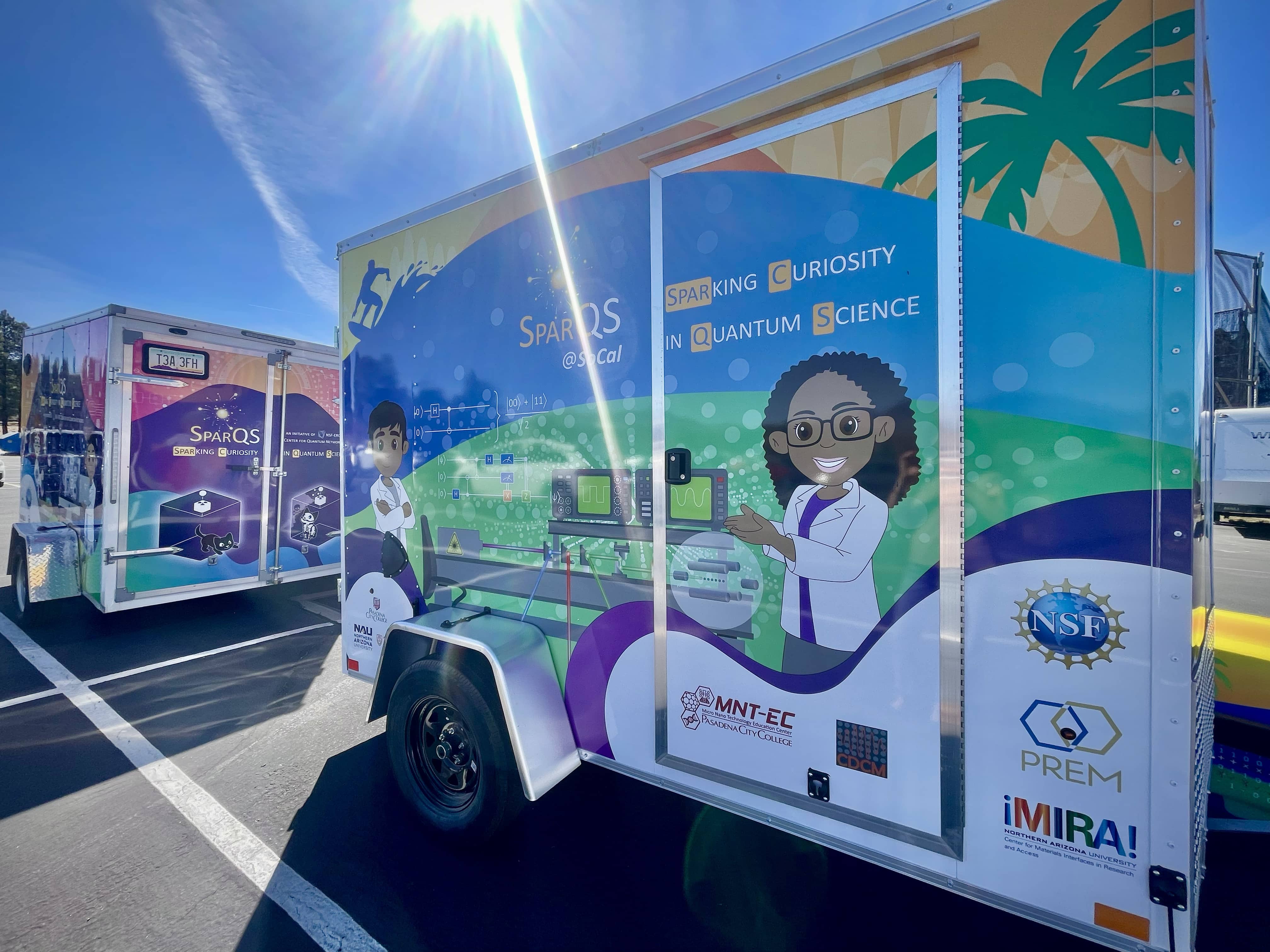
It’s equipped with the same hands-on, engaging experiments that placed the program on the quantum science map four years ago, only this time, it’s not staying in the mountains. This trailer embarked toward its forever home with an NAU ¡MIRA-PREM! partner, the Micro Nano Technology Education Center led by Jared Ashcroft, at Pasadena City College on March 6. In the coming months, the trailer will expand SparCQS’ impact to more than double the number of prospective scientists.
 Department of Physics associate professor Inès Montaño is the SparCQS program lead. While the initiative has no shortage of interested participants, she said SparCQS outreach has been limited in the past by people power and travel time, both factors that this second launch site will address.
“When we were getting started, I didn’t think it would be this big at all,” she said. “I thought we would be begging schools to have us come and work with their kids. We’ve never had to do that. We’ve always had a longer list of people who want us to go somewhere than we have been able to visit. We try to do what we can, but we could never duplicate ourselves. It’s crazy to think that, now, we can. We’re opening this whole new door and building a whole new team.”
SparCQS has driven through Texas, Colorado, New Mexico, Utah and even as far as Bloomington, Minnesota. This is the first time a program trailer will permanently reside off campus.
The new trailer, while retaining SparCQS branding, has been revamped to include distinct Californian designs—like skateboarders, palm trees, seafoam-green oceans and a sunset centerpiece. SparCQS leadership sought advice from its Southern Californian student interns to guarantee it authentically reflected its target community.
“We really haven’t done anything yet in California, so this will help us finally reach those audiences,” Inès Montaño said. “We always find new venues to go to, so I wouldn’t be surprised if, before we know it, we’ll have an event at the beach.”
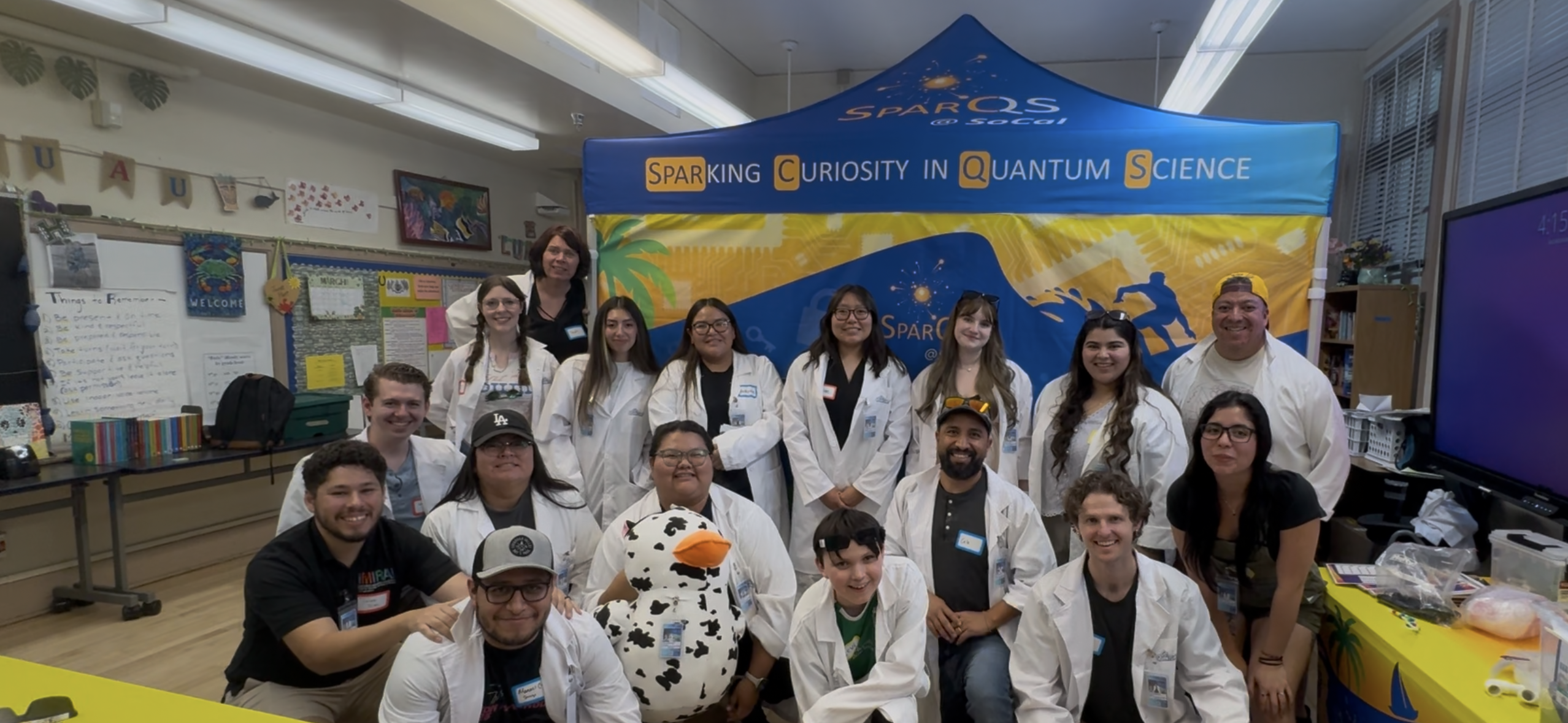
¡MIRA! faculty, interns and volunteers joined Pasadena City College for its first SparCQS outreach event on March 7, kickstarting the new branch’s efforts with a STEM fest at Pasadena Unified School District.
Inès Montaño predicts it may take some time until the Pasadena team matches the Arizona team’s annual event count, but once they learn to combine Flagstaff’s foundational teaching style with their own regional identity, she believes Pasadena could potentially surpass them due to California’s massive population density.
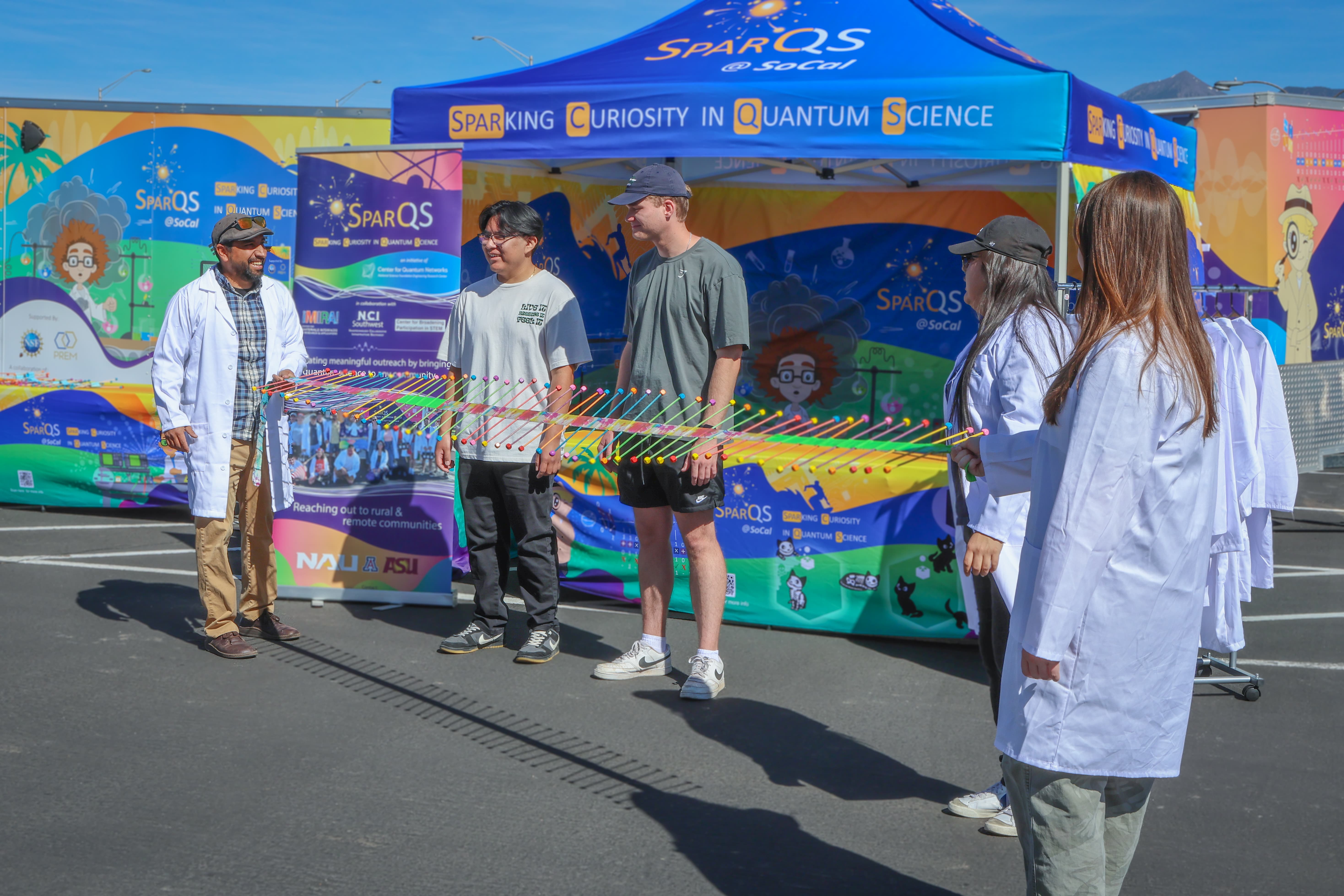 “We’ve created a brand with SparCQS, and now, it’s like we’re franchising,” said Gabriel Montaño, ¡MIRA! director and Department of Physics professor. “When you’re doing something like this, it’s daunting, because you don’t want to lose it. How do you do this without losing the magic that makes SparCQS what it is? It’s taken a lot of work, but we’re pretty excited about it.”
This month’s expansion is one of many taking SparCQS by storm. In the fall, it grew its team by about 20 assistants and interns from the NAU student population. Another grant from NSF ExpandQISE is allowing SparCQS to bring a state-of-the-art quantum learning lab to campus, one that facilitates real quantum observations as opposed to the program’s existing simulated models. Inès Montaño plans to use the teaching lab in a one-credit class on quantum science, PHY 299: Quantum Technologies, this fall. This course has no prerequisites.
Using what it learned from its California expansion, SparCQS plans to launch a third trailer in Denver this summer, which will permanently reside with Emily Griffith Technical College and Front Range Community College.
A new world of applications
With weekly practice explaining complex quantum concepts to humans big and small, it is no wonder that SparCQS interns develop impeccable presentation skills. What may not be so obvious is how SparCQS builds its own knowledge base with every new member.
In the spring 2026 intern and assistant cohort, only two students study physics. The others come from diverse STEM and non-STEM backgrounds, including criminal justice, public health and sociology.
Diverse professional input means SparCQS can widen its examples of real-world quantum applications. Physicists are bound to consider how quantum science applies to physics, but when, say, a public health student outlines how quantum technology could help planning commissions build hospitals in record time, SparCQS leadership can use that intel to connect with individuals studying an entirely different field.
The same logical framework influenced SparCQS’s decision to send its trailers to neighboring states. Pasadena will start its operations with Flagstaff’s same core demonstrations, but with unique insights into subjects like nanotechnology and chemistry, they could design additions to the SparCQS curricula that the existing team hasn’t developed.
 “We’re in an urban center now,” Gabe Montaño said. “New discoveries and new types of inventions come from that. There will be new things that pop up from their lifestyle, what they know and what their needs are. The agricultural community of the Central Valley, for example, is a huge one where I guarantee they will have ideas about what can and should be a target for us that we just don’t think of from our perspective. I’m excited to see what they come up with.”
The team may not be creating a team of mini quantum scientists, but they are striving to ensure every event participant is informed about what the technology can accomplish and how it could influence their profession. Now, they can do that in two places at once.
“Technology is supposed to advance communities, but if not all communities are allowed access to it from the beginning, it creates a bigger disparity,” Gabe Montaño said. “That is what SparCQS is here to do, to make sure that every student, every family, every community has access to that and to ensure they will not be left behind.”
SparCQS is looking for NAU students with curiosity, drive and team spirit to join its fall 2026 cohort. To get more information and apply, fill out the online form.