

What to know
- Who can participate: All students, regardless of year, major and prior mock trial experience level
- Meeting days: Mondays and Wednesdays
- Meeting time: 6-8 p.m
- Meeting location: SBS West Room 109
About the club
Courtroom dramas are filled with misconceptions, but this student-run organization argues the thrill that comes from working on a case with a top-notch legal team is not one of them. Members of NAU’s Mock Trial Club mix authentic evidence know-how with off-the-cuff improvisation to compete in simulated courtrooms as ace attorneys and character witnesses. In the spring, they take their fine-tuned objections to national college contests featuring judges who are, well, actually judges.
Q&A
Ryan Roberts is a senior majoring in civil engineering. After four years in the mock trial program, he returned from recess as the organization’s president in fall 2025. Read on to hear Roberts’ testimony on how he got involved with the club, what goes into building a mock trial case and how NAU’s program has clinched multiple competitions.
Tell us about this club’s history. How has it evolved over the years?
The Mock Trial Club at NAU was formed in 2018. To my understanding, our founder, Sarah Frey, arrived at NAU and was shocked to find we did not have a mock trial program. While I was unable to work with Sarah at NAU, I met her the year before coming to NAU at a high school mock trial tournament in Tucson. She was volunteering her time as a judge at the tournament and encouraged me to join the program once I got to NAU.
In mock trial, competitors play the role of an attorney or a witness to argue a case against other programs in front of a judge in a courtroom. It requires a commendable amount of time, effort and willpower to not only read through the 200-word case packet, but to extensively analyze it to form a legal theory and then compete for an entire weekend against other programs.
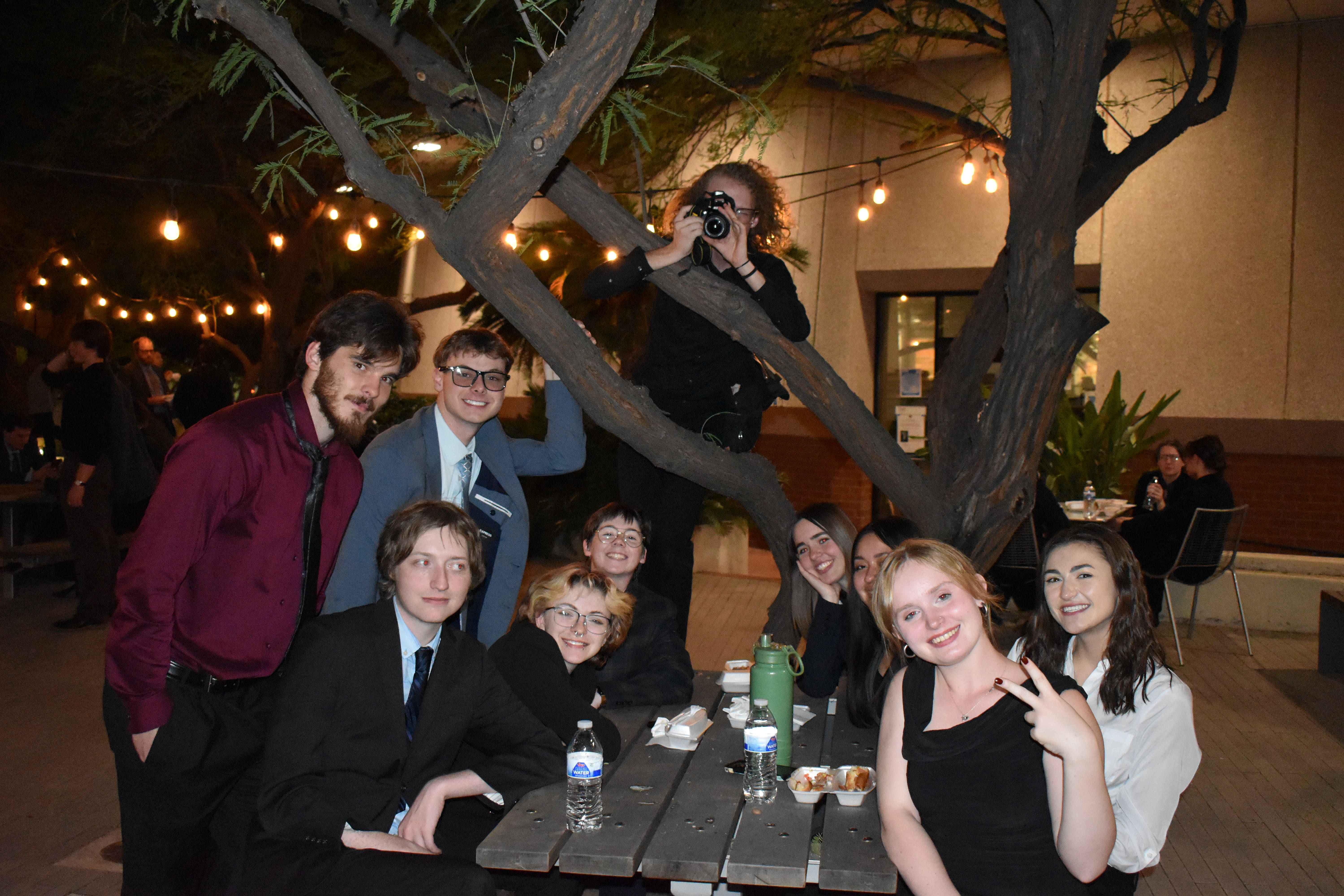 Furthermore, mock trial is a team activity, requiring the development of collaborative skills and a deep trust in one’s fellow competitors. I believe mock trial is one of the most challenging and rewarding activities a college student can do.
NAU’s program is student-led, which is abnormal for mock trial programs. Most are managed by attorney coaches due to the challenging nature of the activity. Being student-led, the members of the NAU program learn the legal content, train new members and prepare for competition all on their own. We are and have always been an underdog program full of the most dedicated and inspiring people I have ever met.
When I joined nearly four years ago, we had only 20 or so members and two competition teams. Now, we have five teams for fall invitational tournaments and four in the spring for regional tournaments, with our membership numbers approaching 50. Our program’s on a steady upward trend, improving every year.
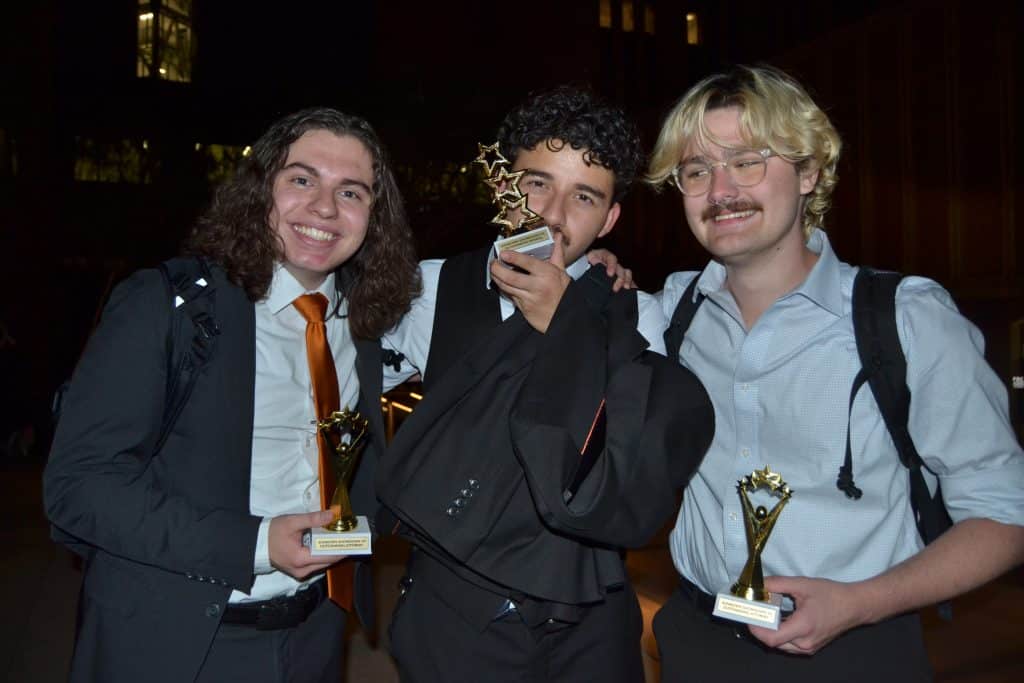
We recently were ranked among the top quarter of teams in the nation when we placed third in the San Diego regional last year, and we solidified our competitive status when we performed well at the following Opening Round Championship Series in Los Angeles. Most recently, our members’ competition scores have reached heights we have never seen before, and it wasn’t just some of our members. It was all of them.
What does Mock Trial Club do throughout the year, both at regular meetings and at any other events?
Early in the year, we focus on education. We don’t expect people to come in and have experience. In fact, the majority of our members have no mock trial experience. We educate every Monday and Wednesday for the first three months. We teach about objections, the rules of evidence, courtroom procedure, how to build a case, how to play witnesses, how to examine witnesses and so on.
After that, we spend time working with our teams and doing scrimmages against ourselves. We bring in judges from the local community of attorneys to help us get feedback. Now, going into the second half of the year having already done that education part, we’re really focusing on team time and scrimmaging. We’re trying to get better.
At competitions, you never really know what you’re going to get, so we encourage our members to try being both attorneys and witnesses. High school is different in that you are required to play both roles. With college, we get a lot of theater majors and a lot of people who purely care about the law. Some people only want to do one or the other, but we try to encourage people to do both because you really have to work with your teammates well and understand the whole process.
What do you need to run a mock trial?
Every program throughout the country can get a case through AMTA. Cases include 200 pages of relevant facts, witness affidavits that we use to build our characters, evidence exhibits and descriptions of how the laws are supposed to work for this case. That is how we build it. We have to have a foundational understanding of the law and what we can and can’t do in a trial. We take those facts, and we build a case. Then, we present it.
They’re pretty accurate to real life. I’ve interned at a law firm for the past two years, doing prisoners’ rights cases. These are federal cases, and I’ve had to use the same rules of evidence to argue them. If I hadn’t done mock trial, I would have no idea what I am talking about.
How do invitational tournaments work? What has been your experience competing?
We don’t do try-outs, especially for invitationals. We emphasize education and serving as an opportunity for everybody, hence having a president who is a civil engineering major and graphic design witnesses and all kinds of people who you would never expect to be on a mock trial team. If we have too many people for invites, the officers step back first.
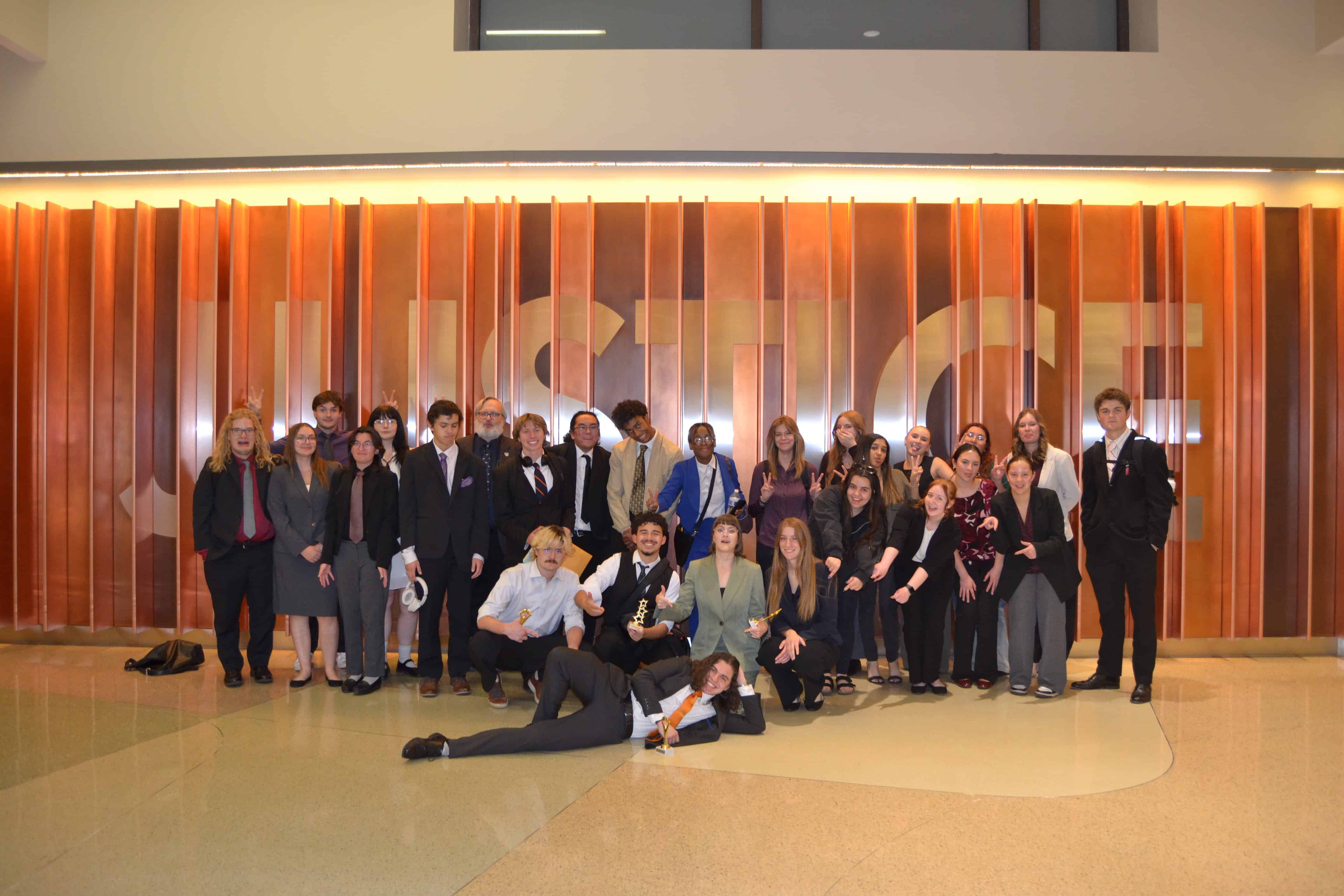 We send each team to one invitational. This year, we went to the University of Arizona’s tournament in Tucson, the Cactus Classic, and we also went to Arizona State University’s Sundown Showdown in Phoenix. We’ve gone to both for the past three years. Starting last year, we’ve also gone to winter invitationals. We sent two teams to Denver, and this year, we’re sending at least two to Las Vegas. Maybe we’ll have the budget to send two more to Denver again, but even if people can’t attend invitationals or regionals, we try to put on end-of-year cases in Flagstaff. That’s where we take old case packets and say, “Have fun with it.”
Usually in mock trial, you have two judges per round: one who is actually running the courtroom and one who is scoring throughout the trial. I’ve been in the training sessions and have served as a judge for summer tournaments. They have certain criteria that we teach about, but essentially, the judges get to decide how good an attorney or witness did on a scale from one to 10. Sometimes, those judges are mock trial alumni. They’ve never been to law school, so the dramatic, fun experience is what they have to go off of. Then, you have career prosecutors and defense attorneys who are looking for a much more grounded thing. If you can’t read the judge, sometimes you get really bad scores.
Last year, one judge said we won against the other team by about 30 points, which is a huge, unheard-of difference. The other judge, however, said we only tied. You really never know, so you have to read your judge.
What professional skills have you developed while participating in Mock Trial Club?
It’s been helpful in any kind of legal internship. We’ve had a lot of members work in these kinds of internships and even make connections through mock trial and the people we bring in. I also used to be an introverted, shy person back in early high school. When I finally decided to join, it really forced me out of my shell. It helps with public speaking, critical thinking, teamwork and thinking on your feet.
Outside of competitions and practices, does Mock Trial Club host any other events?
We also host socials. Recently, we hosted our first pre-law mixer on campus in collaboration with Pi Alpha Delta and an upcoming club, Women in Law Club. We’ve done mock trial movie nights. We’ve made mocktails—because you have to take that low-hanging fruit. Overall, a lot of people in the club end up becoming very close friends. This is an activity where you’re working together with your team for a good amount of time. You get close with them and, more often than not, you start hanging out regularly outside of meetings.
Find out more about Mock Trial Club’s upcoming events by following @lumberjackmocktrial on Instagram.