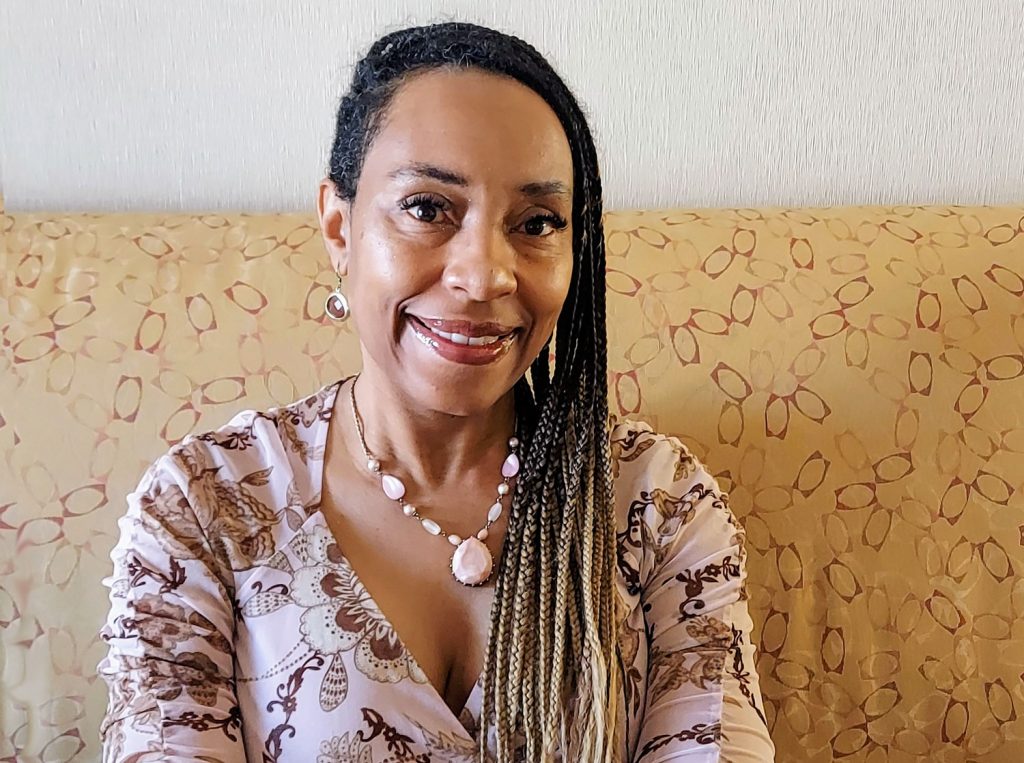


After enduring a lengthy breast cancer treatment, Adrien Gupton didn’t dwell on her misfortune—instead, she became inspired to help others. Gupton, an associate clinical professor and assistant coordinator of NAU’s family nurse practitioner graduate certificate program, jumped headfirst into advocacy and support for Black women and other communities who are at high risk of getting breast cancer. “I believe it happened to me,” she said, “so I can help empower someone else’s journey.”
In recognition of Breast Cancer Awareness Month, hear about Gupton’s cancer journey, learn about the common risk factors and find out what adventures Gupton pursues off campus.
What brought you to NAU?
I originally moved to northern Arizona from North Carolina to work in women’s health in Tuba City. I did that for two years, commuting from Flagstaff every day, until I injured my hand and couldn’t do the work anymore. A friend asked me, “Would you consider teaching?” I said, “Absolutely not, I’ll never teach.” Well, never say never: I started working for NAU in May 2016 and I’ve been here ever since!
What did you want to be when you grew up?
I was a sickly child. From age 3 until maybe 7 or 8, I’d get pneumonia every time I got a respiratory illness. Because of that, I always thought I would be a doctor.
Tell us about a significant memory and how it has impacted your life today.
When I was in high school in Southern California, I was working as a nursing assistant and got to see my best friend’s mom give birth. I remember the obstetrician taking my friend’s dad’s hands and putting them on the baby. She started to pink up and cry, and it was like she felt her dad’s touch and then life entered her. It fascinated me. I ended up working as a labor and delivery nurse right out of nursing school, and later I went to midwifery school. Every time I worked with a patient who was giving birth, I’d cry and get that exact same feeling I got in high school.
Tell us about your breast cancer journey.
In 2013, I became a nurse practitioner. It was a stressful job—my first patient was homeless, schizophrenic and had AIDS—and I started getting migraines. A medical assistant said to me, “Hey, you should get a mammogram.” My left breast was full of calcification; it looked like someone threw salt all over it.
I had what’s called triple-positive breast cancer, which means I tested positive for estrogen receptor, progesterone receptor and human epidermal growth factor receptor 2 markers. Triple-positive breast cancer is very aggressive and has a higher chance of coming back after treatment. I needed six cycles of chemotherapy and 36 radiation treatments, but after that I was cancer-free.
How have you carried your personal health history into your career?
I have the pleasure of serving women who have not been diagnosed with breast cancer but who have a family history that puts them at higher risk. For the average person, the chances of getting breast cancer are about 10%. I work with women whose chances are 20%, 30%, 40%. My job is to screen them with MRIs and mammograms and educate them about what they can do to minimize their chances of getting cancer. Part of the education involves sharing my story to show that even if the worst were to happen, there is life on the other side.
What do you want people to know about breast cancer?
One important risk factor to keep in mind is breast tissue density. If you have dense breast tissue, it means your mammogram may not detect small lesions. When you get a mammogram, check the fine print at the bottom of your report to see if it says you have dense breast tissue. African American women in particular tend to have higher density tissue.
Another thing that isn’t talked about enough is the importance of diet and exercise. Drinking more than five glasses of alcohol in a week can increase your chances of getting breast cancer. You also want to make sure to get at least 150 minutes of exercise a week.
A lot of people feel that if breast cancer doesn’t run in their family, it won’t happen to them. That’s not true—the risk of breast cancer increases with age for everyone. Knowing what’s normal and healthy for you and monitoring for anything irregular is important.
Take us through a day in your life of teaching and research.
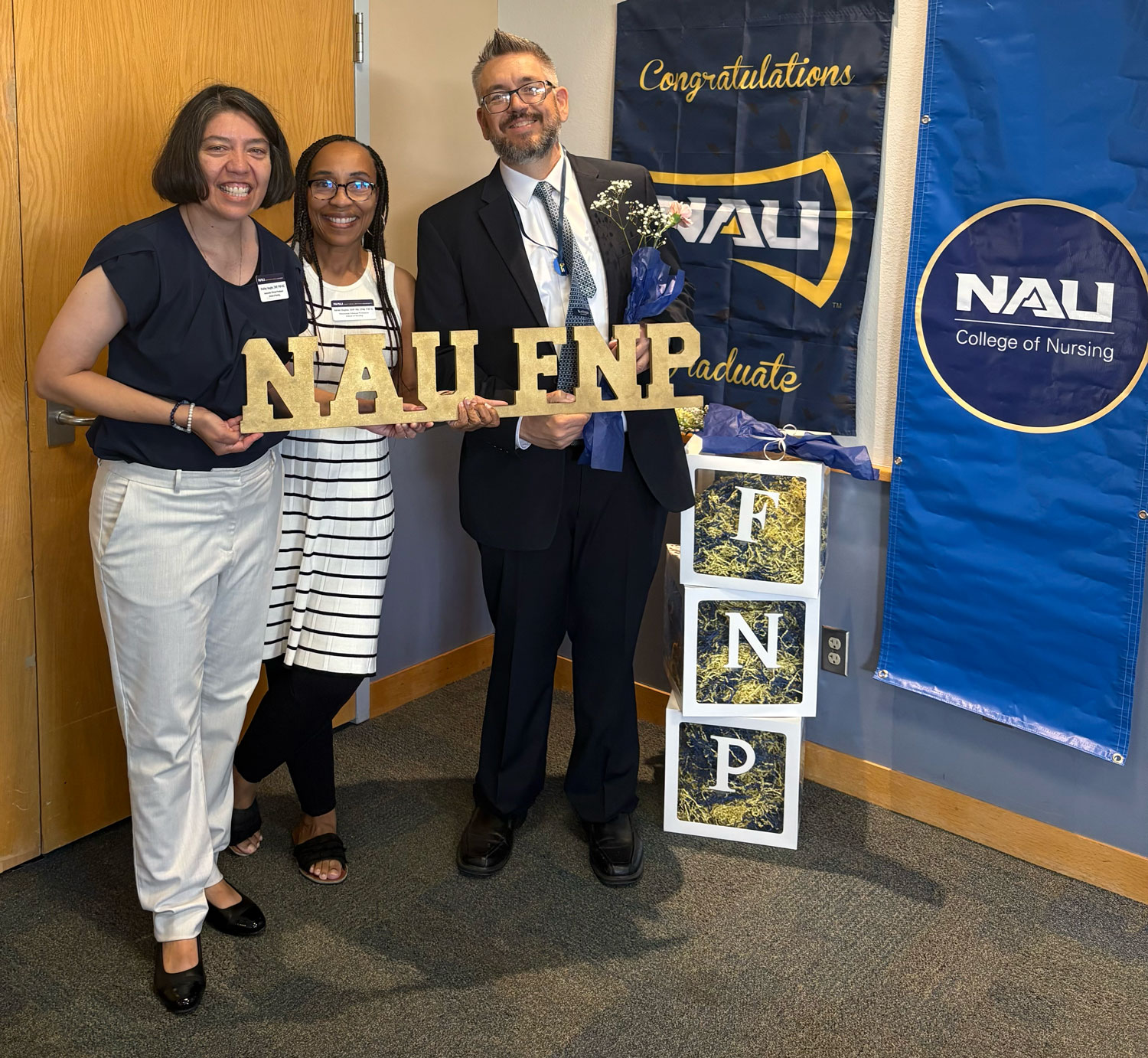
I’ve recently become coordinator of the family nurse practitioner program. We’re small but mighty; I call our group the Fantastic Five. Lots of people don’t know all the things FNPs do, so we’re increasing our presence throughout NAU and northern Arizona to share our “superpowers.”
One of my favorite parts of the job is mentoring students. I was able to go into the clinic with a student the other day and observe her working with a patient. I love that on those days I get to not only help patients but also help the next generation of providers.
I also work in a high-risk breast cancer clinic, where I monitor patients for breast cancer. When we’re able to catch it early, it means patients can be cancer-free with just a lumpectomy and maybe some medication, and they don’t need the whole laundry list of treatments I needed. Alongside high-risk patients, I hope to start working with the veteran community soon.
I also do research on cancer awareness and prevention. I’m working on partnering with organizations like Pink Forever to research how African American women and women of color can become more aware of their risk factors.
What’s your favorite way to spend a day off?
I love a good book, and I also love water—swimming, even just looking at it—that gives me peace. I’m turning 57 this year, but I’m a big old kid at heart! I will ride any roller coaster hands up and toes out. Universal Studios just opened up Epic Universe, and I got my tickets for the VIP tour and the whole nine yards for my birthday in December.
What are three things on your bucket list?
- Take some of my experiences and put them into a book. I want to speak to some of the burnout that healthcare providers are experiencing and help remind them why they went into this field.
- Travel to all seven continents at least once.
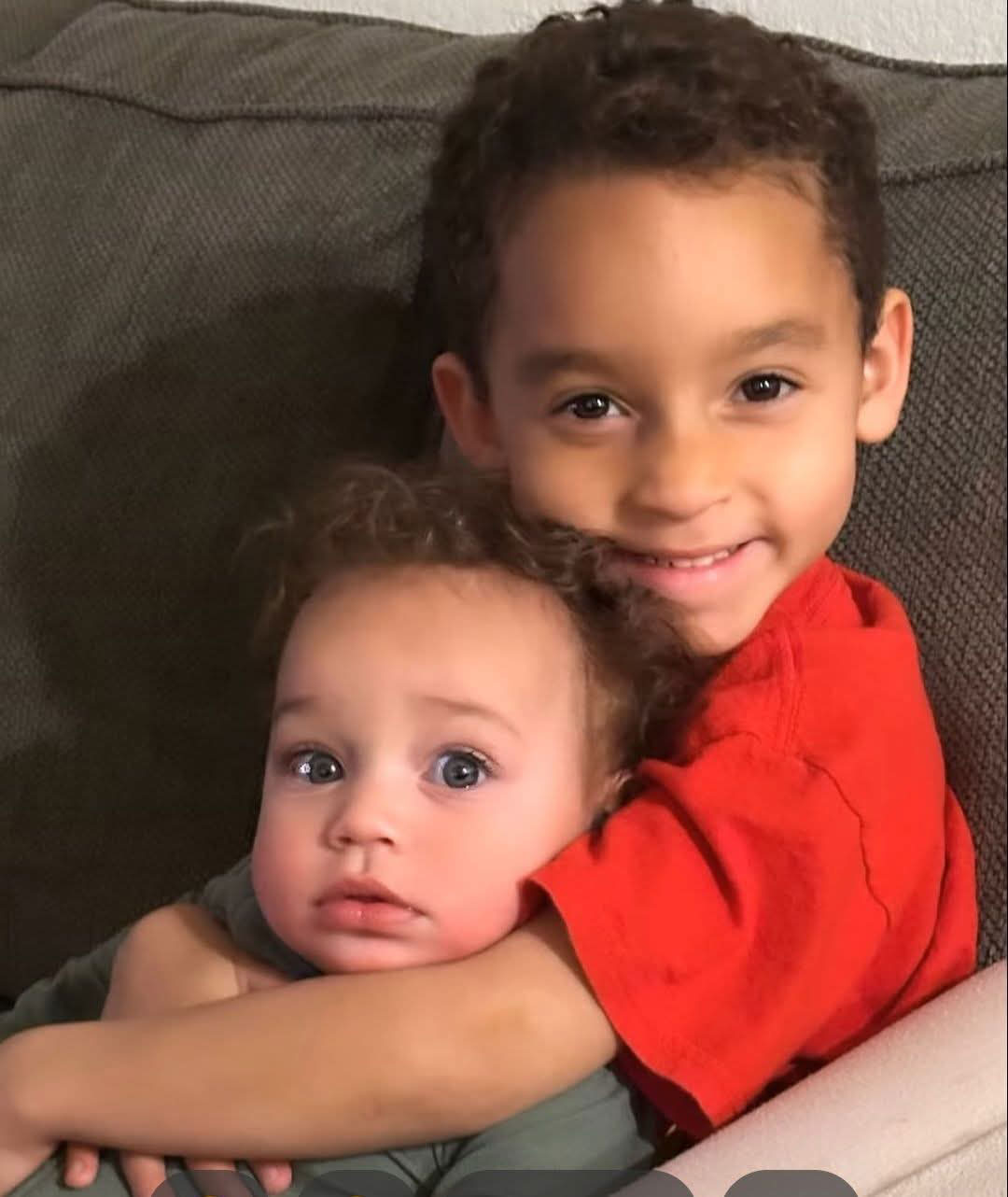
- Spend as much time as possible with my two “grand sugars!” I love spending time with them and watching them grow, discover things and figure out life.

Jill Kimball | NAU Communications
(928) 523-2282 | jill.kimball@nau.edu