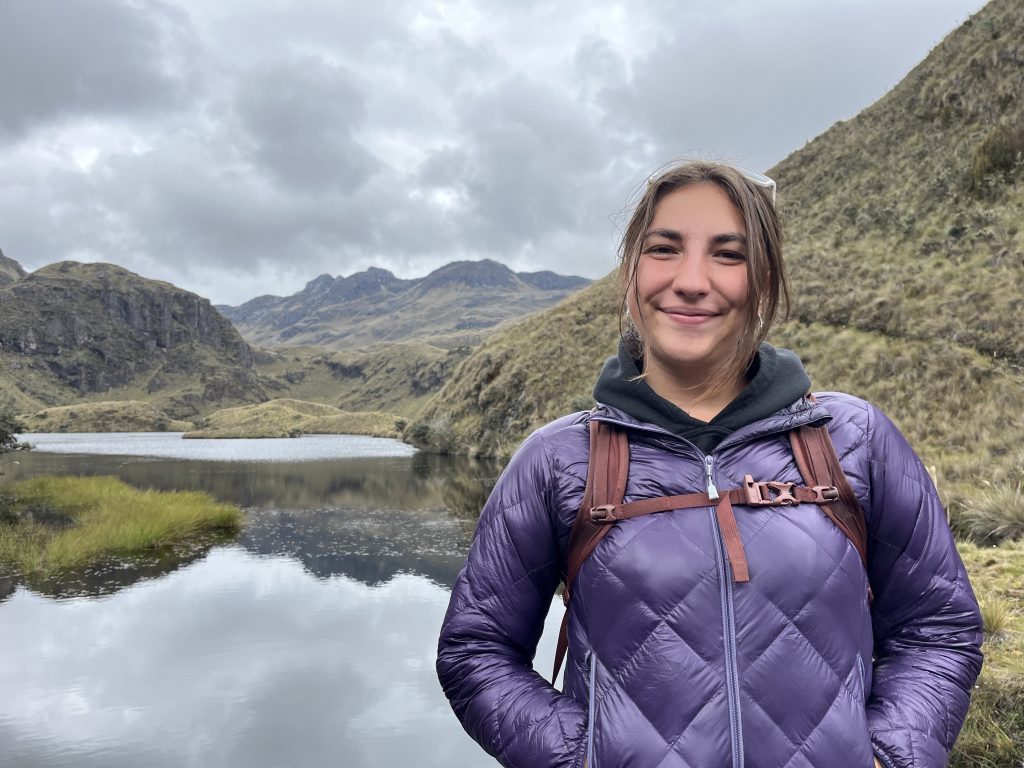


Senior Corinna Haines, who is double majoring in marketing and Spanish, recently spent a year in Latin America through NAU’s Interdisciplinary Global Programs (IGP). During her time abroad, she found a passion for working with nonprofit organizations, forged countless new friendships and ate many an empanada between classes and outdoor adventures.
Where did you study and why did you choose this particular country for your study abroad program?
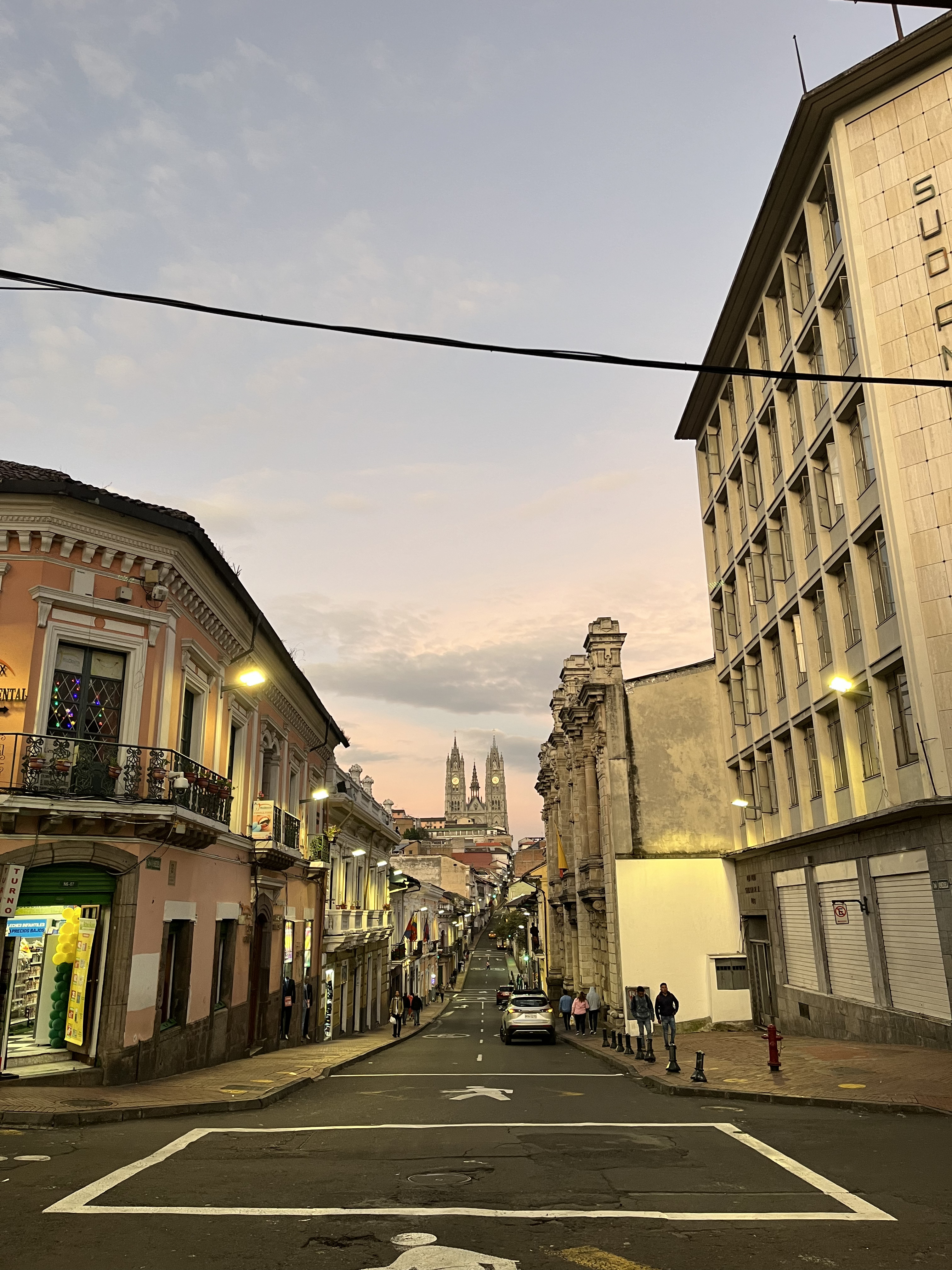
I studied at Universidad San Francisco de Quito (USFQ) in Quito, Ecuador. I was recommended this program by Melissa Armstrong, the IGP director at the time. She recommended it to me because of the diversity of activities and opportunities that Quito and USFQ have to offer. There are endless places to see and so many outdoor and urban things to do in Ecuador, and I was excited about the variation of things this country had to offer. From hiking volcanoes to huge citywide festivals to canoeing in the Amazon, Ecuador has it all. USFQ also offers a wide variety of classes, and I knew that I would be able to take courses that would satisfy my requirements at NAU.
How did you fund your study abroad experience?
As a Lumberjack Scholarship recipient, my tuition was paid for by NAU. I’ve worked throughout my college career to save money in order to help fund my time abroad.
What class(es) or research did you complete while abroad and for how long?
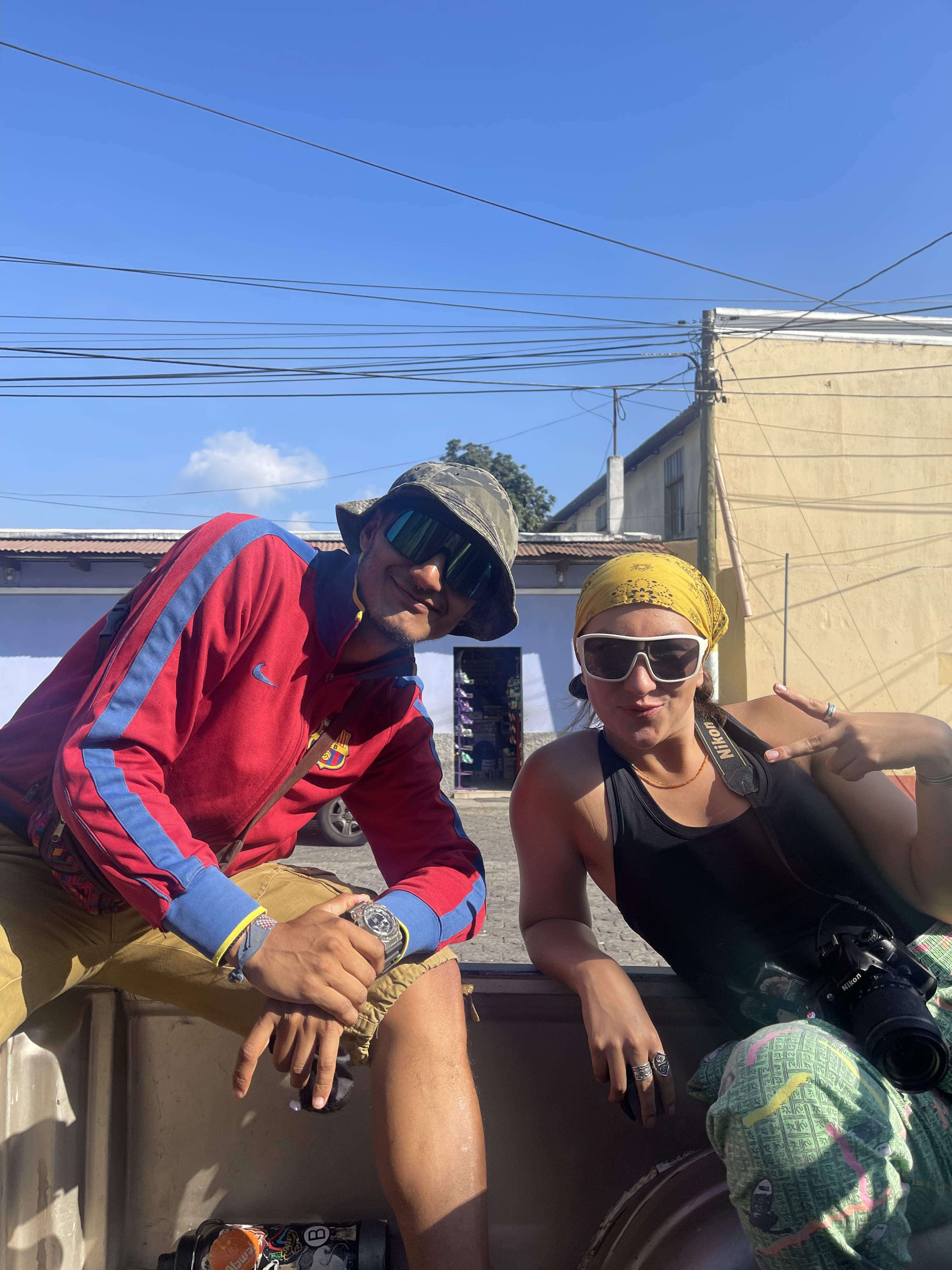 As part of IGP, I spent a year in Latin America. For my first semester, I was in Quito, Ecuador, at Universidad San Francisco de Quito, taking marketing and Spanish classes. My favorite classes I took were Ecuadorian culture and Latin American film, both in Spanish. For my second semester, I moved to Antigua, Guatemala, where I completed an internship with a nonprofit organization called De la Gente. They work with small-scale coffee farmers to support them in the cultivation, processing, packaging and exportation of their coffee to consumers around the world. With this support, they are eliminating the supply chain that historically has taken advantage of these small-scale farmers. My internship was with the marketing department, so I worked to improve our social media presence and advertising and completed several market research projects to better understand De la Gente’s audience.
What expectations or preconceived notions did you have about your chosen country? How has your experience compared to those perceptions?
A lot of people think of all Latin American countries as dangerous, crime-ridden places and somewhere to avoid as American travelers. Before my time abroad, I definitely was nervous about this. In my experience, both Ecuadorians and Guatemalans are extremely kind, generous and will have your best interests in mind. Both these countries face their own political and social hardships that make some daily activities a bit more complicated. I learned how to keep my guard up when I needed to and ensure I was taking the proper steps to keep myself safe. I would strongly encourage anyone who is interested in studying in Latin America to not let the fear of danger deter you. Yes, there are dangerous aspects to living in big cities in Latin America, but the same is true for any big city, and as long as you take the proper steps to ensure your own safety, you’ll be met with nothing but love and acceptance from locals.
Tell us about your favorite—and least favorite—dish abroad.
My favorite dish from Ecuador was empanadas de verde. Verde is a type of under-ripe plantain that’s used in a lot of traditional Ecuadorian dishes. When they are boiled, mashed, shaped into empanadas, stuffed with cheese and fried, they become empanadas de verde, and in my opinion, they’re the best lunch you could ask for! Another very traditional dish from Ecuador is Encebollado. This is a fish soup and is by far the most famous dish from this country. Contrary to its popularity, I really disliked it and found it far too fishy for my taste.
How has this study abroad experience influenced your personal, academic and career goals? Has it opened up new possibilities or changed your direction?
 After spending a year abroad, my goals on all fronts have all grown, and some have taken new paths completely. Personally, I hope to make traveling and learning about new cultures something I continue to do forever. Academically, attending grad school in a different country is something that I would like to explore in the future. Career-wise, I could 100% see myself returning to Antigua or somewhere similar to continue working with nonprofits that focus on supporting underprivileged communities. With connections I made in both Ecuador and Guatemala, my network has grown. I have people I will always be able to reach out to who will be part of my future, whether it be personal, academic or pertaining to my career.
Has this experience changed any of your personal beliefs or values?
The main thing I took away from this experience is the endless possibility for love and friendship. There are people in every town and city of every country in the world who have the potential to be your friend, and it is entirely up to you to go out there and look for them. It is in our human nature to love and be loved, and to deny yourself the chance to go out and look for this, whether it be in a different country, state or even your own hometown, is a devastating disservice to yourself and your could-have-been friends. After my time abroad, I have learned to lead with an open mind and an open heart filled with light, ready to receive human connection, wherever it may come from.