

Jan. 23, 2019
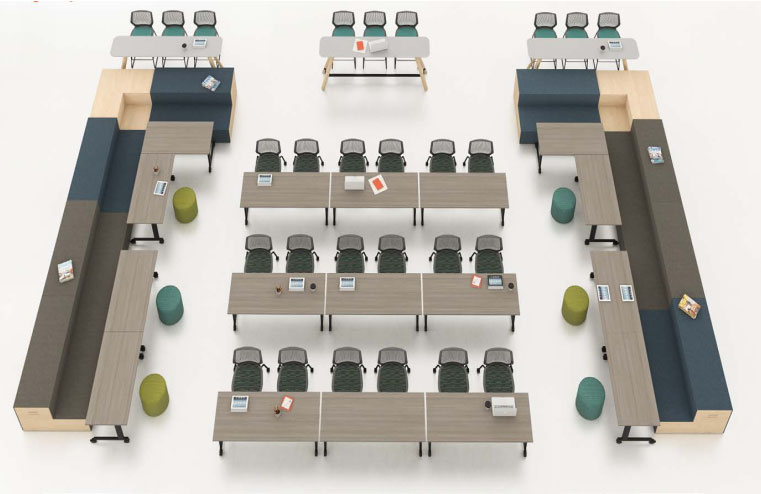
The traditional tiered lecture hall: graduated seats and static furniture, all positioned toward the front of the room while a professor shares knowledge with a class of eager scholars. The image evokes a feeling of the classic collegiate experience. While the standard layout may serve its function for lecture-based courses, the learning process is evolving and with it, so is the need for more flexible classroom designs.
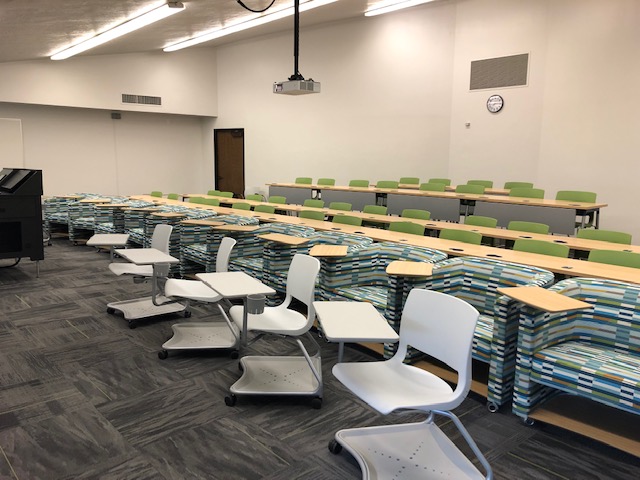 Taryn Williams, project manager of interior design at Northern Arizona University, with other units in the planning, design and construction department, saw this need and sought to expand the norm by creating a space for students and teachers that supports different types of instruction, learning and student needs.
“We are exploring new designs for future classrooms on campus,” Williams said. “We want students to be engaged, to feel they have choice, to promote well-being by offering movement and comfort, to foster collaboration and increase the feeling of community.”
With this in mind, Steve Vedral, interim associate vice president of facility services, had the idea to invite different furniture vendors to showcase their creativity and research on what makes the best learning environment. Six vendors came with designs featuring furniture that can be reconfigured for different teaching styles and needs.
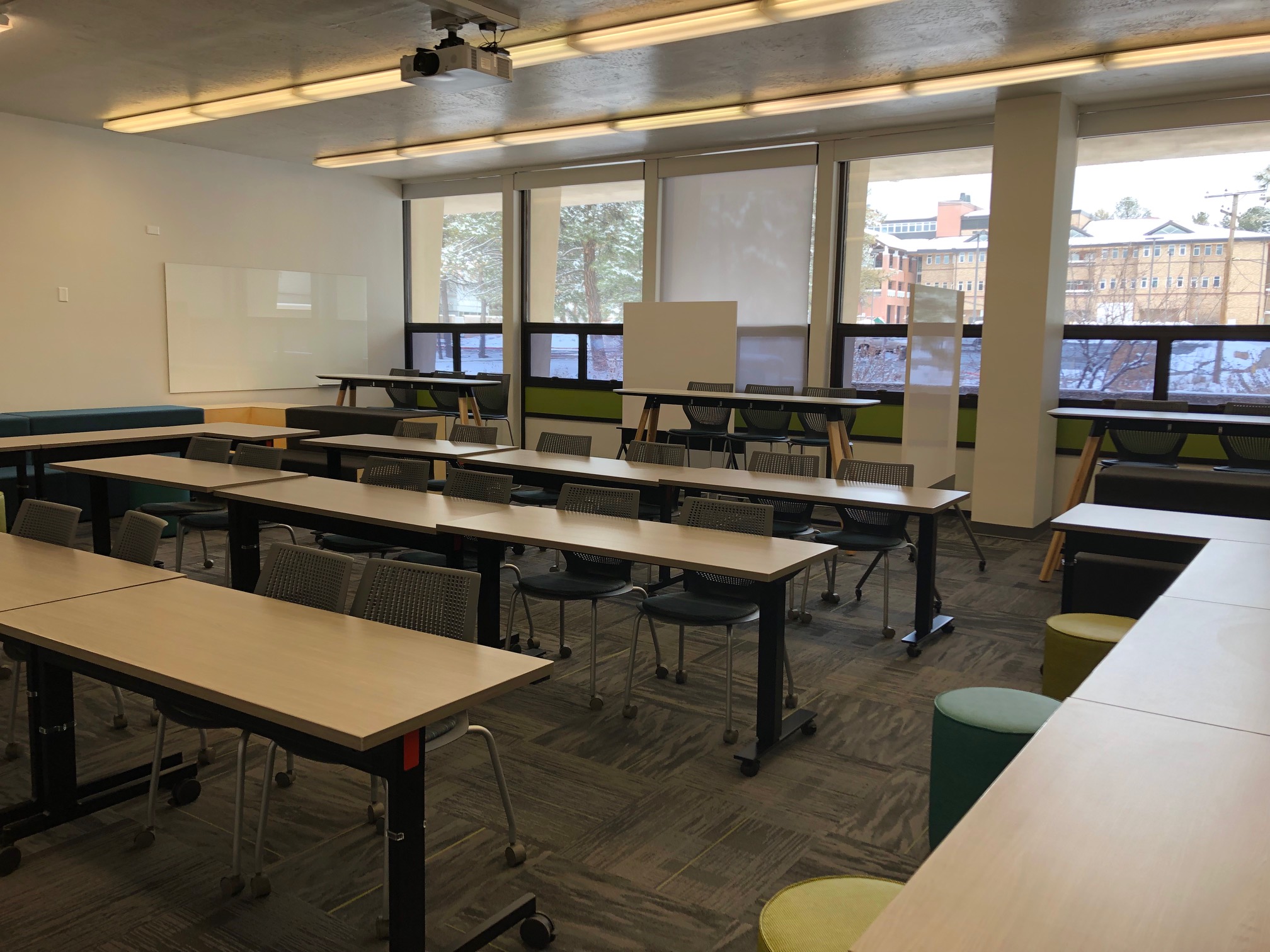
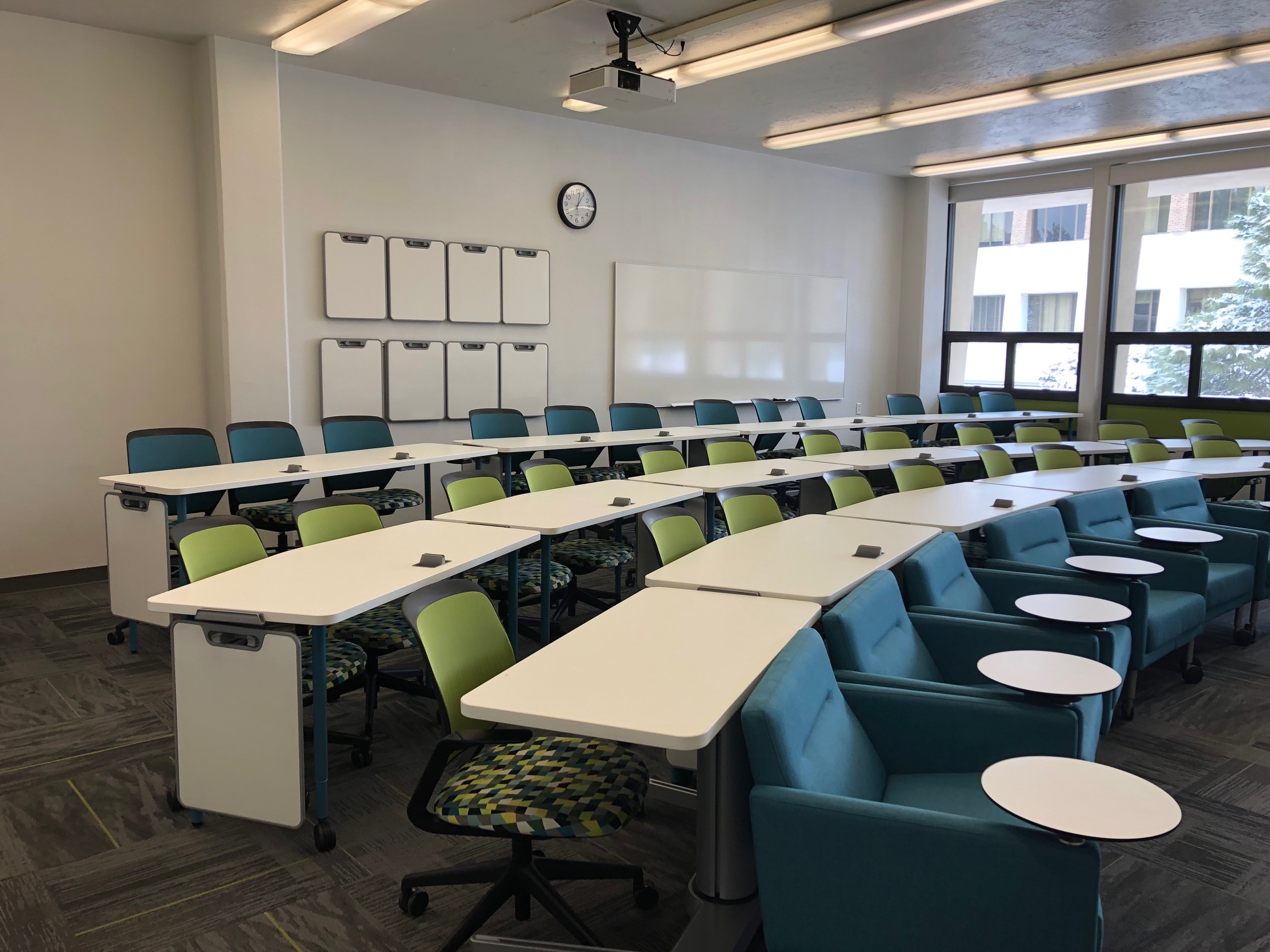 To test this type of furniture in classroom layouts, room 200 of Cline Library underwent construction; concrete tiers were demolished and replaced with new, flexible-layout furniture. Four room configurations were installed over winter break, each from a different vendor and with the details and finishes chosen by the NAU team. The furniture is intended to provide the best of both worlds when it comes to classroom needs.
“All of these rooms can be set up for lecture style as well as group work. This caters to the idea of the ‘flipped’ classroom: the ability to do the hands-on group learning in the classroom,” Williams said. “Research also shows us that students have different ways they like to learn and different comfort needs. With the variety of seating we aim to better meet those needs. We hope that the less formal feeling of the classrooms encourages sharing and participation when appropriate.”
 Staff and students who had class in the trial room have responded positively. Students reacted favorably to the new types of seating and feel of the updated layout. Williams said all feedback is helpful and the team hopes to receive more as the Lumberjack community continues to try out the space. The trial room can be booked by faculty for one or two sessions by contacting library supervisor Greg McLean at 928-523-6828.
On the list of classrooms and student spaces that need renovation, the ones that will be redesigned with the new furniture depends on how they rank in utilization and general appearance as well as the needs of the space. With continued positive feedback, Williams said some spaces in North Campus would be good candidates to start.
 “We want to demonstrate a commitment to learning, cater to different sensory input needs and support a fun learning environment,” Williams said. “We know that change can be uncomfortable, but we want to offer the best learning and teaching environments and we believe this is an opportunity to do that.”